




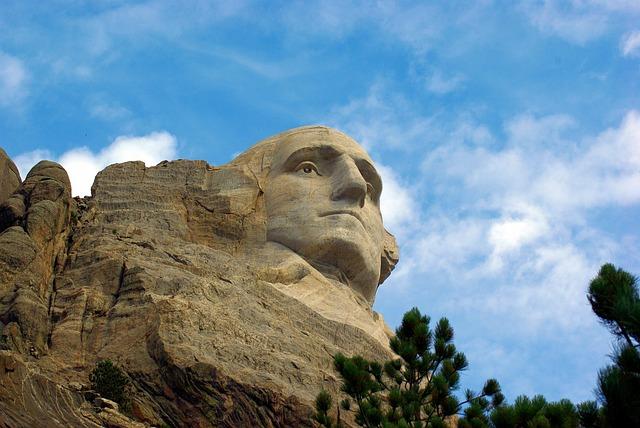
George Washington is widely celebrated as a revolutionary commander and the nation’s first president, yet one of the most revealing aspects of his life is often overlooked: his role as an ambitious, highly strategic entrepreneur. Decades before he took the presidential oath, Washington was deeply immersed in business-buying land, running plantations, operating mills and a distillery, and constantly scanning markets for new opportunities. In an era when modern debates about money, power and politics are increasingly intense, examining Washington’s commercial activity offers a sharper understanding of how closely the American founding was tied to profit, property and private enterprise.
Washington the Entrepreneur: Inside the First President’s Expansive Business Empire
From the vantage point of Mount Vernon, Washington oversaw what functioned as a diversified corporate enterprise by 18th-century standards. Rather than being merely a gentleman farmer, he orchestrated a complex web of farms, mills, fisheries and rental holdings that turned enslaved labor, geographic advantage and regional trade into consistent income.
Washington’s operations moved well beyond traditional tobacco planting. As the global tobacco market fluctuated, he pivoted into wheat and other grains, developing a reputation for producing high-quality flour. His “G. Washington” branded flour was exported throughout the Atlantic world and was recognized in Caribbean ports for its reliability and quality-a kind of early American brand-building.
At the same time, he used his expertise as a surveyor to identify promising land in frontier regions, especially in the Ohio Valley. By acquiring parcels ahead of settlement, he converted knowledge of geography and expansion patterns into long-term capital. As the western frontier advanced, these holdings increased in value, reinforcing his status as both a political and economic heavyweight.
Historians now depict Washington as an early American dealmaker, balancing public life with private enterprise. Surviving ledgers, account books and correspondence reveal deliberate diversification across several sectors:
- Agriculture: Multiple farms producing wheat, corn and livestock for both local consumption and export.
- Manufacturing: Gristmills for processing grain, a sizable whiskey distillery, and fisheries along the Potomac River.
- Real Estate: Carefully chosen landholdings in emerging frontier regions expected to appreciate over time.
- Branding: Marketed flour and whiskey sold under his name, reinforcing reputation and market reach.
| Enterprise | Location | Primary Output |
|---|---|---|
| Mount Vernon Farms | Virginia | Grain & livestock |
| Gristmill | Dogue Run | Export flour |
| Distillery | Near Mount Vernon | Rye whiskey |
| Western Lands | Ohio Valley | Speculation |
By the late 1790s, Washington’s distillery was among the largest in the United States, producing thousands of gallons of whiskey annually-an output that historians have compared to a mid-sized modern craft distillery. These ventures underscore how deeply he engaged with the emerging market economy, well beyond the familiar image of a Cincinnatus-like figure retreating to his fields.
From Estate to Marketplace: How Land, Slavery and Speculation Built Washington’s Wealth
Washington’s Virginia plantations served as the core of a broader financial system built on land, enslaved people and calculated speculation. At Mount Vernon and surrounding properties, enslaved laborers provided the work that powered his various enterprises-from plowing and planting to skilled carpentry and blacksmithing. In the economic logic of his time, enslaved people were recorded as both labor and assets, used as collateral, hired out for wages that went to Washington, and leveraged to support further investments.
Through inheritance, purchase and forced relocation, Washington assembled a substantial enslaved population and large tracts of arable land. These foundations generated the cash flow that enabled him to buy frontier acreage, upgrade equipment, expand milling operations and experiment with new crops. His detailed recordkeeping-tracking yields, expenses, and returns-shows a businessman closely monitoring performance and adjusting strategies in pursuit of profit.
His financial approach fused plantation production with aggressive land speculation. Expecting that the young republic’s growth would transform remote tracts into valuable property, Washington acquired western lands where new roads, river traffic and settlements were anticipated. His military service and political connections gave him access to information and networks that ordinary settlers did not enjoy, allowing him to secure claims in strategically significant areas.
Revenue came from multiple sources: selling wheat and flour, raising livestock, leasing land, earning rent from tenants, and profiting from the appreciation of undervalued frontier parcels. At every step, enslaved labor made this expansion possible, even as the moral implications of slavery would later force a profound rethinking of his legacy.
- Key assets: Enslaved labor, technical survey knowledge, insider access to political and military information.
- Revenue streams: Crop and livestock sales, rising land values, rental income, and hiring out enslaved workers.
- Risk factors: Border conflicts, disputes over land titles, shifts in public opinion and law regarding slavery and property.
| Asset Type | Primary Use | Economic Role |
|---|---|---|
| Plantation Lands | Tobacco, wheat production | Core cash flow |
| Enslaved People | Field and skilled labor | Labor & collateral |
| Western Tracts | Speculative holdings | Long-term capital gain |
In modern terms, Washington functioned as both an agribusiness operator and a real-estate investor whose portfolio relied heavily on coerced labor-a reality that continues to drive historical debate over how to reconcile his political contributions with the economic system that enriched him.
Lessons from Washington’s Ledgers: Early American Capitalism and the Architecture of Power
Washington’s surviving account books offer more than agrarian trivia; they reveal an early blueprint for how wealth could be actively engineered in the new United States. Each carefully drawn column captures the mechanics of a system in which capital, credit and human bondage were interwoven.
He understood that wealth is not simply accumulated-it is constructed through networks of obligation, diversified investments and tight control over labor. Profits drawn from enslaved people’s unpaid work flowed into land purchases, infrastructure improvements, milling, distilling and Atlantic trade, illustrating how controlling production could translate into influence and security.
The structure of his finances echoes enduring patterns in American economic life: consolidation of property in a few hands, reliance on cheap or precarious labor, and the subtle conversion of public authority into private advantage. While the instruments have changed-from personal ledgers to digital balance sheets-the logic behind them remains recognizable.
Historians see in Washington’s books a precursor to later corporate practices, including strategies that resemble vertical integration and leveraged growth. Several themes stand out:
- Debt as leverage: Washington used credit not merely as a necessity but as a deliberate tool for expansion, and as a way to bind tenants, neighbors and business partners into ongoing relationships.
- Scale over subsistence: He moved Mount Vernon away from small-scale, household-focused production toward larger, export-oriented agriculture aimed at distant markets.
- Vertical integration: By controlling stages from growing grain to milling flour to arranging shipment, he reduced dependence on middlemen and captured more of the value chain.
- Political power as capital: His public roles often intersected with private opportunities, with official status enhancing his access to land, information and investors.
| Ledger Line | Modern Parallel |
|---|---|
| Extensive use of credit accounts | Bank-backed corporate financing |
| Profits from enslaved labor | Reliance on low-cost, precarious work |
| Land and riverfront investments | Real estate and infrastructure plays |
| Ties between office and enterprise | Revolving door between state and market |
Today, when analysts discuss how capital flows through supply chains or how regulatory decisions affect private fortunes, they are grappling with patterns that were already visible, in embryonic form, in Washington’s ink-stained ledgers.
Reassessing the Founding Fathers: Washington’s Business Dealings and Contemporary Ethics
The traditional image of Washington as a disinterested statesman standing above the fray obscures the extent to which he was immersed in the commercial world of his time. His investments in western lands, transportation routes, mills, and agricultural innovation make his financial records look less like those of a detached philosopher and more like those of a hands-on developer and entrepreneur.
This dual identity-national icon and profit-seeking landowner-forces a reassessment of how personal economic interests intersect with public service. In a modern landscape of stock portfolios, shell companies and blind trusts, Washington’s example is increasingly invoked in discussions about conflicts of interest and the appropriate boundaries between office and ownership.
The central issue today is rarely whether leaders hold financial assets; it is how those assets are disclosed, managed and separated from official duties. Washington’s efforts in this area were tentative and incomplete by contemporary standards, yet his correspondence does contain instances where he tried to distinguish state responsibilities from his private affairs, even while benefiting from a deeply unequal social and economic order.
Modern ethics committees, watchdog groups and corporate boards grapple with concerns that would have been familiar, in outline if not in detail, to Washington’s contemporaries: transparency, separation and accountability.
- Disclosure: The clarity and completeness with which officeholders reveal their financial interests to the public.
- Separation: The strength of the barriers between private enterprise and public decision-making.
- Accountability: The mechanisms that come into play when potential conflicts of interest are identified.
| Issue | Washington’s Era | Today |
|---|---|---|
| Financial Transparency | Personal letters and ledgers | Mandatory disclosure forms |
| Conflict Rules | Informal norms | Codified ethics laws |
| Public Scrutiny | Limited circulation | 24/7 media and audits |
In the 21st century, where real-time financial reporting and investigative journalism can quickly expose entanglements, Washington’s balancing act appears modest and imperfect. Yet the core tension he confronted-how to exercise power while holding significant private assets-remains at the heart of ongoing debates about democratic accountability.
In Retrospect
As scholars continue to revisit George Washington’s life, his activities as a land speculator, plantation manager, mill operator and distiller reveal a far more commercially engaged figure than the simplified portraits in school textbooks. Rather than standing apart from the marketplace, he operated within it-and helped to mold it.
His story complicates the standard founding narrative, showing how the birth of the United States was intertwined with business, profit and property, as well as with exploitation and inequality. Understanding Washington as both president and entrepreneur does not diminish his political significance; it instead offers a fuller, more nuanced picture of how power, wealth and principle converged at the nation’s beginning-and how those convergences continue to shape American public life today.


