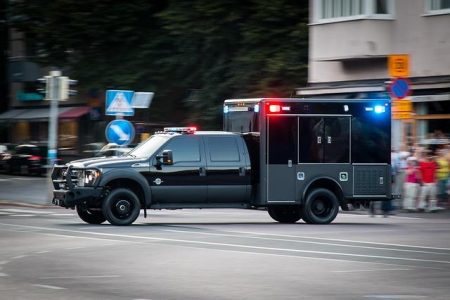



Two members of the US National Guard were wounded in a shooting in Washington, DC, on Sunday, local officials confirmed, in an episode that has reignited debate over security in the nation’s capital. The Guardsmen, who were on active duty at the time, were transported to a nearby hospital with injuries described as non-life-threatening. The attack, reported by Al Jazeera and other news outlets, unfolded against a backdrop of heightened political polarization and ongoing disputes over public safety in major US cities. Police have opened a full investigation and are searching for suspects as authorities move to reassure residents, commuters, and tourists in the heavily monitored district.
Washington DC Shooting of National Guardsmen Sparks New Alarm Over Domestic Troop Safety
The shooting of two uniformed service members on duty in the US capital has reignited questions about how effectively authorities are protecting troops deployed inside the country. Although officials emphasize that the Guardsmen’s injuries are not life-threatening, the incident has sharpened concerns about the growing risks faced by National Guard units called in to support civil authorities at protests, political demonstrations, large public gatherings, and disaster responses.
In recent years, National Guard personnel have become a familiar sight in US cities, including Washington, DC, particularly during high-tension periods such as elections, large marches, and major security events. Policy analysts and lawmakers are now pressing for a deeper review of whether current safety measures, training standards, and equipment are sufficient for the increasingly complex security environment that Guardsmen face in dense urban settings.
Security specialists argue that the attack exposes ongoing vulnerabilities at the boundary between military support and civilian law enforcement. Guard members are often prominently visible but operate under strict legal and operational constraints that differ from traditional policing, potentially leaving them more exposed in volatile situations. Advocates for reform are calling for a comprehensive review of several key areas:
- Protective gear standards for deployments in crowded, high-risk city environments
- Intelligence-sharing mechanisms between local police, federal agencies, and Guard units
- Rapid medical response coordination for uniformed personnel in active threat scenarios
- Mental health support for Guardsmen following exposure to gunfire and other traumatic events
These concerns echo broader national conversations about officer safety and gun violence. According to FBI data, assaults on law enforcement and security personnel have remained a persistent issue in recent years, with firearms continuing to play a central role in serious incidents. While overall violent crime levels in some cities have shown signs of easing since pandemic-era spikes, experts note that shootings involving public safety personnel remain particularly destabilizing to community trust.
| Key Concern | Proposed Focus |
|---|---|
| Urban deployments | Comprehensive risk assessments and route planning before missions |
| Force protection | Upgraded body armor, safer staging locations, and cover options |
| Interagency response | Clear command structures and interoperable communication systems |
Investigators Zero In on Motive and Firearm Supply Chain in Attack on US Military Personnel
Detectives are working to reconstruct the sequence of events that led up to the shooting, analyzing the suspect’s recent movements, financial activities, and online footprint. Investigators are exploring multiple possible motives, ranging from personal disputes and ideological extremism to potential connections with organized criminal networks. Initial witness statements and preliminary evidence suggest the encounter with the National Guardsmen may not have been purely coincidental, prompting authorities to investigate any prior interactions or online exchanges that could hint at targeted planning.
Surveillance footage from nearby streets and businesses, along with traffic and public transit cameras, is being systematically reviewed. Forensic teams are cross-referencing those images and timestamps with cellphone location data and license plate records to identify additional individuals who may have provided transportation, weapons, or other logistical assistance.
Simultaneously, the origin of the firearm and ammunition used in the attack has become a central focus of the inquiry. Ballistics specialists are comparing recovered shell casings and bullet fragments with entries in federal and state databases to determine whether the weapon has been linked to other crimes. Investigative teams are also tracking serial numbers and purchase records to establish whether the firearm was:
- Acquisition trail: Bought from a licensed dealer, obtained via a private or online sale, stolen, or passed through a straw purchaser, as verified through federal and state registries.
- Modification checks: Altered to increase firepower, fitted with extended magazines, or equipped with improvised enhancements that might circumvent existing regulations.
- Supply networks: Connected to known arms traffickers, repeat unlicensed sellers, or loosely organized gun-running operations already under investigation.
Law enforcement officials note that the case also underscores broader national concerns about the accessibility of firearms in urban corridors. While background checks and licensing requirements exist at the federal level, gaps between jurisdictions and private sales can create opportunities for rapid acquisition of high-powered weapons, even by individuals with warning signs in their histories.
| Investigative Focus | Primary Objective |
|---|---|
| Motive Analysis | Clarify the attacker’s intent, planning, and possible targeting of uniformed personnel |
| Weapon Source | Trace the firearm’s journey from seller or original owner to the shooter |
| Network Mapping | Identify any accomplices, facilitators, or trafficking links involved in the incident |
Community and Military Leaders Push for Tighter Security Coordination at Public Events
Following the shooting that left two National Guardsmen wounded, city leaders, neighborhood advocates, and Guard commanders are jointly calling for a recalibrated security strategy for parades, rallies, cultural festivals, and other large gatherings across Washington, DC. Their goal is to reinforce safety around public institutions and open spaces without eroding the city’s character as a hub for civic participation and peaceful assembly.
Officials argue that better coordination is needed well before crowds gather. Local residents have voiced concern about feeling caught between elevated security measures and the risk of further violence, insisting that any enhanced presence of uniformed personnel must remain compatible with the city’s democratic traditions and civil liberties. At the same time, the shooting has highlighted coordination gaps that many community members say can no longer be dismissed as a normal feature of life in a major metropolitan area.
Security planners and event organizers are advocating a cooperative framework that combines civilian leadership with military expertise, anchored in transparency and community engagement. Recommended measures include:
- Joint planning cells to design security perimeters, designate safe corridors, and clearly mark emergency exits and medical stations.
- Shared radio channels and interoperable communications so police, Guard units, fire services, and emergency medical teams can coordinate instantly.
- Unified incident command structures to prevent overlapping orders and confusion when multiple agencies respond to a single event.
- Community liaison officers tasked with gathering feedback from residents, local businesses, and advocacy groups before and after major events.
| Priority Area | Lead Stakeholder | Target Outcome |
|---|---|---|
| Perimeter Security | Metropolitan Police | Earlier threat detection and better crowd protection |
| Guard Deployment | DC National Guard | Faster, better-coordinated responses to emerging risks |
| Civil Oversight | City Council | Open, accountable protocols for the use of military support |
| Public Messaging | Mayor’s Office | Timely, clear safety information for residents and visitors |
Policy Experts Call for Overhaul of National Guard Deployment Rules and Urban Violence Prevention
In the broader policy debate triggered by the incident, experts argue that existing guidelines for National Guard deployments in dense cities are not fully aligned with today’s threat environment. Rapid escalations, lone-actor attacks, and the potential targeting of uniformed personnel all require more rigorous planning and clearer lines of authority, they say.
Specialists in security policy are urging decision-makers to refine the frameworks that govern when and how Guard units are mobilized in support of civil authorities. Among their top recommendations are:
- Clearer chains of command to reduce ambiguity when state, local, and federal agencies operate side by side.
- Faster intelligence-sharing protocols so that information about credible threats can move quickly from analysts to personnel on the ground.
- Scenario-based training that prepares Guard units for complex urban incidents, emphasizing both service member protection and civilian safety.
Analysts warn that relying on improvised arrangements during crises can lead to confusion, duplicated efforts, or gaps in response-as seen in other high-profile security incidents over the past decade. They argue that deployments must be governed by transparent criteria and legal safeguards to strike the right balance between readiness, civil rights, and effective force protection.
At the same time, researchers, clergy, neighborhood groups, and violence-prevention advocates emphasize that strengthening National Guard protocols is only part of the solution. To reduce the likelihood of similar attacks, they are pressing for deeper investment in long-term strategies aimed at lowering gun violence overall and rebuilding trust between communities and public institutions.
Suggested approaches include:
- Targeted violence-interruption programs in neighborhoods with a history of shootings, using credible messengers to mediate conflicts before they escalate.
- Data-driven policing models coupled with strong civilian oversight to focus enforcement on the most serious threats while limiting over-policing.
- Mental health and crisis response teams that can accompany or, where appropriate, replace police in responding to behavioral health emergencies.
- Investment in youth employment and education initiatives that expand opportunities and address the socioeconomic drivers of crime.
| Priority Area | Key Objective |
|---|---|
| Deployment Protocols | Define roles, responsibilities, and rapid response procedures |
| Interagency Coordination | Streamline command structures and communication channels |
| Community Prevention | Lower shooting rates through early, sustained intervention |
Key Takeaways
Authorities say the investigation into the Washington, DC, shooting is still in its early stages, and they have not yet publicly identified a definitive motive. Detectives continue to gather forensic evidence, analyze digital records, and speak to witnesses, while city officials and military leaders are urging patience and pledging full cooperation among agencies to identify and prosecute those responsible.
Beyond the immediate manhunt, the attack has underscored how vulnerable even well-trained security personnel can be when operating far from traditional battlefields. It has also reenergized national discussions about gun violence, public safety, and the protection of institutions at the very center of American political life. As residents and visitors return to daily routines in the capital, debates over National Guard safety, firearm access, and urban violence prevention are likely to remain at the forefront of local and national policy agendas.