



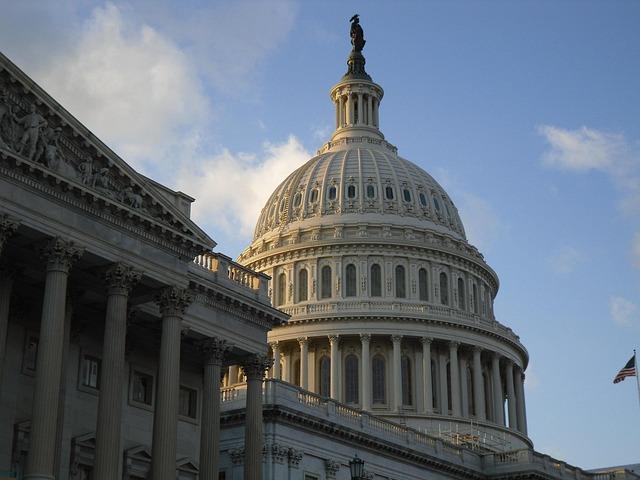
In a city where clout is usually tallied in roll-call votes, line items, and signed executive orders, power almost never looks the same from one office to the next. Washington runs not only on the officials whose names appear on ballots, but also on the strategists, advisors, executives, and advocates who shape the choices those officials make. Washingtonian’s “Most Powerful Women in Washington” highlights the women whose influence stretches across politics, law, business, media, and the nonprofit world-women who set priorities, move markets, steer public debate, and redefine what leadership means in the nation’s capital.
Inside the Rooms That Matter: How Washington’s Most Powerful Women Steer the Policy Agenda
In committee waiting rooms, tucked-away Capitol offices, and encrypted Zoom calls, a network of women is driving many of Washington’s most consequential outcomes-often far from TV lights or public hearings. They engineer compromises on massive spending packages, refine regulatory text line by line, and quietly decide which issues break through into the national spotlight. Their strength is rooted less in public theatrics than in command of the process: determining what appears on the calendar, what reaches the floor, and what vanishes before it ever becomes public.
Chiefs of staff, general counsels, senior policy advisers, and legislative directors-many of them women-serve as critical gatekeepers. They deploy deep expertise and wide-reaching relationships to guide their bosses toward options that can realistically pass, withstand court challenges, and survive news cycles. According to the Congressional Research Service, women now make up roughly half of House chiefs of staff and a growing share of top committee staff, increasing their leverage over what issues move and which stall.
Power also circulates through a dense ecosystem of policy salons, closed-door briefings, and hyper-targeted advocacy that shapes what elected officials see as viable long before a bill number is assigned. Corporate strategists, think tank experts, and coalition leaders model legislative scenarios, run polling experiments, and test narratives with focus groups, then feed their findings into talking points, floor speeches, and agency press releases. Their fingerprints are visible on which crises trigger emergency hearings, which rules are prioritized for fast implementation, and which bold ideas are quietly rewritten into something more likely to survive stakeholder pressure.
Key levers behind the scenes include:
- Control of calendars that dictates if, when, and how pivotal votes and hearings happen.
- Drafting authority over statutory language, amendments, and agency guidance that determines real-world impact.
- Coalition building that aligns corporate interests, advocacy groups, and grassroots organizers around shared goals.
- Message testing that fine-tunes how policy is framed, defended, and marketed to the public.
| Sphere | Typical Role | Main Lever of Power |
|---|---|---|
| Capitol Hill | Chief of Staff | Agenda & access |
| Federal Agencies | General Counsel | Regulatory wording |
| Think Tanks | Policy Director | Data & framing |
| K Street | Lobbying Partner | Vote counts |
Redefining the Power Corridor: How Women Are Rewriting the Rules of Leadership
Across Capitol Hill, K Street, federal agencies, and the West Wing, a new wave of women is changing not only who holds power in Washington, but how that power is deployed. They aren’t waiting for established gatekeepers to open doors; they are redesigning the rooms themselves. From forging bipartisan agreements in midnight markup sessions to shaping trillion-dollar spending plans and recasting national security for a digital age, these leaders are dismantling unwritten rules that once kept them on the sidelines.
Their influence is measured less in symbolic firsts and more in tangible wins: razor-thin vote margins secured, landmark bills enacted, sprawling agencies modernized, and durable alliances built across party lines and institutions. As of 2024, women hold a record number of senior posts across Congress and the executive branch, and more than one in four members of Congress are women-a shift that has transformed both priorities and governing style.
What truly sets this cohort apart is not only where they sit, but how they lead. They elevate evidence over ideology, sunlight over backroom deals, and partnership over the zero-sum instincts that long defined Washington’s inner circle. In offices previously governed by rigid hierarchies and unspoken traditions, they are rewriting the internal rulebook:
- Institutional disruption: Questioning legacy power structures within agencies, law firms, think tanks, and lobbying shops-and replacing them with performance-driven cultures.
- Policy with proximity: Centering lived experience and frontline voices in debates about healthcare, technology, climate, housing, and defense.
- Precision messaging: Leveraging traditional media, digital platforms, podcasts, and hometown networks to influence public opinion in real time.
- Pipeline building: Intentionally recruiting, mentoring, and sponsoring the next generation of women for pivotal staff, advisory, and board roles.
| Power Base | Leadership Shift |
|---|---|
| Congress | From seniority-based control to results-driven caucus leadership |
| Executive Branch | From rigid gatekeeping to cross-agency collaboration and task forces |
| Influence Industry | From quiet, closed-door lobbying to more transparent, values-based advocacy |
| Policy Labs & Think Tanks | From academic white papers to rapid, actionable research and briefings |
Money, Access, and Clout: Inside the Donor Networks and Deal Rooms Led by Women
In a political era when campaigns can raise millions before a single rally is held, a sophisticated group of women has become central to how resources-and therefore leverage-flow through Washington. They are campaign finance chairs, super PAC architects, hedge fund partners, startup founders, and tech philanthropists who treat elections like strategic investment rounds. Their expectations mirror those of seasoned investors: measurable impact, meaningful policy access, and long-term influence.
In invitation-only salons, discreet conference calls, and private virtual briefings, these women grill candidates with the rigor of venture capital partners. They demand detailed positions on antitrust, data privacy, climate risk, reproductive rights, and workforce policy. Their networks link K Street firms to Silicon Valley, Wall Street, and emerging innovation hubs, combining traditional donor lists with corporate boards, advocacy coalitions, and activist movements capable of shifting millions of dollars in days, not months.
Their tools and tactics include:
- High-dollar salons where contributions are bundled, narratives are refined, and policy priorities are negotiated.
- Digital donor circles that monitor giving in real time, flag key votes, and reward follow-through on campaign promises.
- Closed-door briefings that bring together lobbyists, grassroots organizers, policy experts, and Hill leadership.
- Cross-party alliances organized around shared interests in national security, tech regulation, caregiving, and infrastructure.
| Role | Leverage | Primary Arena |
|---|---|---|
| Finance Chair | Sets fundraising goals; controls high-level donor access | National Committees |
| PAC Strategist | Directs independent expenditures and issue ads | Issue Campaigns |
| Corporate Lobbyist | Aligns political giving and advocacy with business strategy | K Street Firms |
| Grassroots Fintech Founder | Uses technology to scale and target small-dollar donations | Digital Platforms |
Inside glass-walled conference rooms that double as negotiation hubs, these women are not simply signing checks; they are structuring the deals that shape who chairs key committees, which bills advance to markup, and how aggressively new rules are rolled out. Access is increasingly quantified and tech-enabled: donor platforms sync contribution histories with legislative timelines, while automated follow-ups from campaigns and offices often arrive within hours of a contribution.
By demanding clear metrics-votes taken, amendments filed, oversight hearings scheduled-women at the center of this donor ecosystem are transforming what once looked like social giving into a disciplined portfolio of political assets. In the process, they are reshaping not only what influence buys in Washington, but who gets to wield it.
Lessons for Aspiring Power Players: Strategies and Roadmaps from Washington’s Top Women
Behind every major policy breakthrough or headline-grabbing decision, many of Washington’s most powerful women are relying on playbooks that ambitious professionals can adapt in any sector. Their approach combines rigorous preparation, intentional relationship-building, and a long-horizon view of power.
They study legislation and briefings with the depth of trial lawyers. They pressure-test their arguments before hearings, negotiations, and media hits. They treat every public appearance-whether a local town hall or a national broadcast-as a chance to reinforce a clear mission. Their rise is rarely accidental; it stems from strategic positioning, sustained visibility, and a willingness to take on hard, complex portfolios that others sidestep.
Common strategies they deploy include:
- Strategic networking: Cultivating alliances across party lines, branches of government, industries, and sectors instead of relying on a single inner circle.
- Message discipline: Defining a core story about who they are and what they stand for-and repeating it consistently in interviews, memos, testimony, and speeches until it frames the conversation.
- Issue ownership: Becoming the recognized expert on one or two high-impact issues-such as cybersecurity, public health, climate resilience, or economic equity-before expanding their portfolio.
- Talent cultivation: Treating staff development as a force multiplier, building teams that can execute independently and extend their influence.
- Resilience protocol: Preparing in advance for pushback, scrutiny, and crises with strong facts, trusted allies, and clear boundaries.
| Strategy | Practical Roadmap |
|---|---|
| Build Policy Cred | Claim a focused niche; publish, brief, and speak on it at least once a quarter. |
| Shape Your Narrative | Craft a three-line bio that links your role to clear public or organizational impact. |
| Expand Your Map | Schedule monthly coffees or video chats with contacts beyond your agency, firm, or sector. |
| Rehearse for Crisis | Run regular mock briefings or Q&A drills to stress-test your data, arguments, and redlines. |
To Wrap It Up
As Washington confronts overlapping political, economic, technological, and social challenges, the women highlighted here are not simply present at the table-they are determining what gets discussed and what gets done. Their influence stretches from legislative text to courtroom strategies, from corporate board agendas to neighborhood advocacy meetings, shaping daily life across the region and beyond.
Taken together, their trajectories reveal a broader transformation in how power works in the capital. Authority is no longer defined solely by title, seniority, or office location, but by the capacity to build coalitions, define priorities, and deliver measurable results. Whether operating in government, advocacy, business, media, or the nonprofit sector, these women have expanded the boundaries of what leadership in Washington can look like.
In the years ahead, their choices will help determine how both the city and the country navigate their toughest tests-from democracy’s resilience to climate adaptation to economic inclusion. For now, they stand as a testament to how far Washington has come-and as a preview of how much further it may go under the guidance of its most powerful women.