

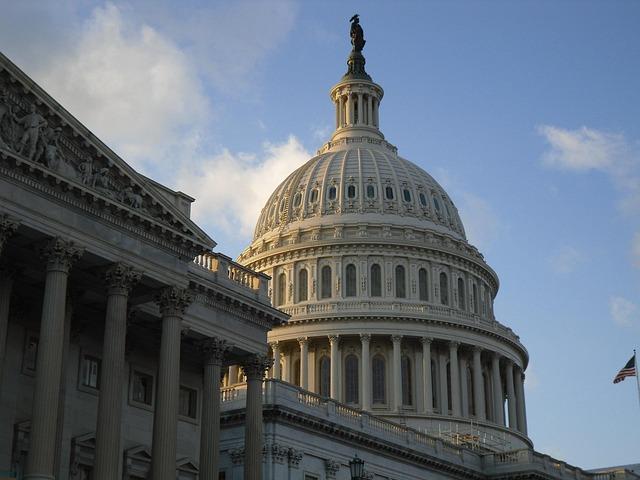
National Guard personnel from six states and the District of Columbia have moved into the nation’s capital this week, significantly reinforcing the security posture across Washington, D.C. Coordinated through the National Guard Bureau, this deployment brings additional manpower, vehicles, and specialized teams to support an already robust network of local and federal agencies. The effort is designed to safeguard public spaces, protect critical government functions, and ensure continuity of operations as officials respond to elevated security demands in and around the National Capital Region.
Multi-State Guard Presence Expands Security Footprint in Washington, D.C.
Citizen-Soldiers and Airmen from six states and the District of Columbia have arrived in Washington under pre-existing mutual-aid and emergency assistance agreements. While each unit remains under the authority of its respective governor, they are operating in close partnership with the D.C. National Guard, U.S. Capitol Police, Metropolitan Police Department, and federal security agencies.
Their presence represents a temporary but substantial expansion of the protective ring around federal buildings, transportation corridors, and major civic spaces. Tasks range from strengthening perimeter security and manning access points to supporting logistics hubs that keep first responders supplied and mobile. The overarching objective is to reinforce lawful activity, maintain order, and protect key infrastructure without disrupting daily life in the city.
In line with National Guard doctrine, these forces occupy a clearly defined supporting role. They are not replacing civilian law enforcement but augmenting it, enabling police and federal officers to focus on core law enforcement duties while Guard members handle complementary missions such as traffic flow, crowd support, and behind-the-scenes sustainment.
- Non-law enforcement support to municipal and federal partners to preserve civil authority.
- Enhanced visibility and presence around high-value federal and civic facilities.
- Rapid response capability to scale forces up or down as the situation changes.
- Joint coordination centers to align tasks, share information, and unify efforts.
| Supporting State | Primary Role |
|---|---|
| Maryland | Traffic and access control |
| Virginia | Perimeter security |
| Pennsylvania | Logistics support |
| New Jersey | Communications support |
| New York | Quick reaction teams |
| Delaware | Joint operations center liaison |
| District of Columbia | Command and coordination |
Integrated Operations with Local and Federal Partners Boost Public Safety
The deployment from six states and the District of Columbia is built around a single, integrated mission framework that links Guard capabilities directly to the operational needs of city departments and federal agencies. Using joint operations centers, secure communications networks, and shared digital tools, Guard leaders coordinate constantly with law enforcement, emergency management officials, and critical city services.
This unified structure allows for real-time intelligence sharing, streamlined tasking, and the flexibility to shift teams rapidly as conditions evolve. From busy transit hubs to major government complexes, Guard units are positioned where they can most effectively strengthen local capacity and keep critical systems functioning.
Current mission sets include:
- Perimeter security in partnership with local police agencies to protect government facilities, transit nodes, and public venues.
- Traffic and crowd management support to help maintain emergency access routes and safe movement for residents, workers, and visitors.
- Logistics and sustainment roles that ensure agencies have continuous access to equipment, fuel, and personnel.
- Civil support planning with federal partners to preserve continuity of government and reinforce disaster and crisis response capacity.
| Support Element | Lead Partner | Primary Objective |
|---|---|---|
| Security Teams | Local Police | Critical site protection |
| Joint Operations Cells | Federal Agencies | Shared situational awareness |
| Medical Support | EMS & Public Health | Surge care capacity |
| Transport Units | City Emergency Mgmt | Rapid personnel movement |
In recent years, major metropolitan regions across the U.S. have seen increasing reliance on this type of interagency model. According to the National Governors Association, multi-jurisdictional coordination has become a cornerstone of large-scale event planning and crisis response, helping states and cities respond more effectively to complex security challenges.
Training, Readiness, and Urban Operations Keep Guard Forces Mission-Ready
Senior leaders stress that the ability of units from multiple states to deploy quickly and operate smoothly in Washington is the product of sustained investment in training and readiness, not last-minute improvisation. Over time, Citizen-Soldiers and Airmen have participated in mission-specific urban training that replicates the dense, layered environment of the nation’s capital.
These training cycles typically include:
- Crowd management and civil disturbance scenarios tailored to complex cityscapes.
- Advanced communications drills that test multiple radio systems and secure data networks.
- Scenario-based rehearsals that refine rules of engagement and clarify how Guard forces interact with law enforcement and civilian agencies.
Exercises conducted alongside federal agencies and municipal departments have allowed units to practice everything from traffic diversion to joint incident command. This preparation ensures Guard members can integrate into the existing security structure without slowing ongoing operations or duplicating effort.
Interoperability now goes well beyond compatible radios. Joint task force cells rely on synchronized planning timelines, shared situational reports, and standardized terminology. Liaison officers embedded with Metropolitan Police, U.S. Capitol Police, and federal agencies help compress decision cycles, reduce confusion, and maintain a common operational picture across multiple jurisdictions.
By enforcing common tactics, techniques, and procedures (TTPs), Guard units from different states can plug directly into a unified command and control framework when they arrive. This standardization helps sustain a consistent security posture across federal buildings, transportation networks, and high-visibility public areas.
Advancing Future Multi-State Guard Collaboration in the National Capital Region
Commanders from the District of Columbia and participating states agree that the most effective multi-state operations are built well before any deployment is ordered. They are advocating for more robust, institutionalized mechanisms that make it easier to move from planning to execution when Washington calls on out-of-state support.
Key recommendations include the creation of standing interstate coordination cells, shared operational playbooks, and a unified communications architecture. These tools would give Guard units from Maryland, Virginia, and other contributing states a common starting point whenever they mobilize in support of the capital.
Leaders are also pushing for more frequent joint rehearsal exercises in the National Capital Region. Large-scale drills that simulate significant events-ranging from mass gatherings to complex emergencies-would allow Guard units and civil agencies to validate radios, fine-tune traffic and route security plans, and rehearse decision-making under realistic conditions.
- Shared digital platforms to distribute mission orders, maps, and real-time updates across state lines.
- Regional training rotations hosted by different states on a recurring schedule to broaden experience.
- Pre-scripted support agreements to shorten mobilization timelines and clarify roles in advance.
- Embedded liaison officers in city and federal command centers to maintain continuity during operations.
| Focus Area | Proposed Action | Expected Result |
|---|---|---|
| Communications | Unified radio and data standards | Faster joint responses |
| Training | Multi-state urban support drills | Improved on-scene cohesion |
| Logistics | Shared staging and supply hubs | Reduced deployment time |
| Leadership | Joint command mentorship programs | Common decision framework |
Officials further emphasize the value of standardized after-action reviews and a centralized database of lessons learned from every National Capital Region mission. By consolidating best practices-from managing large crowds near federal complexes to integrating medical triage support with local hospitals-Guard teams from six states and the District can deploy with a common baseline of expectations and proven methods.
Emerging priorities for future missions include expanding cyber defense cooperation to protect critical digital infrastructure, improving public affairs coordination so agencies deliver clear, consistent messaging, and bolstering family support networks for Guard members who mobilize on short notice. These initiatives are designed to sustain force readiness while maintaining the strong community ties that are central to the National Guard’s identity.
Conclusion: The National Guard’s Enduring Role in the Nation’s Capital
As operations continue in Washington, D.C., Guard leaders stress that the deployment remains finite, conditions-based, and governed by strict rules of engagement. Force levels and mission assignments are reviewed regularly and adjusted to match the evolving needs of local and federal partners. Throughout the operation, the priority remains clear: protect people, property, and democratic institutions while enabling the normal rhythm of civic life to continue.
The combined presence of units from six states and the District of Columbia underscores the National Guard’s unique role in the nation’s security architecture-a community-based force that can mobilize rapidly, integrate smoothly with civil authorities, and provide critical support wherever and whenever it is required. In the nation’s capital, that role is on full display as Guard members stand alongside their interagency partners to safeguard the seat of American government.