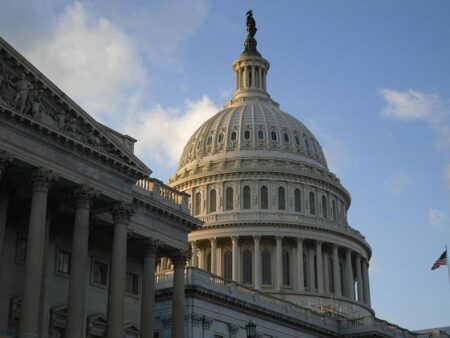




As Washington edges toward yet another possible government shutdown, health care has become one of the sharpest flashpoints on Capitol Hill. Routine budget work has morphed into a high-stakes struggle over Medicaid, public health funding, and pandemic-era coverage expansions-disputes that have hardened into ideological battle lines. Those conflicts now threaten to disrupt not only federal operations, but the day‑to‑day functioning of hospitals, clinics, and community programs across the country.
Health care funding showdown puts frontline care on the line
While lawmakers spar over spending bills, the uncertainty surrounding federal health dollars is already filtering down to exam rooms, billing offices, and public health departments. Health systems are dusting off emergency playbooks and modeling what cuts might look like if funding stalls-even for a short period.
Hospital executives and clinic directors are weighing painful choices: delaying facility upgrades, instituting hiring freezes, or slowing down long‑planned expansions in services like behavioral health and maternal care. Organizations that depend heavily on Medicaid reimbursements and federal grants, particularly safety‑net providers, say even brief payment delays can destabilize their operations.
The risks are most acute for rural hospitals and community health centers that operate on razor‑thin margins. For many of these providers, a shutdown or prolonged budget deadlock isn’t just a political headline-it is the difference between staying open and closing doors.
- Delayed reimbursements disrupt hospital cash flow, complicating payroll and vendor payments.
- Community health centers anticipate trimmed service hours and hiring pauses for critical staff.
- Public health initiatives may be forced to pause vaccination drives, cancer screening campaigns, and overdose prevention efforts.
- Rural institutions face a heightened risk of permanent closure or consolidation into distant regional systems.
| Group | Short-Term Impact | Long-Term Risk |
|---|---|---|
| Patients with chronic illness | Missed appointments, disrupted medication schedules | Uncontrolled disease, increased emergency department visits |
| Hospitals | Cash shortages, temporary staffing reductions | Elimination of specialized services, mergers or closures |
| Clinicians | Extended shifts, heavier caseloads, rising stress | Higher turnover, departures from public or safety‑net settings |
| Public health agencies | Interrupted outreach, gaps in surveillance and reporting | Reduced preparedness for outbreaks and emerging health threats |
Policy observers warn that the repeated cycle of eleventh‑hour deals and near‑shutdowns is steadily weakening the nation’s health care infrastructure. As Congress lurches from one short‑term patch to the next, hospitals and clinics are forced into reactive crisis management instead of long‑range planning.
For patients-especially those whose coverage is tied to federal programs-basic services like primary care visits, prenatal checkups, and mental health counseling can become contingent on unpredictable vote counts in Washington. That dynamic is embedding partisan brinkmanship into the everyday delivery of care in ways that are increasingly difficult to reverse.
The deeper fight: Medicaid, Medicare, and pandemic-era coverage gains
Beneath the immediate budget standoff lies a broader ideological clash over the scope and permanence of publicly funded health coverage. During the COVID‑19 public health emergency, Congress and the administration enacted policies that dramatically expanded access-particularly through Medicaid, Medicare protections, and enhanced Affordable Care Act (ACA) subsidies.
Republican lawmakers contend that these emergency steps were never meant to become the new baseline. They argue that extended Medicaid eligibility, continuous coverage rules, and boosted marketplace subsidies have turned temporary relief into an expensive, ongoing expansion of the welfare state. From their perspective, rolling back those measures and tightening eligibility is necessary to curb long‑term spending.
Democrats counter that withdrawing support too abruptly would undo historic coverage gains. Since 2010, the uninsured rate has fallen substantially, and pandemic-era measures helped prevent a surge in people losing insurance during a severe economic shock. They warn that aggressive cutbacks could push millions of low‑income adults, children, people with disabilities, and near‑retirees off coverage, destabilizing hospitals and physician practices that serve vulnerable populations.
The White House and key senators argue that any plan to scale back COVID‑era protections must be gradual and carefully targeted. In contrast, House conservatives are pressing for fast‑tracked eligibility checks, stricter work requirements in some states, and tighter federal spending caps.
These competing priorities are now showing up in highly technical negotiations with major real‑world consequences:
- Medicaid redeterminations: As states unwind continuous coverage protections, Republicans favor more aggressive reviews to quickly remove ineligible enrollees. Democrats emphasize avoiding “paperwork losses,” where eligible people lose coverage due to administrative hurdles.
- Medicare savings vs. access: Proposals to trim spending on Medicare Advantage plans or certain prescription drugs draw pushback from seniors’ advocates and powerful industry groups, even as budget hawks insist on cost containment.
- Pandemic ACA subsidies: The enhanced ACA tax credits that kept premiums in check for many families are set to expire unless renewed. Republicans argue the boosts should sunset; Democrats want to cement them to prevent premium spikes.
- State flexibility: GOP proposals for expanded waivers and work requirements for some Medicaid populations meet Democratic warnings that such terms could lead to widespread coverage losses and rising uncompensated care.
| Program | Key GOP Goal | Key Democratic Goal |
|---|---|---|
| Medicaid | Slow program growth, tighten eligibility and oversight | Maintain broad enrollment, smooth the unwinding process |
| Medicare | Rein in long‑term costs and future liabilities | Protect benefits while using tools like drug price negotiation |
| Pandemic-era ACA subsidies | Allow temporary enhancements to lapse | Make enhanced premium assistance permanent or long‑term |
The upshot is a tangle of cross‑pressures: efforts to cut spending collide with promises to protect seniors, rural hospitals, and low‑income families, leaving negotiators with few easy trade‑offs.
Community health centers and the growing risk of care deserts
While the debate over Medicaid and Medicare dominates headlines, a quieter crisis is looming for community health centers and other local safety‑net providers. These facilities often operate with a mix of federal grants, Medicaid payments, and state or philanthropic support. When federal funding becomes uncertain, they feel the impact almost immediately.
In many underserved rural counties and urban neighborhoods, community health centers are the primary entry point into the health system. Patients rely on them for vaccinations, diabetes and hypertension management, prenatal care, substance use treatment, and mental health counseling. A disruption in federal backing can unravel that fragile ecosystem.
As negotiations drag on, clinic leaders are preparing for tough scenarios: limiting new patient intake, cutting evening or weekend hours, delaying the opening of satellite sites, or scaling back services like dental care and behavioral health that are often funded through more precarious grants.
- Rural towns risk losing access to the only local prenatal services or urgent care options, forcing residents to travel long distances for basic needs.
- Inner-city communities may face longer wait times, more crowded waiting rooms, and spillover of routine care into already strained emergency departments.
- Chronic disease management efforts-such as programs for heart disease, asthma, or HIV-can be curtailed or eliminated when dedicated funding runs dry.
- Local economies absorb secondary shocks as health centers scale back hiring, residency programs, and training pipelines that support health jobs.
| Area | Main Clinic Role | Risk if Support Lapses |
|---|---|---|
| Rural County | Primary care, emergency stabilization, and referrals | More closures, longer travel times, delayed emergency treatment |
| Urban Core | Safety‑net access point for uninsured and underinsured residents | Overcrowded ERs, untreated basic conditions, rising preventable complications |
| Suburban Fringe | Behavioral health, addiction services, and youth counseling | Increased overdoses, more mental health crises, strain on law enforcement |
These pressures compound existing trends. In recent years, dozens of rural hospitals have either shuttered or converted to limited‑service facilities, contributing to so‑called “care deserts” where routine medical services are out of reach. Without consistent support for community health centers, both rural and urban gaps in care are likely to widen.
Building guardrails: targeted deals and structural reforms
In response to the recurring brinkmanship over health spending, a growing number of policy experts-across partisan and ideological lines-are urging Congress to erect guardrails that would protect critical health programs from shutdown politics.
One central idea is to negotiate narrowly tailored, multi‑year funding agreements for core pillars of the safety net: Medicaid, community health centers, and key Affordable Care Act subsidies. These commitments would be largely insulated from annual appropriations battles, providing a predictable floor of support while leaving room for debate on optional expansions or new initiatives.
Advocates of this approach argue that decoupling essential health funding from high‑stakes budget showdowns would reduce the leverage of small factions willing to risk a shutdown. It would also help hospitals, insurers, and public agencies make longer‑term investments in technology, workforce, and care delivery models.
Another proposal gaining traction is the creation of automatic “continuing resolutions” (CRs). Under such a mechanism, if Congress misses funding deadlines, existing health funding levels would be extended temporarily, preventing agencies and providers from having to prepare for abrupt shutdowns while negotiations continue.
Parallel to these funding strategies, several think tanks and former congressional staffers are working on bipartisan frameworks to change how major health policy moves through Congress. Their suggestions include:
- Multi‑year health funding for foundational programs such as Medicaid, community health centers, and core ACA supports.
- Automatic stopgap extensions that keep agencies operating at current levels when appropriations talks stall.
- Stricter limits on policy riders in large spending bills, to prevent complex health changes from being tacked on at the last minute.
- A dedicated bipartisan health panel tasked with tackling recurring disputes over Medicare payment systems, drug pricing reforms, and long‑term cost trajectories.
| Proposal | Main Goal |
|---|---|
| Multi‑year health deals | Provide stable, predictable support for key programs |
| Automatic CR triggers | Prevent shutdowns when negotiations miss deadlines |
| Limit riders | Reduce last‑minute brinkmanship and opaque deal‑making |
| Bipartisan health panel | Move chronic policy battles into a structured, long‑term forum |
Supporters of these reforms believe they could gradually shift the center of gravity away from crisis‑driven negotiations and back toward regular order-where committee hearings, expert testimony, and transparent debate shape outcomes more than cliff‑edge deadlines.
In Conclusion
The latest funding standoff over health care is about more than a single budget cycle. It reflects deep, unresolved disagreements over how far the federal government should go in guaranteeing coverage and underwriting the nation’s health infrastructure.
Whether Congress can avoid a shutdown will depend, in large part, on its ability to either reconcile those differences or temporarily set them aside in favor of pragmatic deals. Until that happens, health care will remain both the epicenter of fiscal showdowns and a revealing test of whether lawmakers can govern in an era defined by perpetual crisis politics.