


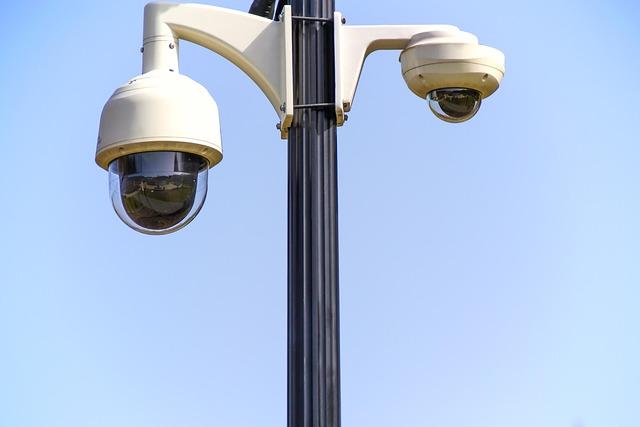
The U.S. Department of War is rolling out a new constellation of AI-enabled cameras across the greater Washington, D.C. area, in what officials describe as one of the most far‑reaching upgrades to the region’s airspace surveillance in years. Built to detect, follow, and classify airborne objects in real time, the system is designed to reinforce the protection of high‑security zones and critical federal facilities, while integrating with existing radar and satellite defenses. Officials say the platform will help security teams rapidly distinguish potential threats-from unauthorized drones to low‑flying aircraft-amid increasingly crowded and complex skies over the nation’s capital.
AI-powered surveillance network ushers in a new era of low-altitude monitoring in Washington
Defense planners have quietly switched on a tightly integrated mesh of AI-enabled optical nodes stationed on rooftops, at federal compounds, and around key infrastructure across the National Capital Region. Working in concert, these nodes deliver a persistent visual layer of monitoring at lower altitudes that traditional radar struggles to cover.
The network aggregates synchronized video streams from hundreds of cameras, then applies machine-learning models to separate drones, commercial aircraft, birds, and environmental clutter. This processed information is pushed into existing command‑and‑control dashboards in near real time, where it is merged with radar tracks and other sensor data.
Engineers overseeing the program explain that the algorithms are not static: they continuously retrain on updated flight behavior, seasonal patterns, and weather conditions. This adaptive learning is meant to sharpen detection accuracy while steadily driving down the false alerts that historically overwhelmed human operators.
Key capabilities of the AI-enabled camera grid include:
- Round‑the‑clock automated visual tracking of low‑altitude objects across urban and suburban corridors
- Instant cross‑validation of aerial activity against approved flight plans and restricted airspace boundaries
- Shared operational picture for military, federal, and local stakeholders via common dashboards
- Discreet alerts for unusual, evasive, or unregistered aerial movements
| Node Type | Coverage Focus | AI Task |
|---|---|---|
| Urban Rooftop | High-density downtown flight lanes | Drone behavior analysis and swarm detection |
| Perimeter Ridge | Outer approach and departure routes | Low-altitude anomaly detection and trajectory deviation spotting |
| Federal Facility | Sensitive and restricted airspace polygons | Intrusion recognition and threat classification |
Military planners describe the architecture as a “visual radar overlay” that enhances, rather than replaces, legacy aerospace defense systems. Camera feeds are routed through hardened government cloud environments, where pattern-recognition engines correlate visual signatures with radar returns, aircraft transponders, and historical flight databases.
This layered fusion approach is intended to give decision‑makers a more reliable, multi-source view of an unfolding incident within seconds, supporting more calibrated responses instead of blanket shutdowns or overbroad restrictions. While civil liberties advocates are already examining the program’s scope, defense officials maintain that the cameras are tuned to monitor activity in the sky, not to focus on identifiable individuals on the ground, and that stringent audit trails govern how imagery is archived, accessed, and exchanged across agencies.
Advanced imaging systems target faster threat detection and fewer false alarms
At the technical level, the new surveillance layer relies on a blend of multi‑spectral optics, embedded AI processors, and encrypted communications links to continuously scan the complex airspace above Washington. Rather than depending on a single radar return or optical cue, the system combines inputs from infrared, low‑light, and high‑definition daytime cameras to sort ordinary activity from genuine threats.
Defense officials say this multi‑sensor fusion helps the system cut through visual noise generated by city lighting, overlapping flight paths, and variable weather. The goal is to reduce the cognitive burden on human analysts while retaining clear human oversight of any enforcement decision. Initial field tests suggest that automated classification improves the system’s ability to ignore benign objects-such as hobbyist drones flown in approved zones or scheduled commercial flights-thereby reducing unnecessary security escalations.
Program engineers note that the underlying models have been trained on extensive libraries of flight profiles and visual signatures, spanning everything from small quadcopters to business jets. This training enables more precise anomaly detection when an aircraft deviates from expected behavior or an unregistered drone appears near critical assets.
Key performance targets for the Washington deployment include:
- Accelerated identification of unauthorized drones and low‑flight aircraft in sensitive corridors
- Lower false alarm rates in high‑traffic sectors and during major public gatherings or events
- Stronger coordination among federal, state, and local responders through standardized threat notifications
- Richer evidentiary records using time‑stamped, high‑resolution visual logs that support after‑action reviews
Recent aviation safety reports highlight why this matters: the Federal Aviation Administration recorded thousands of drone sightings near U.S. airports and critical facilities in the last few years, with a noticeable concentration around large metropolitan regions. Against that backdrop, defense officials argue that AI-enabled cameras offer a way to quickly separate real risks-such as drones loitering near runways or federal buildings-from innocuous or misreported incidents.
| Metric | Legacy Systems | AI-Enabled Cameras |
|---|---|---|
| Average alert time | 2-3 minutes from initial detection to operator warning | Often under 30 seconds from first sighting to classified alert |
| False alarm rate | High in congested urban airspace and complex weather | Markedly reduced through multi-sensor and AI-driven filtering |
| Operator workload | Primarily manual tracking and classification | AI-assisted triage with human review of critical cases |
Expanded integration raises new privacy, data, and oversight questions
The AI-enabled cameras are not being fielded as a stand‑alone tool. Instead, they are being stitched into a broad ecosystem of radar, satellite, and terrestrial sensors already active throughout the Washington region. This deep integration amplifies the government’s ability to detect and respond to aerial threats, but it also broadens the footprint of data collection over both federal and civilian spaces.
Civil liberties organizations caution that linking persistent, high‑definition imagery with automated recognition tools and long‑standing defense databases could create a level of continuous observation without modern precedent. Internal planning documents referenced by reporters describe test efforts in which video streams may be cross‑referenced with watchlists and location records, raising fresh questions about retention periods, downstream use of data, and the legal framework that governs such activities.
Defense officials insist that “robust governance mechanisms” are built into the architecture, but public details remain limited, heightening unease among privacy researchers and members of Congress. Oversight duties appear distributed across multiple agencies, which watchdog groups argue could dilute clear lines of responsibility when mistakes occur.
Among the most frequently raised concerns are:
- Data retention rules for footage that does not relate to any security incident, including incidental images of bystanders.
- Interagency data sharing practices with law enforcement and intelligence bodies, and the circumstances under which sharing is permitted.
- Automated “anomaly” flagging criteria, which are often opaque to the public and may not be easily contestable.
- Limited transparency around audit results, system performance, and the frequency or cause of serious errors.
| Issue | Defense Position | Public Concern |
|---|---|---|
| Data Storage | “Time-limited and secure” with technical protections | Exact timelines, deletion standards, and scope remain unclear |
| Oversight | Shared across multiple agencies and review bodies | Fragmented authority may hinder accountability |
| Transparency | Periodic, often redacted briefings to lawmakers | Insufficient detail for meaningful public scrutiny |
Experts call for clear guardrails, auditability, and accountable AI deployment
Legal scholars, policy analysts, and civil liberties advocates argue that deploying AI-enabled cameras in such a sensitive airspace demands rigorously documented rules, auditable decision chains, and publicly accessible oversight frameworks. In their view, every automated alert-whether it concerns a drone straying into a restricted zone or an aircraft deviating from its flight path-should be traceable to a specific algorithmic process, input data, and human review step.
To avoid what critics describe as “black box security,” several think tanks and advocacy groups have proposed establishing an independent, multi-agency review panel. This body would be charged with regularly assessing system performance, bias, and error rates, as well as ensuring that agencies comply with agreed‑upon data‑handling standards.
Core elements of these proposals include:
- Clear legal limits on how long different categories of data can be retained.
- Explicit authorization procedures for any secondary use of collected footage.
- Accessible mechanisms for pilots, businesses, and communities to challenge or correct false positives.
- Regular public reporting on incidents, misuse, and systemic failures.
In parallel, defense officials have indicated a willingness to explore layered governance models that can be explained to both lawmakers and the public without revealing operationally sensitive details. Draft guidance under review would blend technical constraints with procedural rules, such as:
- Tiered access controls that limit raw, identifiable data to a small group of vetted analysts with mission need.
- Mandatory human review before any AI-generated alert results in enforcement or punitive action.
- Routine transparency reports outlining how often the system is used, the volume of alerts, and how errors are corrected.
- Defined redress pathways so that individuals or organizations affected by erroneous flags can seek review and remedy.
| Safeguard | Primary Goal |
|---|---|
| Independent Audits | Validate accuracy, measure bias, and drive corrective action |
| Incident Logging | Create a traceable record of alerts, decisions, and outcomes |
| Data Minimization | Reduce long-term privacy exposure by limiting unnecessary collection and storage |
| Public Briefings | Keep stakeholders and communities informed about system scope and safeguards |
Closing Remarks
As federal agencies continue expanding AI-enabled imaging and surveillance platforms across the National Capital Region, debates over transparency, legal authority, and long‑term policy limits are poised to intensify. For now, defense officials frame the upgraded AI-enabled camera network as a targeted response to evolving aerial threats, emphasizing its role in shielding critical government sites and densely used commercial flight corridors.
Whether the technology can simultaneously deliver improved security and uphold civil liberties will hinge on how it is governed in the coming years. With additional deployments under consideration and new funding likely to surface in upcoming budget cycles, Washington’s airspace is emerging as an early proving ground for how far-and how quickly-AI-driven surveillance will be allowed to advance in a democratic society.