

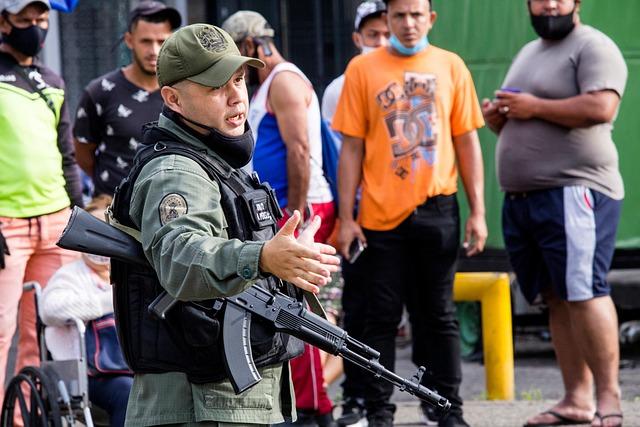
A National Guard soldier who was shot near the White House during a recent wave of unrest in Washington, D.C., has died, President Donald Trump confirmed, as reported by NBC News. The fatal incident, occurring within sight of one of the most heavily guarded federal complexes in the country, has intensified debate over security in the nation’s capital and the vulnerability of Guard units called up during periods of civil tension. While federal, military, and local agencies continue to piece together what happened, officials and community leaders are confronting larger questions about public safety, protest management, and the role of military forces in domestic crises. The following sections detail the known facts of the shooting, reactions from the White House and the Pentagon, and how this tragedy fits into the broader climate of unrest and security measures in Washington.
What happened: the shooting near the White House and initial security lockdown
Early investigative reports from law enforcement and National Guard officials indicate that the shooting unfolded shortly after sunset along a reinforced security perimeter just beyond the White House complex. The Guardsman was posted in an area that had been reinforced due to demonstrations and heightened alert levels.
Witnesses describe a brief but intense confrontation in which a single individual moved quickly toward a blocked-off sector. Security personnel shouted multiple commands for the person to stop before gunfire erupted. Within moments, the quiet of the evening was replaced by sirens and shouted orders as law enforcement vehicles converged on the scene.
Radio traffic captured in the minutes after the shooting suggests that responders initially feared there might be more than one assailant. That uncertainty led authorities to shut down nearby corridors, divert foot traffic, and intensify screening at adjacent checkpoints until the situation could be clarified.
Officials from several agencies later described the security response as following established protocol. Units from the U.S. Secret Service, U.S. Park Police, and the D.C. Metropolitan Police Department moved in rapidly to stabilize the site, provide medical care, and contain any potential spillover threat. Their coordinated actions included:
- Immediate trauma care delivered by on-scene medics and federal personnel trained in emergency response.
- Fast lockdown of adjoining checkpoints, access points, and screening lanes to prevent further incursions.
- Integrated command-and-control communications between local and federal operations centers.
- Initial threat evaluation to determine whether the shooter had accomplices or had planted any other dangers in the area.
| Approximate Timeline | Primary Action Taken |
|---|---|
| 00-02 minutes | Gunshots reported; security perimeter frozen and sealed |
| 03-07 minutes | Life-saving measures and on-the-spot medical care |
| 08-15 minutes | Evacuation to a nearby hospital; expansion of lockdown zone |
This rapid sequence reflects the increasingly layered security posture in Washington, D.C.-a city that has seen some of the largest demonstrations in recent U.S. history. According to data compiled by several research groups, major protests and political gatherings in the capital have grown more frequent and more complex to manage over the past decade, putting added pressure on coordination between the Secret Service, local police, and National Guard units when they are deployed.
Who he was: Staff Sgt. Daniel Morales and the mission that brought him to D.C.
Authorities identified the fallen Guardsman as Staff Sgt. Daniel “Danny” Morales, a 29-year-old National Guard soldier from Des Moines, Iowa. He had served eight years in the Guard and completed two overseas deployments before being called to active duty in Washington.
Friends, colleagues, and relatives describe Morales as disciplined and reserved, the type of noncommissioned officer who volunteered for long shifts so that younger soldiers could rest. He was a standout athlete in high school and the first in his immediate family to enlist, a decision he reportedly framed as a way to create stability and opportunity back home. Off the drill field, he worked as a mechanic, balancing civilian employment with Guard obligations.
- Age: 29
- Hometown: Des Moines, Iowa
- National Guard Service: 8 years
- Overseas Deployments: Afghanistan and Kuwait
| Position Held | Core Responsibility | Deployment Area |
|---|---|---|
| Platoon Sergeant | Convoy and route security operations | Kabul Corridor |
| Squad Leader | Installation and base protection | Camp Arifjan, Kuwait |
| Team Chief | Crowd management and area security | Downtown Washington, D.C. |
Morales’s unit deployed to the nation’s capital under an emergency activation order intended to reinforce security amid escalating protests and demonstrations around federal buildings. Pentagon guidance has increasingly emphasized that such missions require balancing protection of federal property with respect for constitutional rights, a tension that has drawn scrutiny from civil liberties advocates and lawmakers alike.
According to Guard tasking documents reviewed by NBC News, Morales was part of a quick-reaction force responsible for rotating coverage along the outer ring of the White House security zone. His assignment blended riot-control readiness, traffic diversion, and crowd de-escalation techniques. His written orders highlighted three central objectives: defend key federal facilities, support local law enforcement efforts, and reduce confrontations with civilians whenever possible. Those directives underscored how politically sensitive domestic deployments have become, especially in urban centers where residents and demonstrators are in close proximity to armed troops.
Political fallout and public response to the shooting and Trump’s statement
Reaction from political leaders, advocacy organizations, and the broader public was swift and divided, mirroring the deep national rifts over demonstrations near the White House and the use of federal force during unrest.
Members of Congress from both parties issued public statements expressing sympathy for Morales’s family while raising concerns about how the Guard is being used in high-tension environments. Some lawmakers called the death a tragic consequence of deploying citizen-soldiers into complex protest zones; others framed it as evidence that current security arrangements are inadequate to protect both demonstrators and those assigned to safeguard federal sites.
Advocacy groups, including civil liberties and veterans’ organizations, demanded clarity on the rules of engagement and questioned whether Guard troops are being given sufficient training, equipment, and legal guidance before being placed in close contact with large crowds. On social media, posts honoring Morales appeared alongside calls for an independent review of crowd-control tactics. Organizers of demonstrations in several major cities incorporated moments of silence into their events as the incident quickly became part of a broader debate about policing, protest rights, and domestic military support.
- Statements of condolence from governors, mayors, and state adjutants general across the country.
- Public criticism from civil liberties and human rights organizations questioning the overall deployment strategy.
- Increased focus on the legal and operational framework guiding National Guard missions in urban protest settings.
- Vigils and memorial gatherings held near protest sites and state capitols in honor of the fallen Guardsman.
In a short but highly publicized address from the White House, President Trump confirmed that Staff Sgt. Morales had died from his injuries. He described Morales as a “patriot who put service above self” and pledged that federal authorities would conduct a full investigation to determine what led to the shooting. Delivered as demonstrations continued just blocks away, his remarks were filtered through familiar partisan narratives: supporters pointed to his emphasis on restoring order and backing law enforcement; critics argued that the administration was using the tragedy to rationalize a tougher posture in the streets of D.C.
The White House signaled that a coordinated, multi-agency investigation would move forward under federal oversight. Simultaneously, several members of Congress pushed for independent review mechanisms and greater transparency, warning against any appearance of political interference in a case that has already become emblematic of the broader conflict over security and civil liberties.
| Stakeholder | Primary Response |
|---|---|
| White House | Confirmed death; pledged comprehensive federal investigation |
| Congress | Called for oversight hearings and detailed accountability measures |
| Advocacy Organizations | Pressed for review of use-of-force policies and deployment criteria |
| General Public | Divided between strong support for security forces and concern about militarization |
This public debate echoes broader national trends. Over the past several years, polling has shown a widening gap in attitudes toward law enforcement and federal intervention during protests, with views often splitting along partisan and racial lines. The death of a National Guard member so close to the White House adds a deeply personal dimension to that debate.
Improving Guard safety: strengthening protections in high-risk federal security zones
In the aftermath of the shooting, military planners and security officials are discussing a range of measures designed to better protect National Guard soldiers operating around high-value federal targets. The proposals, some of which are already being quietly implemented, aim to refine how Guard units are integrated into complex urban security environments.
Key options under review include more robust armored transport for mobile teams, upgraded ballistic gear beyond standard-issue vests and helmets, and dedicated real-time coordination centers that connect local police, Secret Service, and Guard commanders via secure digital channels. Additional improvements being considered focus on the physical layout of protest zones, such as clearly marked safe lanes for troops and observers, enhanced lighting around choke points, and expanded surveillance coverage to better monitor potential threats.
- Upgraded protective equipment for Guardsmen on foot, including higher-level body armor and eye and head protection.
- Tighter force-protection guidelines for mixed civilian-military environments around federal buildings.
- Forward-positioned medical teams capable of reaching wounded personnel and civilians within minutes.
- Mandatory briefings based on current intelligence before each mission cycle, covering likely flashpoints and emerging threats.
- Mental health resources and decompression protocols for Guardsmen rotating off high-stress assignments.
| Focus Area | Recommended Action | Projected Implementation |
|---|---|---|
| Perimeter Security | Fortify static posts with updated barriers, lighting, and camera systems | Immediate |
| Mobility & Transport | Deploy armored or hardened vehicles in proximity to volatile demonstration zones | Within 30 days |
| Training & Preparedness | Conduct scenario-based drills for urban gunfire, ambush, and crowd surge incidents | Within 60 days |
| Oversight & Review | Establish joint review panels for all significant injuries or attacks on Guard forces | Ongoing |
Experts in civil-military relations also emphasize that policy changes must address not only physical protection, but also clarity of mission. They argue that National Guard troops are most effective-and safest-when their tasks are strictly defined, legal authorities are transparent, and communications with local officials and community leaders are open and consistent.
Looking ahead: what the incident means for security and public trust
The investigation into the shooting near the White House remains in progress, with federal, military, and local agencies reviewing video footage, radio logs, and eyewitness accounts. While officials have not released a schedule for when their findings will be made public, the outcome is expected to shape how future National Guard deployments in Washington, D.C., and other major cities are planned and executed.
In the meantime, the death of Staff Sgt. Daniel Morales has become a powerful symbol of the hazards facing service members sent into the middle of domestic unrest. It raises pressing questions about how to safeguard both public spaces and those sworn to protect them during moments of heightened tension. As protests and large-scale gatherings remain a regular feature of political life in the capital, policymakers are under mounting pressure to refine security strategies that protect federal property, uphold civil liberties, and reduce the risk of further loss of life.
No final decisions have been announced regarding policy shifts, new security guidelines, or changes in the National Guard’s role. Until those choices are made, Morales’s death stands as a stark reminder of the volatility that can surround demonstrations at the seat of government-and of the human cost borne by citizens in uniform who are called upon to maintain order on America’s streets.