


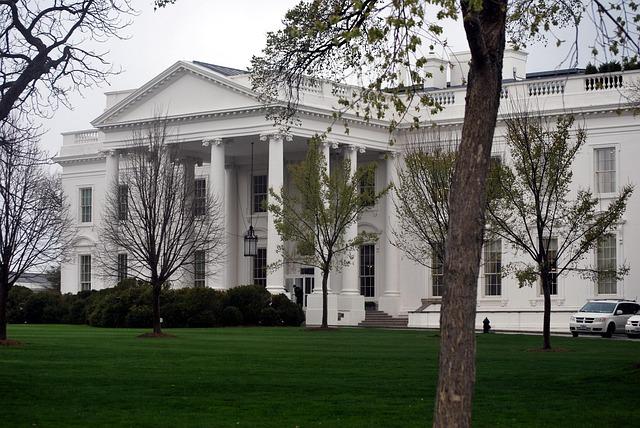
Residents across Washington DC are voicing growing alarm over Donald Trump’s renewed push to deploy the National Guard in the nation’s capital in response to rising youth crime. While supporters of the plan portray a military-style crackdown as a necessary show of strength against carjackings, robberies and assaults involving teenagers, many Washingtonians counter that troops in the streets would sidestep the real drivers of violence-poverty, school disengagement, untreated trauma and a shortage of meaningful youth services.
In a city still wrestling with questions of policing, race and public trust, critics warn that activating the National Guard could intensify tensions, further criminalize young people and offer, at best, a short-lived sense of order without addressing why so many teens are being pulled into dangerous situations in the first place.
National Guard in DC: Residents Question Whether Troops Address Root Causes of Youth Crime
On sidewalks, in church basements and at Advisory Neighborhood Commission meetings across DC, the dominant mood is less partisan outrage and more a deep, anxious skepticism. Residents say the symbolism of armored trucks and camouflage uniforms sends the wrong message to communities already under heavy surveillance.
Parents and youth advocates describe a mismatch between what they see on the ground and what is being offered from above: instead of counselors, mentors and social workers, they see talk of soldiers, checkpoints and curfews. Longtime community leaders point to the city’s stark racial geography-majority-Black neighborhoods east of the Anacostia River in Wards 7 and 8 are far more accustomed to police sweeps than to well-funded recreation centers or job hubs.
Many residents ask whether a short burst of visible force can possibly untangle the overlapping problems that surface in police reports and juvenile court records: chronic absenteeism, school suspensions, housing instability, grief from gun violence, and the lure of the underground economy.
Data Shows Complex Patterns, Not a Simple Law-and-Order Problem
Police statistics reflect a complicated picture. According to DC crime dashboards and recent federal data, youth involvement in certain violent offenses has increased in the last few years, even as other categories have flattened or fallen. Experts note that teens involved in carjackings or robberies are often facing:
- Disconnection from school or frequent suspensions
- Family financial strain and unstable housing
- Exposure to neighborhood shootings and repeated loss
- Limited access to mental health care and after-school activities
Criminologists argue that these patterns resemble those in other major US cities, where youth violence rises when social supports and economic opportunities erode. Against this backdrop, community organizers in Washington DC are pushing for strategies calibrated to the complexity of the data, not just the visibility of the headlines.
Residents and Organizers Promote Alternatives to a Military Response
Instead of the National Guard, grassroots coalitions are calling for a layered public-safety strategy that balances accountability with robust prevention. They highlight several efforts that they say have been underfunded or overshadowed in the rush toward a crackdown:
- Violence interruption programs that use trusted neighborhood mediators to defuse conflicts before they become shootings.
- Targeted mental-health services for teenagers living with chronic stress, grief and trauma.
- Evening and weekend job pathways developed with local businesses, unions and training centers so teens can earn money legitimately.
- Restorative justice approaches that keep first-time youth offenders connected to school and community rather than cycling them into detention.
Advocates argue that these strategies, when adequately funded and guided by data, are more likely to shift long-term trends than a short-term show of force.
| Response Type | Primary Focus | Likely Outcome |
|---|---|---|
| National Guard Deployment | Immediate deterrence and crowd control | Short-term visibility, fragile community trust |
| Community-Based Programs | Prevention, support and engagement | Lower recidivism, stronger neighborhood ties |
| Data-Driven Outreach | Directing services to hotspots and at-risk youth | Resources aligned with actual risk patterns |
Overpoliced Neighborhoods Fear Military Presence Will Widen the Trust Gap
In many DC neighborhoods, especially those with a long history of aggressive law enforcement, the idea of soldiers patrolling residential streets is deeply unsettling. Local organizers, clergy and tenant association leaders describe it as an escalation that could permanently damage already fragile relationships between young people and public institutions.
Residents who live near public housing complexes and major corridors say they are accustomed to seeing marked police cars, unmarked vehicles and surveillance cameras. To them, replacing or supplementing those visible tools with military convoys and armed checkpoints risks hardening the perception that their neighborhoods are being managed as security zones, not nurtured as communities.
Fears of Criminalizing Youth Rather Than Supporting Them
Mentors and youth workers worry that teenagers, already wary of police interactions, will respond to a Guard presence by avoiding public spaces altogether-skipping school, ducking jobs programs and pulling further away from adult supports. They point out that:
- Recreation centers in some high-need areas have reduced hours or outdated facilities.
- Job-training centers for young adults frequently have waiting lists or limited slots.
- Counseling and therapy options for low-income youth are often scarce or difficult to access.
Against that reality, the swift mobilization of the National Guard sends a clear signal about priorities: armored vehicles can appear on short notice, but funding for youth centers or trauma care moves at a crawl.
Community leaders say they are not opposed to safety-they are the ones calling 911 when violence erupts-but they want a strategy grounded in partnership, not occupation. They are pushing for a plan that includes:
- Transparent, two-way communication between city officials, residents and youth organizers about any security changes.
- Rigorous de-escalation training and narrowly defined roles for any Guard personnel, with clear limits on their authority.
- Substantial investment in schools, mental-health services, job pipelines and housing support alongside any enforcement measures.
- Independent community oversight of expanded security operations, including complaint processes and public reporting.
| What Residents Say They Need | What They See Proposed |
|---|---|
| Violence interruption and mediation | Armed patrols and guard units |
| Jobs, apprenticeships and paid training | Checkpoints and vehicle searches |
| Youth centers and safe spaces open late | Military vehicles at key intersections |
| Trusted local leaders at the table | Outside forces with limited neighborhood ties |
Experts Push for Youth Services, Mental Health Support and Jobs Instead of Short-Term Crackdowns
Criminologists, social workers and community organizers widely contend that relying on the National Guard to manage youth crime in DC misdiagnoses the problem. They argue that the conditions funneling teens into high-risk behavior-housing insecurity, lack of steady income, exposure to violence and limited mental-health care-cannot be solved with curfews and patrols.
In interviews and public forums, experts describe an all-too-familiar cycle: adolescents move between overcrowded classrooms, underresourced schools, shuttered recreation centers and unstable living situations. When conflict erupts-whether in a hallway, on a bus or online-there are few safe outlets or adults with time and training to intervene early.
Investing in Prevention Over Punishment
Instead of armored vehicles, coalitions across DC are urging a comprehensive package that embeds support into the daily lives of young people most at risk. Their proposals focus on keeping youth connected to constructive opportunities, particularly during peak crime hours in the late afternoon and evening. Among their recommendations:
- 24/7 youth drop-in centers staffed with mental health clinicians, conflict mediators and career counselors, located in neighborhoods with the highest violence levels.
- Paid apprenticeships tied to public infrastructure projects, health care, tech and green jobs, so teens can earn money while building a résumé.
- Trauma-informed staffing in schools, including full-time social workers, psychologists and restorative justice coordinators to address conflict before it escalates.
- Guaranteed summer employment for teenagers in high-arrest zip codes, with placements in city agencies, nonprofits and private employers.
National research supports this prevention-first approach. Studies from institutions like the Brookings Institution and the Urban Institute have found that well-designed summer jobs programs can cut violent-crime arrests among participants, while school-based mental-health services correlate with reduced suspensions and better academic outcomes.
| Priority Area | Core Goal |
|---|---|
| Mental health clinics and mobile crisis teams | Reduce youth crises, retaliation and self-harm |
| Job and apprenticeship programs | Create stable income and credible future pathways |
| Evening and weekend recreation | Provide safe, supervised spaces during peak risk hours |
Policy Advocates Call for Coordinated, Long-Term Public Safety Plans Beyond Symbolic Deployments
Policy experts argue that deploying the National Guard in DC is less a coherent public safety strategy than a high-visibility move aimed at signaling toughness. They warn that such symbolic gestures often fade once cameras leave, leaving communities with the same structural conditions that produced the crisis.
Advocates are pressing the White House, Pentagon and DC leadership to develop a shared, long-term framework for public safety-one that spans administrations and is grounded in data, community input and clear accountability. Rather than episodic surges of force, they endorse models that combine federal resources with neighborhood-led initiatives.
Key elements of this kind of coordinated approach include:
- Multi-year, stable funding for violence interruption, youth mentoring and family-support programs, buffered from election-cycle swings.
- Common performance metrics used by federal, city and nonprofit partners to track progress beyond arrest counts, including school attendance, job placement, recidivism and mental health outcomes.
- Formal coordination hubs where community groups, social service agencies, law enforcement and prosecutors regularly review hotspots, share data and co-design responses.
- Transparent public reporting that allows residents to see which interventions are being tried, which are underperforming and which are working well enough to expand.
| Short-Term Tactic | Long-Term Strategy |
|---|---|
| National Guard patrols | Community-driven violence intervention networks |
| Curfew sweeps and mass stops | Nighttime youth centers, safe transit and outreach teams |
| One-off enforcement raids | Comprehensive gun trafficking investigations and tracing |
Balancing Federal Power With Local Democracy
Behind these debates lies a broader concern: that federal muscle could overshadow local democracy and neighborhood voices in Washington DC. Residents have no voting representation in Congress, yet decisions about their streets are often made in secure conference rooms blocks away from the communities most affected.
Advocates insist that any expanded federal role in DC public safety must come with explicit safeguards:
- Robust civil rights protections and clear limits on surveillance and use of force.
- Public criteria explaining when and how federal intervention, including National Guard deployment, can be triggered or expanded.
- Mandatory community consultation before major changes in security posture, especially in neighborhoods with a history of overpolicing.
- Dedicated funding streams that redirect a significant share of security budgets into housing stability, youth employment, mental-health care and reentry support.
Without this recalibration, they warn, Washington risks repeating a familiar pattern: dramatic, short-lived enforcement surges followed by retreat, while the root causes pulling young people into carjackings, crews and informal economies remain largely untouched.
Concluding Outlook: DC’s Youth Crime Debate as a Test of America’s Public Safety Priorities
As Washington DC braces for the potential arrival-and political fallout-of a National Guard deployment, residents and officials remain sharply divided over whether a military presence can genuinely reduce youth violence or simply paper over deeper inequalities.
For many in the city, the push to bring troops into DC’s neighborhoods has become a proxy for a larger question: will the nation’s capital confront youth crime primarily through force, or through a sustained investment in opportunity, stability and care?
What is clear is that the communities most affected by crime are still waiting for solutions that do more than increase the number of uniforms on the street. Until policymakers match enforcement tools with equally visible, long-term commitments to housing, jobs, mental health and education, the tension between short-term security and lasting reform will continue to define not only DC’s streets, but the national conversation over how America chooses to police-and support-its own capital.


