



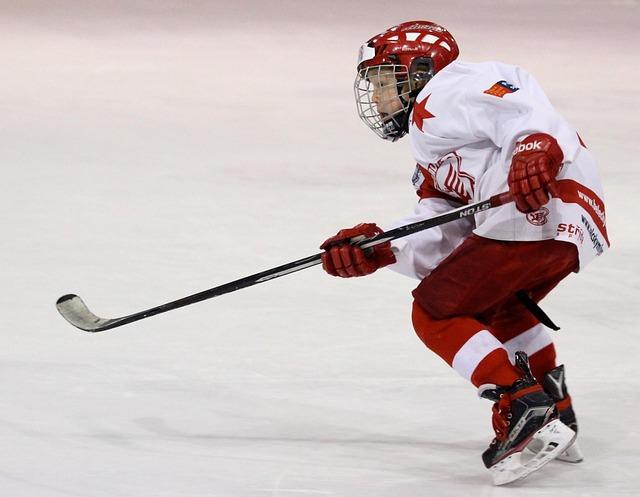
The Washington Capitals roll into the 2017 Stanley Cup Playoffs with more on the line than at any point in the Alex Ovechkin era. Back-to-back Presidents’ Trophies, a roster stacked with elite talent, and a defensive group built to smother opponents have created a simple, unforgiving benchmark in Washington: lift the Stanley Cup or consider the season a failure. This isn’t just another hopeful run-it’s a reckoning for a franchise defined as much by regular-season dominance as by postseason frustration. In the nation’s capital, the message is unmistakable: this spring, it’s Stanley Cup or bust.
Why the Capitals’ 2017 Stanley Cup window is both wide open and dangerously fragile
The pressure surrounding Washington is the product of timing as much as talent. The roster has been engineered for the present, not the distant future. With Alex Ovechkin and Nicklas Bäckström in the latter half of their primes and several critical contributors on expensive or expiring contracts, the organization’s margin for error is razor-thin.
Head coach Barry Trotz faces a delicate balancing act: manage minutes for an aging but star-studded core, keep the room unified under intense scrutiny, and maintain energy through a physically punishing spring. That challenge is amplified inside a brutal Metropolitan Division, where one misstep can swing an entire series. Internally, everyone understands what’s at stake-another early exit could force the franchise into sweeping changes, reshaping the roster, reevaluating the bench, and inevitably reopening debates about Ovechkin’s legacy.
- Cap Crunch & Depth: Washington’s premium talent eats a large share of the salary cap, leaving limited room to stack the bottom six and third defense pair. Those depth units must punch above their pay grade.
- Goaltending Under the Microscope: Braden Holtby, a Vezina-caliber goaltender, has to shoulder a heavy load against layered screens, tips, and second-chance opportunities that define playoff hockey.
- Playoff Baggage: Years of postseason letdowns-often to familiar rivals-add a psychological hurdle. One bad bounce can trigger the feeling of “here we go again.”
- Special Teams Sustainability: The power play, built around Ovechkin’s devastating one-timer from the left circle, must stay varied and creative to avoid becoming predictable in seven-game chess matches.
| Key Pressure Point | Risk in 2017 Run |
|---|---|
| Top-Six Scoring | Too much offensive burden on Ovechkin’s line in low-scoring games |
| Blue-Line Matchups | Heavy reliance on John Carlson’s minutes against high-speed opponents |
| Mental Resilience | Responding to swings in momentum, especially in decisive Game 7 situations |
Star power vs. depth: how the Capitals must elevate their entire lineup
For the 2017 Capitals, the difference between another bitterly short run and a defining march to June will be decided by how forcefully their biggest names seize critical moments. Alex Ovechkin, Nicklas Backstrom, and Braden Holtby can’t simply “play well”-they must impose their will when the pressure peaks.
Ovechkin needs to consistently convert on the power play and drive 5-on-5 chances, especially in tight, one-goal contests. Backstrom must neutralize other elite centers, dominate on the puck, and dictate tempo in all three zones. Holtby has to provide calm, technically sound goaltending that kills budding momentum shifts before they snowball. In a stacked Eastern Conference, meeting expectations isn’t enough; Washington’s stars have to exceed them when the clock winds down and every possession is magnified.
But star-driven success in the playoffs is rarely solo work. The Capitals’ blueprint hinges on their supporting cast changing games, not just filling in shifts. The middle-six forwards, bottom-six grinders, and second defense pair must tilt the ice with structure, energy, and discipline.
Depth players will be asked to own key details: winning net-front battles, controlling the boards, maintaining structure through neutral-zone traffic, and limiting turnovers that morph into breakaways and odd-man rushes. The kind of subtle, “small” mistakes that burned Washington in previous springs can’t resurface.
Key responsibilities across the depth chart include:
- Relentless forecheck pressure to disrupt opposing breakouts, create chaos on retrievals, and generate turnovers below the hashmarks.
- Efficient defensive-zone exits through quick, smart first passes and strong support, reducing Holtby’s exposure to repeat chances.
- Consistent secondary scoring so opponents pay a price for overloading coverage on Ovechkin’s line.
- Reliable special teams depth, particularly a second penalty-kill unit that can withstand extended zone time without breaking down.
| Unit | Key Task | Playoff Impact |
|---|---|---|
| Top Line | Drive possession, capitalize on premium chances | Establishes series identity and offensive standard |
| Middle Six | Exploit weaker defensive matchups | Builds scoring separation and punishes depth flaws |
| Bottom Six | Energy, physical presence, key penalty-kill minutes | Wears down opposing stars over long series |
| Top Defense Pair | Limit top scoring threats, manage transitions | Controls pace, space, and quality of chances |
| Goaltending | Make timely saves, control rebounds, maintain composure | Turns razor-thin games into series-defining wins |
Strategic evolution: adjustments the Capitals need to survive the Eastern Conference gauntlet
In the modern NHL, talent alone doesn’t carry teams through four brutal rounds; it must be paired with a flexible, detail-driven game plan. For the 2017 Washington Capitals, that starts with structure, tempo, and adaptability.
Defensively, Washington needs to seal up the neutral zone. In previous playoff runs, the Capitals have been burned by quick-strike transition teams. Better gap control from defensemen, smarter support from centers, and compact layers through the middle of the ice are mandatory to slow high-octane threats such as Pittsburgh. Wingers have to commit to tracking back and collapsing low before sprinting out for counterattacks.
Offensively, extended zone time has to produce dangerous looks, not just inflated shot totals. That requires sharp low-to-high puck movement, rapid puck rotation into the slot, high-percentage one-timers, and consistent net-front traffic to take away the goaltender’s eyes. The Capitals must convert heavy territorial advantages into goals, not moral victories.
On the bench, Barry Trotz and his staff will be judged on more than pre-series preparation. In-series and in-game adjustments-line juggling, defensive pair tweaks, matchup choices, and special-teams looks-will influence whether Washington can adapt faster than its opponents. Emotional detachment will be critical; decision-making can’t be driven by name recognition or past reputation.
Strategic levers that could decide tight Eastern Conference clashes include:
- Rolling four lines to match or exceed the tempo of teams like the Penguins and Rangers, preventing top players from being overtaxed too early in a series.
- Situational faceoff specialization, ensuring that defensive-zone and late-game draws are taken by the most reliable centers.
- Dynamic power-play alignments that reposition Ovechkin and vary entry patterns to stay a step ahead of opponent scouting reports.
- Shot-quality and volume management to limit clean looks against Holtby on the rush, even if that means occasionally conceding harmless outside attempts.
| Adjustment Area | Primary Focus | Playoff Impact |
|---|---|---|
| Neutral Zone | Disciplined gaps, layered support, smart backpressure | Neutralizes elite transition and rush offenses |
| Special Teams | Unpredictable power-play and aggressive penalty kill | Turns tight, low-scoring games into winnable edges |
| Bench Management | Rapid line adjustments, matchup exploitation | Finds advantages in long, tactical series |
If the Stanley Cup bid collapses: how the Capitals’ front office and coaching staff must respond
For the Capitals’ leadership, failure to convert this “Stanley Cup or bust” season into a deep playoff run won’t allow for a slow, reflective offseason. It will require swift, clear-eyed evaluation and decisive action.
The front office’s first task is an honest, unsentimental review of the core. That means evaluating whether to extend or move established veterans, identifying contracts that constrain future flexibility, and determining which prospects are ready to assume meaningful roles. The days of leaning solely on name recognition are over; roster decisions must be grounded in performance data, scouting, and future cap projections.
Key questions will include: Can this version of the core still contend in two or three years? Which players are declining faster than anticipated? Are there internal candidates ready to step into top-nine or top-four roles at a lower cost?
Behind the bench, scrutiny will be equally intense. The organization will dissect systems, special-teams plans, and game-management decisions against top-tier opponents. If the conclusion is that tactical rigidity or ineffective adjustments cost Washington another opportunity, ownership may push for significant coaching changes rather than marginal tweaks.
To reposition the franchise for sustained contention rather than one more desperate push, the Capitals must prioritize:
- Reshaping the roster profile toward higher speed, versatility, and forechecking pressure, particularly on the wings.
- Reassessing special-teams schemes that didn’t hold up under playoff pressure, including entries, setups, and in-series adaptations.
- Elevating NHL-ready prospects into meaningful roles instead of sheltering them at the margins of the lineup.
- Targeting value signings-players who may be undervalued elsewhere but fit a faster, more aggressive team identity.
| Priority Area | Front Office Action | Coaching Response |
|---|---|---|
| Roster Core | Explore trades, buyouts, and restructures | Reframe leadership roles and ice-time hierarchy |
| Team Identity | Add speed, forecheck intensity, and versatility | Implement a quicker transition game and aggressive pressure |
| Prospect Usage | Protect young talent from cap-driven moves | Integrate prospects into middle-six roles and penalty kill |
Final word: what “Stanley Cup or bust” truly means for Washington
The 2017 postseason represents a tipping point for the Washington Capitals. With an established core, elite goaltending, and a roster engineered for playoff-style hockey, anything short of a deep run will be viewed as a fundamental failure of this era. The organization has invested heavily-financially, emotionally, and strategically-to give this group its best shot at finally breaking through.
As the puck drops on the 2017 Stanley Cup Playoffs, the narrative around Washington shifts from “potential” to “proof.” For Alex Ovechkin, the front office, and a fan base that has waited through years of near-misses, the stakes couldn’t be clearer.
In Washington, there is no safety net. It’s Stanley Cup or bust.