
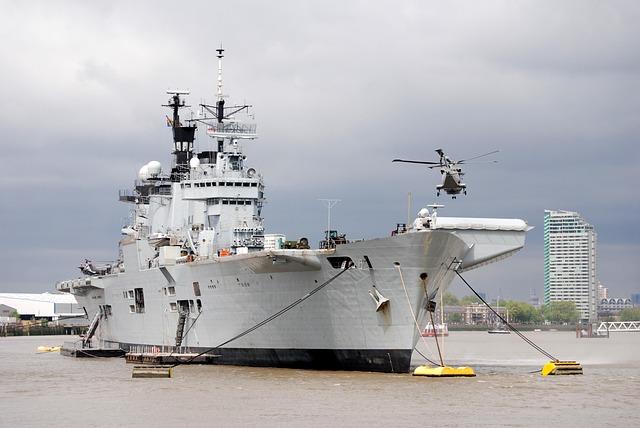
The nuclear-powered aircraft carrier USS George Washington (CVN 73) has returned to Fleet Activities Yokosuka, underscoring the United States’ enduring maritime presence in the Western Pacific and reaffirming its security alliance with Japan. Following an extensive maintenance and modernization period, the carrier’s arrival marks a renewed phase of forward-deployed naval forces (FDNF) in the region. As the flagship resumes operations in the U.S. 7th Fleet area of responsibility, American and Japanese officials are emphasizing its role in sustaining deterrence, operational readiness, and regional stability amid increasing security challenges across the Indo-Pacific.
Renewed carrier presence in Western Pacific reinforces allied security
Operating once again from Fleet Activities Yokosuka, USS George Washington (CVN 73) begins a new forward-deployed chapter that strengthens U.S. treaty commitments and reassures partners facing a more complex security environment. Its return adds a highly adaptable maritime force package able to surge across the Western Pacific, support integrated exercises, and maintain a visible presence that bolsters deterrence without relying on crisis-driven deployments.
The carrier’s return aligns with longstanding U.S. obligations to Japan, the Republic of Korea, and other regional allies, providing a credible, day-to-day demonstration of resolve. In an Indo-Pacific where major powers are steadily increasing naval activity-regional defense reports note that over 60% of global maritime trade passes through Indo-Pacific sea lanes-such presence is central to maintaining open access and a rules-based order.
Key elements of the carrier strike group’s mission in the Western Pacific include:
- Joint training with the Japan Maritime Self-Defense Force and other allied fleets to refine combined warfighting skills.
- Freedom of navigation patrols that emphasize the importance of unimpeded commerce and lawful use of the seas.
- Humanitarian assistance preparedness in a region frequently hit by typhoons, earthquakes, and tsunamis.
- Multinational exercises that standardize shared procedures and enhance operational coordination.
| Focus Area | Regional Impact |
|---|---|
| Maritime Patrols | Supports a rules-based maritime order and open sea lanes |
| Allied Exercises | Raises combined readiness and joint interoperability |
| Crisis Response | Improves speed and scale of relief and support operations |
By conducting persistent, routine operations rather than episodic deployments, George Washington’s presence sends a steady signal of commitment, complementing regional initiatives such as expanded trilateral cooperation among the United States, Japan, and the Republic of Korea.
Training and crew readiness boost interoperability with allied navies
With USS George Washington once again forward-deployed, sailors across the ship and its embarked air wing are executing an intensified schedule of bilateral and multilateral exercises. Flight deck operations, strike group planning cells, and air wing squadrons are rehearsing complex scenarios that mirror real-world contingencies, from high-end conflict to non-combatant evacuation and disaster response.
These drills emphasize rapid decision-making, robust damage control, and seamless command-and-control across multiple domains. Liaison officers and exchange personnel from partner navies are becoming a standard feature on watch teams, enabling shared procedures, common terminology, and aligned rules of engagement for maritime security operations throughout the Western Pacific.
Current training priorities include:
- Integrated air and missile defense events with regional partners to test layered defense against emerging threats.
- Combined anti-submarine warfare exercises focused on detecting, tracking, and engaging undersea targets.
- Cross-deck helicopter operations that harmonize safety, maintenance, and flight standards between navies.
- Shared logistics and replenishment concepts that extend on-station endurance for allied task groups.
| Exercise | Key Partner | Focus Area |
|---|---|---|
| Pacific Shield | Japan | Air Defense |
| Sea Link | Australia | ASW |
| Harbor Guard | Republic of Korea | Port Security |
At sea, the strike group is validating new tactics, techniques and procedures that are increasingly harmonized with allied doctrines. Communications teams are stress-testing interoperable data links and secure voice networks, ensuring that ships and aircraft from different nations can plug into a single operational picture in near-real time. Engineering, medical, and damage-control teams are conducting parallel drills with foreign counterparts, reinforcing common standards for emergency response.
This elevated readiness posture is designed not only to discourage aggression, but also to guarantee a rapid, coordinated response to humanitarian crises-such as major earthquakes or typhoons-where multinational naval forces often provide critical first-response capabilities.
Yokosuka community partnerships strengthen people-to-people ties
The return of USS George Washington to Fleet Activities Yokosuka is reshaping the relationship between the ship’s crew and the surrounding city, renewing a long-standing partnership that stretches beyond the base perimeter. Navy leadership and local authorities are expanding initiatives that connect American sailors with residents through education, culture, and public safety.
Programs that take service members into local schools, community centers, and disaster-preparedness events are helping foster mutual understanding and trust. Through language exchanges, joint cultural festivals, and youth mentorship efforts, the presence of the carrier is visible not just on the waterfront, but throughout Yokosuka’s neighborhoods.
Cooperative efforts aimed at strengthening community resilience and quality of life now include:
- Joint disaster-response exercises that integrate base personnel with Yokosuka’s fire, medical, and municipal agencies to refine evacuation and emergency procedures.
- Volunteer outreach in classrooms, elder-care facilities, and environmental projects along the coastline.
- Cultural exchange events featuring music performances, sports tournaments, and food fairs that bring Japanese and American families together.
| Program | Focus | Local Partner |
|---|---|---|
| Harbor Safety Drill | Disaster readiness | Yokosuka Fire Dept. |
| Portside Classroom | Language & STEM | City Schools |
| Blue-Green Shoreline | Coastal cleanup | Local NGOs |
These initiatives complement broader regional cooperation on disaster management. Japan sits along the Pacific “Ring of Fire,” and recent years have demonstrated how combined civil-military planning-such as during major typhoons-can significantly accelerate recovery and reduce human suffering.
Modernization and innovation shape future carrier deployment concepts
The re-deployment of USS George Washington to Yokosuka also highlights an extensive package of modernization upgrades that will influence how future carrier strike groups operate and deploy. Enhanced combat systems integration and advanced command-and-control suites enable the ship to fuse, analyze, and share information at speeds tailored to modern multi-domain operations, where air, sea, space, and cyber activities are tightly intertwined.
Upgraded radar and communications systems give the carrier a more precise, resilient sense of the operating environment, while improved networks enhance secure collaboration with allied forces. Below decks, energy-efficient power systems, predictive maintenance diagnostics, and revamped aviation support infrastructure offer a real-world laboratory for refining lifecycle sustainment and readiness practices across the carrier fleet.
These enhancements are helping shape emerging concepts such as distributed maritime operations, which emphasize dispersed yet networked forces that can complicate an adversary’s targeting and decision-making. The ship is also informing new models of rotational crewing, data-driven readiness assessments, and standardization of joint interoperability.
Among the most closely watched innovations are:
- Integrated sensors that accelerate threat detection, classification, and targeting coordination.
- Networked C2 architectures that support real-time collaboration with U.S. and allied platforms across the Indo-Pacific.
- Digital maintenance tools that leverage analytics to predict failures, cut repair times, and boost availability.
- Optimized air wing support that increases sortie generation and flexibility for missions ranging from deterrence patrols to humanitarian relief.
| Upgrade Focus | Operational Impact |
|---|---|
| Combat Systems | Improved maritime and air domain awareness and faster decision cycles |
| Networks & C2 | Deeper integration with joint and allied forces across the region |
| Maintenance Tech | Shorter repair durations and higher operational availability |
| Aviation Support | More adaptable, sustained flight operations for diverse mission sets |
By pairing these upgrades with evolving deployment strategies, George Washington serves as a live test platform for the next generation of carrier operations in the Indo-Pacific, where rapid technological change and rising competition are reshaping naval warfare.
Key Takeaways
As USS George Washington settles back into its role at Yokosuka, its presence represents far more than the return of a familiar carrier. It reflects the U.S. Navy’s long-term commitment to regional stability, the resilience of the U.S.-Japan alliance, and the ongoing transformation of forward-deployed naval forces in the Indo-Pacific.
With the ship once again in its historic homeport, attention is shifting from transition to execution. In the months ahead, the carrier’s operations, training activities, modernization efforts, and integration with regional partners will offer a clear measure of how this new phase in Yokosuka’s maritime story contributes to deterrence, cooperation, and security across the Western Pacific.