


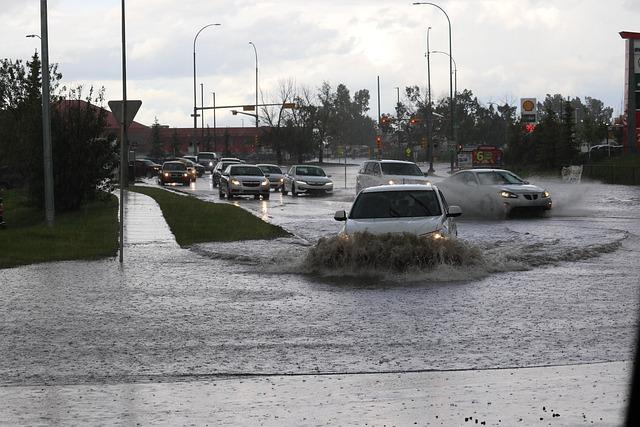
Days of unrelenting winter storms have once again drenched Washington state, pushing rivers past their banks and swallowing roads under muddy, fast-moving water. For many communities in western Washington, the scenes feel painfully familiar to the catastrophic floods of 2021. Fresh evacuation orders, swift-water rescues and heightened landslide warnings are unfolding in areas where homes, farms and roads were only recently repaired. As first responders work around the clock to safeguard lives and property, local leaders say this latest deluge lays bare how precarious the region’s recovery remains-and how urgent it is to prepare for increasingly frequent extreme weather.
Flood-weary communities face another blow as unfinished recovery meets new disaster
Across the floodplains of western Washington, half-completed houses, stacked lumber and faded construction signs tell the story of a recovery still in motion. Many families are living in homes that have only just been made livable after the 2021 deluge. Now, as rivers swell again, they’re watching water climb familiar marks on foundations, wondering whether years of rebuilding will be erased in a single storm cycle.
Construction crews that had been scheduled to pour concrete, reconnect utilities or finish interior work have abruptly shifted into emergency mode-moving equipment to higher ground, filling sandbags and helping with evacuations. Residents who only months ago unpacked the last moving box are repacking essentials, monitoring river gauges on their phones and sleeping in shifts in case they have to leave at a moment’s notice.
County engineers warn that critical infrastructure-particularly aging backroads, temporary bridges and previously damaged levees-never fully recovered from the 2021 floods. Some repairs were stopgap measures intended to buy time; now those quick fixes are buckling under another round of heavy runoff, exposing weak points throughout the region’s transportation and flood-control systems.
Local officials describe a grinding cycle: flood, clean up, plan, delay-and then flood again. Each major storm forces cities and counties to divert staff and money away from long-term projects toward immediate damage control. Small towns that were promised expedited mitigation work report that federal funding, environmental reviews and contractor shortages have slowed nearly every project. In several communities, protective barriers installed after 2021 are already overtopping or failing, forcing emergency managers to prioritize which neighborhoods, farms or roadways they can protect first.
On the ground, the consequences ripple through daily life:
- Homeowners are evacuating once more, even as unresolved insurance disputes from the 2021 disaster linger.
- Businesses that had reopened in downsized or temporary locations are closing their doors again-some signaling this may be permanent.
- Schools are returning to remote instruction as bus routes, rural roads and key connectors disappear under water.
- Farmers are watching winter crops drown and stored hay and feed spoil, compounding multi-year financial losses.
| Community | 2021 Impact | Current Setback |
|---|---|---|
| Riverbend | Dozens of homes gutted | Fresh evacuations, road closed |
| Cedar Flats | Primary bridge damaged | Detour washed out again |
| Maple Junction | Downtown under water | New businesses forced to close |
Repeat flooding sparks scrutiny of aging levees, stormwater systems and land use choices
As communities confront yet another “once-in-a-generation” flood, a fundamental question is back on the table: Is the region’s protective infrastructure built for the climate it faces now, or the one it had decades ago?
Hydrologists and public works staff point to a familiar list of weak links: decades-old levees never designed for the current level of peak flows, storm drains and culverts sized for smaller historical storms, and past development decisions that filled in wetlands and paved over open spaces that once soaked up excess water. Many of Washington’s official flood maps still rely on outdated rainfall estimates that do not reflect the heavier, more frequent downpours documented across the Pacific Northwest over the last decade.
That mismatch leaves both public agencies and individual property owners exposed. A road engineered in the 1970s for a certain volume of water may now be overrun multiple times a winter. Neighborhoods built to old flood standards are discovering that their “100-year floodplain” now seems to flood every few years.
As recovery work continues from earlier storms, planners and elected officials are facing difficult choices: rebuild damaged defenses where they are, make them bigger and higher-or fundamentally rethink how towns coexist with nearby rivers and creeks. In city councils, county boards and packed community meetings, residents are pressing for clearer answers about who will pay for resilience upgrades and who will bear the risk if changes are delayed.
Policy conversations are increasingly focused on:
- Reinforcing or relocating levees that consistently overtop during major storms.
- Upgrading stormwater systems-from culverts to pump stations-in older neighborhoods that flood repeatedly.
- Restricting future development in known floodplains and low-lying areas, even when land is in high demand.
- Restoring wetlands, side channels and vegetated buffers along rivers to absorb and slow runoff.
| Issue | Current Status | Key Question |
|---|---|---|
| Aging levees | Periodic inspections, uneven repairs | Rebuild higher or retreat from riverbanks? |
| Stormwater systems | Designed for smaller, historical storms | Who funds large-scale upgrades? |
| Land use rules | Development still allowed in risky areas | Should zoning halt building in repeat-flood zones? |
Insurance shortfalls, federal aid delays and deepening emotional fatigue
In the neighborhoods where sandbags never made it back into the shed, residents are confronting not just water in their basements, but a tangle of policies and paperwork that often feels overwhelming.
Because standard homeowners’ insurance usually excludes flooding, many households are depending on a patchwork of National Flood Insurance Program (NFIP) policies, limited private coverage, federal emergency assistance and personal savings. For families still recovering from 2021, those savings are already thin. As the new damage is tallied, people are spending hours on the phone trying to persuade insurers and inspectors to distinguish between recent destruction and unresolved structural problems from the previous storms.
The result is a widening gap between those who can afford to rebuild quickly-thanks to savings, comprehensive coverage or access to credit-and those who face months or years in limbo while they wait for decisions, grants or appeals.
- Denied or partial insurance claims when adjusters label problems as pre-existing rather than newly caused.
- Prolonged waits for federal assessments, which delay rental assistance, repair grants and other benefits.
- Significant out-of-pocket expenses to perform basic cleanup and emergency fixes to keep homes marginally livable.
- Rising anxiety and hypervigilance every time a strong storm appears in the extended forecast.
| Challenge | Impact on Residents |
|---|---|
| Insurance Gaps | Unexpected bills and stalled repairs |
| Federal Aid Delays | Months in temporary or unsafe housing |
| Emotional Strain | Sleep loss, stress and relocation debates |
Beyond the financial hardship, the emotional wear and tear of living through repeated disasters is reshaping conversations in living rooms and public forums alike. Residents describe a constant background worry that never fully subsides. For some, each heavy rain feels like a countdown to the next emergency evacuation; others talk about the heartbreak of watching neighbors give up and move away.
Mental health professionals report more cases of disaster-related anxiety and depression, particularly among children and teens who now associate dark clouds and weather alerts with disruption and loss. Parents say their kids ask if they’ll have to move again every time the river rises. Faith groups, community organizations and schools are stepping in with counseling, support groups and wellness programs, but demand often outpaces available services.
Local leaders increasingly frame “recovery” as a dual challenge: rebuilding roads, levees and homes while also tending to the quiet, cumulative impact that recurring disasters have on people’s sense of safety and belonging. In planning documents and public statements, they’re beginning to talk about resilience as something that applies to both infrastructure and mental health.
Climate adaptation, zoning reforms and long-term flood risk reduction under debate
As images of flooded main streets and submerged farm fields echo scenes from 2021, state and local officials are shifting from crisis management to an uncomfortable but necessary conversation: how much to invest in climate adaptation-and what changes to make to where and how people build.
Multiple agencies are evaluating proposals that range from targeted buyouts in the most flood-prone neighborhoods to reconfigured levee systems, new overflow basins and “green infrastructure” corridors designed to store and slow floodwaters. Some plans would deliberately reconnect rivers to parts of their historical floodplains, reducing pressure on levees and sparing downstream communities from the brunt of future storms.
At the same time, there is a growing willingness among policymakers to revisit zoning and building codes in flood-prone regions. That includes restricting new construction in high-risk areas, raising elevation requirements for new homes and critical facilities, and revising how local governments approve subdivisions and commercial projects near rivers, creeks and shorelines.
Behind the scenes, planners and climate scientists are circulating updated models that show not only more intense rainfall, but shorter intervals between major storms. Federal reports already highlight that heavy precipitation events have increased across the Pacific Northwest in recent decades, and projections suggest that trend will continue as the climate warms. For Washington’s floodplain communities, that means less time to recover between disasters unless major changes are made.
In recent policy briefings, agencies laid out a mix of structural projects and regulatory tools meant to interrupt the cycle of flood, repair and rebuild in place. Among the ideas under active consideration:
- Stricter elevation standards for new construction and substantial renovations within designated flood zones.
- Redrawn flood maps that integrate current rainfall data and future climate projections rather than relying solely on historical records.
- Voluntary public buyout programs aimed at residents in repeatedly inundated neighborhoods who want to relocate to safer ground.
- Nature-based flood defenses such as restored wetlands, expanded river corridors and urban greenways that double as recreation areas during dry periods.
| Measure | Goal | Timeline |
|---|---|---|
| Updated zoning overlays | Limit new building in high-risk areas | Draft by late 2025 |
| Home elevation grants | Protect existing residences | Pilot launch in 2026 |
| Buyout expansion | Reduce repeat losses | Phased over 5 years |
Looking ahead: stabilizing today while planning for a wetter future
As emergency crews continue to monitor saturated hillsides, unstable slopes and rising rivers, residents in Washington’s hardest-hit areas are again dragging ruined belongings to the curb and calculating what it will take to rebuild-if they decide to stay. Many are asking how many more times they can start over in the same place.
State and local officials emphasize that long-term solutions are moving forward, from overhauls of stormwater systems to updated land-use rules and climate-informed planning. But large infrastructure projects, buyouts and zoning reforms unfold over years, not weeks, and require sustained funding and political will.
For the moment, the focus remains on stabilizing communities that have now weathered two major flooding disasters in just a few years. With additional storms in the forecast and climate experts warning that extreme weather episodes are becoming both more intense and more common, the sense of déjà vu in Washington’s floodplains may be less an anomaly than an early glimpse of what the future holds.