



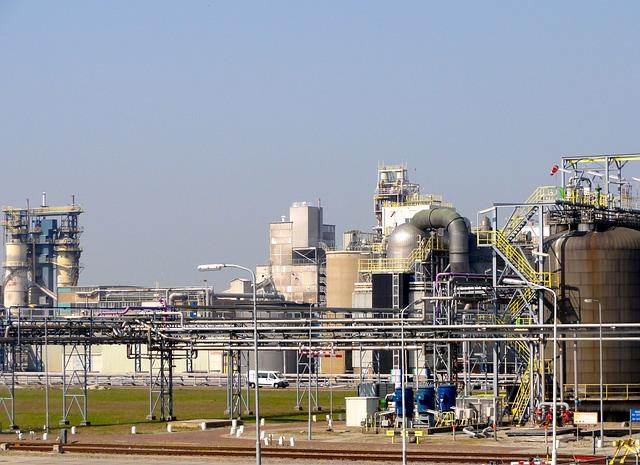
Italian aerospace manufacturer Avio S.p.A. is preparing a major expansion into the United States with a planned $500 million rocket motor production facility in Virginia-one of the largest space-related industrial investments the state has ever seen. The project, to be executed by its American arm, Avio USA, reflects surging global demand for solid rocket motors fueled by booming commercial launch activity and evolving defense priorities. State leaders say the move not only cements Virginia’s role in the space and defense supply chain, but also highlights a broader trend of European space companies building a deeper, long-term presence in the U.S. market.
How Avio USA’s Rocket Motor Facility Could Reshape Virginia’s Economy and the U.S. Space Landscape
The planned complex positions Virginia as a pivotal manufacturing and technology hub within the worldwide launch ecosystem. The $500 million outlay is expected to anchor a wider industrial network of advanced suppliers, testing centers, and engineering consultancies, accelerating the Mid-Atlantic region’s rise as a space manufacturing corridor.
Local and regional economic impacts are projected to include:
- Creation of hundreds of high-paying, highly skilled jobs.
- New demand for specialized infrastructure, including transportation links, utility capacity, and digital connectivity.
- Increased private investment in surrounding industrial parks and innovation districts.
At the national level, having a domestic source of sophisticated solid rocket motors reduces exposure to foreign supply chains and volatile geopolitical conditions. This can stabilize launch costs, shorten procurement cycles, and decrease the risk that international crises disrupt access to critical propulsion hardware-all vital considerations as the number of annual global launches continues to grow.
From a strategic perspective, a U.S.-based Avio facility enhances the country’s ability to support both commercial and government missions in an increasingly congested and contested orbit. By embedding core production in Virginia, Avio USA can more closely coordinate with American launch providers, defense primes, and NASA programs, adding redundancy and flexibility to propulsion capacity.
Expected strategic outcomes include:
- Stronger industrial resilience by diversifying where and how rocket motors are produced.
- Accelerated innovation cycles as engineering, prototyping, testing, and manufacturing operate under one U.S.-based umbrella.
- Improved export potential for propulsion systems engineered and built in the United States.
- Tighter alignment with U.S. space policy, defense planning, and allied launch requirements.
| Impact Area | Virginia | U.S. Space Sector |
|---|---|---|
| Jobs & Skills | Hundreds of high-wage engineering and technical roles | Broader propulsion expertise and talent pool |
| Supply Chain | New in-state aerospace and advanced manufacturing suppliers | Lower dependence on imported propulsion components |
| Competitiveness | More prominent standing in the U.S. space economy | Potential for lower launch costs and more reliable schedules |
| Security | New strategic industrial asset on U.S. soil | Additional buffer and redundancy in rocket motor capacity |
Supply Chain Resilience and Defense Strategy in Domestic Rocket Motor Production
The Avio USA investment is part of a wider push to fortify critical aerospace and defense supply chains against geopolitical tension, export restrictions, and aging legacy facilities. Producing rocket motors in Virginia enables the company to sidestep overseas chokepoints in areas such as solid propellant ingredients, advanced castings, and guidance-related hardware, while collaborating more directly with U.S. defense and space agencies.
For defense planners, this move is not merely a business expansion-it is a strategic hedge. A domestic, vertically integrated propulsion site can help:
- Scale production quickly during periods of heightened demand or conflict.
- Ensure assured access to rocket motors for both national security and civil missions.
- Improve oversight and quality control through a closely regulated U.S.-based supplier network.
The facility is expected to nurture a local ecosystem of vetted subcontractors covering composites, electronics, test instrumentation, and specialized machining, reinforcing end-to-end control of the propulsion value chain.
However, building resilience requires more than constructing new buildings. Avio USA and policymakers must contend with:
- Talent shortages in high-end manufacturing and defense-grade engineering.
- Complex dual-use export laws that govern rocket technology.
- Heightened cybersecurity expectations for digitally connected factories.
Industry observers anticipate that the plant’s blueprint will incorporate redundant production lines, diversified sources of critical inputs, and inventory strategies designed to cushion against sudden disruptions.
Key defense-oriented resilience measures include:
- Multi-sourcing of critical materials such as solid propellants, binders, and high-performance carbon fiber to eliminate single points of failure.
- Secure-by-design IT/OT architectures that shield sensitive design files, control systems, and tooling from cyberattacks.
- Flexible manufacturing configurations that allow rapid switching between commercial launch production, defense contracts, and urgent surge requirements.
- Coordinated planning with federal and state agencies on permitting, emergency response, and workforce pipelines.
| Resilience Focus | Defense Benefit |
|---|---|
| Domestic sourcing | Less exposure to foreign policy shifts and export controls |
| Redundant lines | Ability to maintain output during disruptions or rapid surges |
| Cyber protections | Protection of sensitive designs, IP, and mission-critical data |
| Skilled workforce | Reliable, long-term production capacity for defense and civil needs |
Building a Talent Pipeline and Innovation Engine Around Advanced Manufacturing
Locating a high-value rocket motor facility in Virginia transforms the state into a focal point for workforce development in propulsion, automation, digital manufacturing, and composite materials. Educational and industry stakeholders are already exploring new partnerships to ensure local talent can meet Avio USA’s staffing needs.
Emerging initiatives are expected to emphasize:
- Advanced manufacturing certifications tailored to aerospace and defense standards.
- Additive manufacturing and robotics training for technicians and engineers.
- High-reliability quality control skills required for propulsion components.
Community colleges, universities, and technical schools are likely to align curricula with Avio USA’s requirements, including expanded apprenticeships, co-op programs, and mid-career reskilling for workers transitioning from other industries. On-the-job training will be especially important during the early ramp-up phase.
Priority workforce development themes include:
- Specialized technician positions in precision machining, non-destructive testing, and metrology.
- STEM pipeline programs targeting high school and undergraduate students interested in aerospace careers.
- Collaborative R&D projects between Avio USA and regional research universities focused on propulsion, materials, and automation.
- Supply-chain readiness for SMEs so smaller firms can meet aerospace-grade standards and enter defense and space contracts.
Technology transfer will be another powerful driver of regional growth. As Avio USA introduces proprietary manufacturing processes and data-rich production methods, those capabilities can diffuse to adjacent sectors-from aerospace components and industrial robotics to clean energy technologies.
Regional planners are evaluating:
- How digital twins, advanced sensors, and predictive maintenance used on the shop floor can be adapted across other local factories.
- Strategies to cluster suppliers, startups, and research partners near the facility to maximize spillover innovation.
- Joint testbeds and demonstration projects that leverage Avio USA’s expertise in high-performance propulsion.
| Pillar | Regional Opportunity |
|---|---|
| Workforce Training | New aerospace and advanced manufacturing programs at local colleges and technical centers |
| Tech Transfer | Broader adoption of cutting-edge manufacturing tools and methods by regional suppliers |
| Innovation | Creation of a propulsion and space manufacturing cluster anchored in Virginia |
| Partnerships | Joint labs, shared test facilities, and collaborative research grants with universities and national labs |
Policy, Infrastructure, and Long-Term Strategy to Maximize the $500 Million Rocket Motor Investment
For Virginia to fully capture the long-term benefits of Avio USA’s $500 million rocket motor facility, public incentives and policy tools will need to be carefully structured. Rather than broad, unconditional subsidies, economic development experts recommend performance-based packages linked to measurable outcomes.
Key policy levers include:
- Job creation benchmarks that tie tax credits to achieving and maintaining specific employment levels.
- Capital reinvestment commitments to ensure ongoing modernization rather than one-time construction.
- Workforce training obligations in partnership with regional education providers.
- Support for small and mid-sized businesses to secure places in Avio USA’s supply chain and prevent over-concentration of economic gains.
Examples of targeted tools that can reinforce long-term value:
- Performance-based tax incentives linked to payroll thresholds, production milestones, and local procurement.
- Workforce grants for community colleges, trade schools, and STEM academies that build aerospace-focused programs.
- Shared infrastructure investments where the state, localities, and Avio USA co-fund critical upgrades.
- Supplier development programs that help regional aerospace SMEs meet quality, cybersecurity, and export compliance standards.
| Priority Area | Key Requirement | Long-Term Outcome |
|---|---|---|
| Transportation | Enhanced road, rail, and port connectivity to spaceports and major logistics hubs | Faster, more predictable deliveries and reduced logistics risk |
| Utilities | High-reliability power, water, and broadband infrastructure with room to scale | Stable operations and capacity to support future production expansions |
| Workforce | Robust STEM education pathways and advanced manufacturing training programs | A sustainable, local talent pipeline for aerospace and defense employers |
Infrastructure strategy will ultimately determine whether the initial construction boom transitions into durable industrial capability. Regional planners are prioritizing:
- Resilient electric grids and backup generation to support energy-intensive testing and production.
- Redundant fiber-optic networks to enable secure, data-heavy manufacturing and real-time coordination with customers.
- Efficient freight corridors for the movement of large, sensitive hardware to spaceports and other launch-related facilities.
Coordinated land-use and community planning around the site is equally important. Zoning decisions, housing availability, public transit options, and environmental buffers will shape how the plant integrates into the broader region and how attractive the area becomes for additional aerospace investment.
Stakeholders are also considering how to embed the facility into Virginia’s larger space and defense strategy, including:
- Aligning state permitting timelines with federal launch and mission schedules.
- Promoting long-term research partnerships among Avio USA, universities, and government labs.
- Maintaining robust environmental monitoring to ensure propulsion testing and production remain compatible with sustainability goals.
Key Takeaways
If brought to completion as envisioned, Avio’s new Virginia rocket motor facility would represent a major expansion of the company’s U.S. operations and significantly deepen the commonwealth’s role in the national rocket motor supply chain. As detailed construction plans solidify and hiring accelerates, state and local leaders will be closely tracking whether this $500 million commitment to advanced propulsion manufacturing delivers the promised economic growth, supply chain resilience, and strategic advantages for both Virginia and the broader U.S. space and defense ecosystem.