



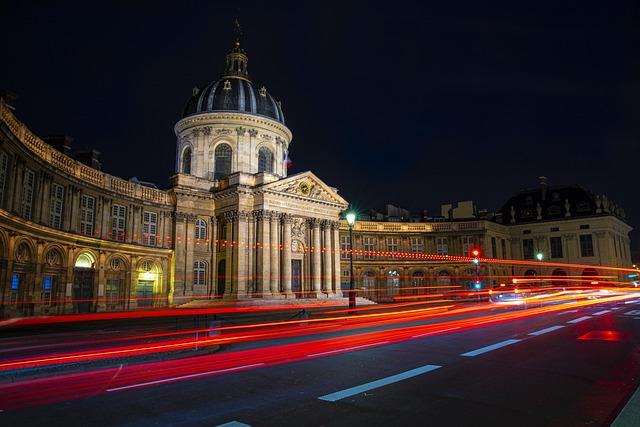
In the waning days of his administration, Donald Trump quietly signed off on a plan to place his name on the headquarters of the U.S. Institute of Peace (USIP), a congressionally funded body created to promote diplomacy and conflict resolution. At the very same moment, his team was locked in an intense legal confrontation with that institution.
Newly obtained documents, first highlighted by PBS, reveal how this mix of symbolic recognition and courtroom hostility captured the contradictions of Trump’s foreign policy style and his rocky relationship with U.S. government institutions. The episode also adds a new chapter to the broader debate over how presidential legacies are literally carved into the architecture and public spaces of Washington, D.C.
Trump’s name etched onto US Institute of Peace headquarters amid escalating legal clash
Former President Donald Trump’s name is now discreetly etched into the stone of the U.S. Institute of Peace’s headquarters in Washington, D.C., even as he and his allies pursue aggressive legal action against the same organization. The inscription, tucked into a cluster of donor acknowledgments on a side facade seldom noticed by tourists, has been described by one insider as “visually restrained but politically thunderous.”
Internal correspondence reviewed by reporters shows that the decision followed a contentious, months-long debate inside the institute. Staff and board members questioned whether honoring Trump as a “major benefactor” could coexist with the USIP’s statutory obligation to remain nonpartisan and insulated from overt political pressure. In the end, leadership approved a compromise: a small, stone-etched inscription that mirrors existing typography and is framed as standard donor recognition.
The timing, however, has sharpened public scrutiny of the institute’s governance. Trump’s lawyers are pressing defamation and bias claims in federal court, accusing the organization of harboring institutional hostility toward him and his policy agenda. Ethics specialists argue that the simultaneous litigation and commemoration, one unfolding in legal filings and the other in limestone, highlight the uneasy border between public institutions and powerful political figures.
Observers point to several areas of concern:
- Perception of political favoritism at a taxpayer-supported, congressionally chartered institution that is supposed to be nonpartisan.
- Potential leverage in ongoing lawsuits if Trump’s team cites the inscription as proof of acknowledgment, influence, or institutional deference.
- Chilling effect on staff who research disinformation, authoritarian tactics, and political violence, and who may now fear political retaliation.
| Key Element | Details |
|---|---|
| Location | Secondary facade, adjacent to donor plaque grouping |
| Inscription Style | Modest, stone-etched lettering matching existing font and size |
| Official Justification | Classified internally as “standard donor recognition” |
| Legal Backdrop | Ongoing civil case alleging institutional bias and damage to Trump’s reputation |
From quiet mediator to political lightning rod: how a nonpartisan peace body was pulled into Trump-era warfare
For most of its history, the U.S. Institute of Peace functioned on the edge of Washington’s political spotlight-a technical, low-profile institution focused on conflict mediation, training negotiators, and advising U.S. officials in fragile states. That changed dramatically as the Trump era unfolded.
As Donald Trump’s presence loomed over the building-not in giant golden letters but in a newly approved stone inscription-USIP became entangled in the same polarized fights reshaping other parts of the federal apparatus. Allies of the former president portrayed the institute as part of a hostile “deep state” network, casting suspicion on its research grants, fellowship programs, and ties to international partners. Inside the building, career staff insisted that their work was guided by congressional mandate and a long bipartisan record, not by partisan agendas.
Yet behind closed doors, the institute’s leadership found itself diverting time and resources from field programs to legal defense and political risk management. Subpoenas, discovery requests, and oversight inquiries forced a relatively small organization to bolster its legal team, respond to repeated document demands, and navigate public attacks on its neutrality.
Routine activities-policy roundtables, workshops on preventing electoral violence, training sessions for mediators-were recast through a partisan lens. Trump-aligned advocacy groups examined event lineups, speaker affiliations, and grant recipients for any sign of ideological slant. Inside a building that now carried Trump’s name in stone, staff attempted to continue day-to-day peacebuilding work under the shadow of an escalating legal and political confrontation.
Key pressure points included:
- Funding battles over specific peacebuilding projects in conflict-affected countries, with some initiatives criticized as misaligned with Trump’s foreign policy priorities.
- Accusations of political favoritism in fellowships, research collaborations, and public events, including claims that certain experts were systematically favored or excluded.
- Litigation and compliance burdens that redirected staff time away from on-the-ground programs and toward responding to subpoenas, audits, and legal filings.
- Symbolic contradictions as Trump’s name on the structure stood in stark contrast to his team’s courtroom arguments against the institution.
| Aspect | Before Trump Era | During Legal Clash |
|---|---|---|
| Public Profile | Specialized, largely below the national political radar | Highly visible and frequently invoked in partisan debates |
| Congressional Scrutiny | Occasional, largely bipartisan oversight | Intense, often partisan investigations and hearings |
| Reliance on Legal Counsel | Routine regulatory and compliance matters | Regular court appearances and extensive legal strategy |
Branding, power, and mission: what the Trump naming dispute reveals about public institutions
Placing the surname of a former president on a building dedicated to conflict resolution, while that same figure attacks the institution’s integrity in court, dramatizes a core dilemma for public bodies: are they guardians of a mission or stages for political branding?
In this case, the physical structure-its glass, steel, and stone-has become a backdrop for competing narratives. One narrative centers on the symbolic weight of a name, which in contemporary American politics functions as a proxy for ideology, loyalty, and grievance. The other narrative emphasizes institutional stewardship, the often-unseen work of shielding an organization’s mission, personnel, and reputation from short-term political storms.
For U.S. agencies, especially those that operate internationally, the stakes go far beyond aesthetics. Naming decisions can shape how local partners, civil society groups, and foreign governments interpret an institution’s neutrality. A name associated with a polarizing political figure may raise questions about whose interests the institution serves and whether critics or minorities will feel comfortable engaging with it.
In the Trump-USIP clash, the juxtaposition of legal warfare and exterior signage has sparked concerns such as:
- Independence: Can a peace-focused, congressionally funded body credibly claim impartiality when its facade carries the name of a litigant who is directly challenging its work?
- Credibility: How can officials reassure domestic and international partners that program decisions are guided by law and policy rather than by personal allegiance or political pressure?
- Precedent: If one high-profile politician secures honorific recognition during or after a conflict with an agency, what stops others from demanding similar treatment?
- Use of public funds: To what extent are taxpayer dollars supporting civic institutions-and to what extent are they subsidizing de facto political billboards?
| Dimension | Symbolism | Stewardship |
|---|---|---|
| Primary Focus | Visibility, branding, partisan identity | Mission effectiveness, governance, continuity |
| Main Audience | Political supporters, media, and critics | General public, staff, global partners, and Congress |
| Time Horizon | Immediate political cycles and news coverage | Long-term institutional trust and credibility |
Why experts say clearer naming rules are crucial to preserving institutional independence
Ethics scholars, governance experts, and watchdog organizations warn that the Trump-USIP dispute exposes a broader vulnerability in Washington’s approach to honorific naming and donor recognition. They argue that when elected officials or former officeholders can secure inscriptions, plaques, or naming rights at publicly funded entities-especially those they are simultaneously criticizing or suing-it blurs the line between civic recognition and political endorsement.
These concerns are intensified by the broader trend of political branding in public spaces. Around the world, public institutions face growing pressure to honor leaders, parties, or wealthy patrons, often with limited transparency about the financial or political conditions attached. In the United States, where public confidence in government remains fragile-surveys from organizations such as Pew Research Center show trust in the federal government hovering near historic lows-opaque naming practices risk feeding perceptions of a system tilted toward political insiders.
To address these risks, many experts advocate for clear, binding guidelines that spell out how naming decisions are made, who qualifies for recognition, and under what circumstances such honors can be suspended or revoked. Some also urge Congress and independent boards to modernize rules to address contemporary forms of political influence and social media-driven branding.
Reform proposals frequently focus on strengthening conflict-of-interest safeguards and reinforcing public oversight. Common recommendations include:
- Mandatory disclosure of any financial donations, legal entanglements, political affiliations, or contractual ties between honorees and the institution.
- Time-limited naming agreements that expire after a defined period and are subject to reapproval, with publicly accessible records of each renewal.
- Automatic suspension or review clauses if an honoree initiates legal action against the institution, is under formal investigation related to it, or is found to have violated ethics standards.
- Independent ethics panels composed of nonpartisan experts to evaluate all naming proposals and issue written justifications for their decisions.
| Proposed Safeguard | Intended Effect |
|---|---|
| Clear naming rules | Limit political leverage and reduce ad hoc decision-making |
| Public disclosure | Enhance transparency and allow independent scrutiny |
| Ethics review | Protect the neutrality and legitimacy of public institutions |
Closing Remarks
In the end, the visual and political contrast is striking: Donald Trump’s name etched on the front of the nation’s congressionally chartered peace institution, even as his administration sought to limit its authority through budget proposals, public criticism, and courtroom arguments.
Supporters see the inscription as an affirmation of Trump’s standing within official Washington and as a challenge to organizations they view as unaccountable or ideologically skewed. Critics, by contrast, see the episode as emblematic of a presidency that frequently invoked “peace” and “law and order” while clashing with many of the institutions designed to cultivate stability and uphold democratic norms.
As legal and political disputes surrounding the U.S. Institute of Peace continue, the engraving on its building has become more than an architectural detail. It serves as a tangible symbol of a larger struggle over how the United States defines “peace,” who is authorized to speak in its name, and how far political figures can go in imprinting their personal brands onto the nation’s public institutions.