


Tens of thousands of anti-abortion advocates are once again expected to flood Washington, D.C., for the annual National March for Life, a flagship event at the heart of the United States abortion debate. Organized by the March for Life advocacy group, the gathering draws faith leaders, elected officials, students, and grassroots activists from every region of the country. Their shared goal: to promote restrictions on abortion and advance a long-term strategy to remake reproductive policy at both the federal and state levels.
Launched in 1974 in the immediate aftermath of the Supreme Court’s Roe v. Wade ruling, the National March for Life has evolved into one of the capital’s largest recurring political demonstrations. This year’s event unfolds in the shadow of the Supreme Court’s 2022 decision overturning Roe, which has triggered a rapidly changing legal environment. From near-total bans in some states to expanded protections in others, the country now faces a fragmented landscape of state laws, court injunctions, and closely watched ballot measures.
As marchers convene for speeches, prayer services, and a procession through the National Mall, observers on all sides see the event as a key indicator of how public sentiment and political strategies are shifting around one of the most polarizing issues in American life.
National March for Life Expands as Post-Roe Legal Landscape Deepens the National Abortion Debate
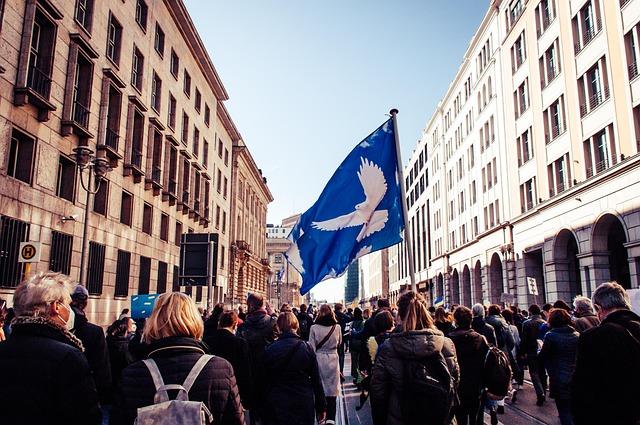
Under a bright winter sky, long lines of buses unloaded thousands of participants who transformed downtown Washington into a dense corridor of signs, flags, and coordinated chants. Organizers describe this year’s National March for Life as not only larger, but also more demographically varied, with delegations that include high school groups, university organizations, veterans, and extended families, many of whom traveled overnight from small towns as well as major metropolitan areas.
While the March has traditionally concentrated on federal policy and Supreme Court decisions, the tone this year reflects a new reality: with Roe overturned, statehouses and state courts have become central battlegrounds. Advocates point to a surge of litigation and legislation across the country as states test the limits of their authority to regulate abortion, and as voters increasingly encounter abortion-related measures on local ballots.
From the main stage, speakers highlighted what they described as a “decisive moment” for the pro-life movement. Referencing recent rulings, pending legislation, and upcoming referendums, they argued that the next few election cycles could set the trajectory for abortion policy for decades. Smaller breakout gatherings throughout the day focused on equipping participants with practical strategies to influence that trajectory: training in digital organizing, storytelling, fundraising, and community support for pregnant women.
Recurring themes included:
- Legislative momentum in states considering new or revised abortion laws.
- Rising youth engagement, particularly through campus ministries and student-led advocacy groups.
- Stronger coalitions linking faith communities with medical professionals, legal experts, and nonprofit organizations.
- Digital advocacy tools that amplify messaging through social media, podcasts, and livestreamed events.
Attendance estimates have trended upward since the Dobbs decision, reflecting renewed urgency among participants:
| Year | Estimated Attendance | States Represented |
|---|---|---|
| 2022 | ~50,000 | 35+ |
| 2023 | ~70,000 | 40+ |
| 2024 | Growing | Reported in 45+ |
According to recent surveys from major research organizations, public opinion on abortion remains sharply divided, with support for legal abortion varying widely by region and political affiliation. Against this backdrop, the National March for Life is increasingly framed-by its supporters and critics alike-as a barometer of how energized the pro-life base remains and how it intends to pursue its goals in a post-Roe era.
Behind the Scenes: How March for Life Organizers Seek to Shape Policy on Capitol Hill
Beyond the visible demonstrations, the March for Life has developed into a carefully coordinated lobbying effort aimed at converting public witness into concrete policy outcomes. In the weeks before the march, organizers systematically analyze congressional voting records, committee assignments, and public statements to map out where each lawmaker stands on abortion-related legislation.
Advocacy teams then tailor packets of information-including legislative summaries, polling data, and personal stories from constituents-to specific offices. Volunteers are trained in short, disciplined talking points and coached on how to navigate conversations with both supportive and skeptical staffers. A key goal is to secure commitments for co-sponsorship, hearings, or public statements that can be cited later in campaigns and fundraising appeals.
To keep the pressure on after the march concludes, coalition partners coordinate a multi-layered follow-up plan that blends in-person advocacy with online mobilization. These efforts include:
- District-level town halls and listening sessions aimed at keeping abortion policy on local political agendas.
- Targeted social media blitzes, especially in swing districts where lawmakers may be weighing their stance.
- Concise policy briefs summarizing proposed legislation in accessible language for both officials and the public.
- Rapid-response networks that can generate calls, emails, and letters to offices within hours of major court rulings or legislative developments.
| Tactic | Primary Goal |
|---|---|
| Capitol Hill visits | Secure new co-sponsors |
| Constituent letters | Highlight local impact |
| Briefing breakfasts | Educate key staffers |
| Press conferences | Shape public narrative |
In addition, organizers increasingly turn to data analytics to refine their approach. By tracking which messages resonate most in email campaigns, social feeds, and petition drives, they aim to adjust their language and framing in real time. The strategy underscores a broader shift: the National March for Life is no longer viewed by its leaders as a stand-alone event, but as one critical node in a year-long policy campaign.
Dueling Demonstrations and Tight Security Reveal Deepening Rifts Over Reproductive Rights
As the main procession advanced past major landmarks, clusters of counterprotesters gathered in designated areas, holding their own signs and chanting in direct opposition to pro-life slogans. The competing messages-one calling for broader reproductive rights and the other advocating for stricter abortion limits-offered a vivid snapshot of a country profoundly divided over reproductive health policy.
To manage these tensions, local authorities developed a layered security plan in coordination with federal agencies and event organizers. Bike patrols and mounted units were stationed along the route, while plainclothes officers monitored social media and crowd behavior to anticipate flashpoints. Whenever the space between opposing groups narrowed, law enforcement moved swiftly to restore distance, aiming to prevent minor confrontations from escalating.
City officials say these strategies increasingly resemble the protocols used for high-risk political rallies, underscoring how contentious the national abortion debate has become. Visible safeguards were widely deployed, including:
- Separated demonstration zones to keep pro-life marchers and counterprotesters from prolonged face-to-face confrontations.
- Designated de-escalation teams, including trained volunteers and clergy, tasked with calming heated exchanges.
- Emergency medical stations positioned at intervals to respond to health emergencies or injuries.
- Centralized surveillance and communication hubs linking police, transit officials, and rally coordinators.
| Element | Purpose |
|---|---|
| Barricades | Maintain distance between opposing groups |
| Checkpoints | Screen for prohibited items and manage flow |
| Observation posts | Monitor crowd behavior and emerging hotspots |
While serious incidents have remained relatively rare, officials note that the intensity of political rhetoric nationwide demands ongoing adjustments to security planning. The National March for Life and the accompanying counterdemonstrations thus serve not only as political statements, but also as tests of how cities handle mass gatherings amid deep ideological division.
Beyond the National March for Life: Building Year-Round Engagement with Voters, Churches, and Communities
Movement leaders stress that a single day in Washington, no matter how large or visually striking, cannot substitute for consistent local engagement. For that reason, the networks behind the National March for Life are investing in resources that help supporters translate the energy of the march into everyday civic action.
Advocates encourage participants to remain active in their hometowns-meeting with local officials, joining or forming parish committees, and partnering with community organizations. Many leaders argue that elected officials are more likely to respond to sustained, low-profile contact over months than to one high-intensity demonstration each year.
To support these efforts, coalitions distribute toolkits and training materials that explain how to:
- Organize monthly listening sessions in churches, schools, and community centers to discuss abortion policy and related social services.
- Host issue briefings for youth groups and campus ministries that link pro-life advocacy with broader questions of healthcare, poverty, and family support.
- Coordinate letter-writing and digital advocacy campaigns timed to key legislative votes or court hearings.
- Develop service partnerships with pregnancy resource centers, adoption agencies, and social service organizations.
| Period | Suggested Focus | Key Partner |
|---|---|---|
| Spring | Educational forums | Local churches |
| Summer | Community outreach | Service groups |
| Fall | Policy briefings | Civic coalitions |
| Winter | Legislative meetings | Advocacy networks |
Data-driven tools are also playing a larger role. Campaign strategists now rely on parish surveys, online polls, and social media analytics to determine which messages resonate most with different age groups, regions, and denominational communities. By syncing calendars with existing church activities and community events, organizers hope to embed pro-life programming into the rhythm of local life rather than competing with it.
Analysts suggest that this integrated approach-combining the visibility of the National March for Life with steady local engagement-could gradually normalize regular contact between citizens and lawmakers, thereby keeping abortion policy visible in public debates well beyond the news cycle of the march itself.
Closing Perspectives: A Movement that Sees the March as a Beginning, Not an End
As the 51st National March for Life winds down and participants board buses for the journey home, organizers emphasize that the event is meant to signal the start of another year of sustained advocacy rather than a conclusion. Legal and political clashes over abortion-from state supreme courts to federal appellate courts to local ballot measures-show no sign of abating. In that environment, march leaders and attendees alike speak of a long-term commitment measured not just in one day’s turnout, but in the cumulative effect of countless local conversations and policy initiatives.
Supporters of the March for Life say they intend to remain a visible, organized presence in national and state-level debates over reproductive rights. Whether their message ultimately gains broader support in a politically volatile environment remains uncertain, especially as public opinion and election results continue to shift from cycle to cycle. For now, however, those who filled the streets of Washington depart with a shared conviction: the National March for Life is one highly visible moment in a much longer campaign, and their work, they insist, continues long after the crowds disperse.