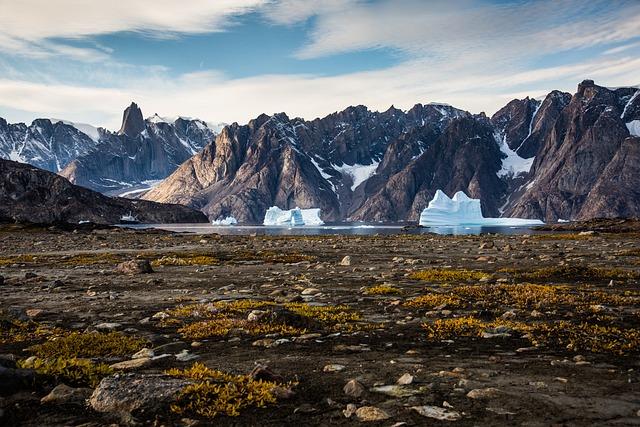
France is preparing to open a consulate in Greenland, a step widely seen as a quiet but pointed signal to the United States as global competition in the Arctic accelerates. First reported by Al Jazeera, the plan reflects Paris’s mounting interest in the High North’s strategic and environmental future, where rapid ice melt is revealing new sea routes and energy and mineral opportunities. Officially, France presents the move as a way to strengthen its relationship with the autonomous Danish territory, but diplomats and observers say it also underscores that Washington is no longer the only Western power seeking a long-term foothold at the top of the world.
France bets on Arctic diplomacy with new Greenland consulate as subtle challenge to US influence
France’s decision to establish a permanent diplomatic presence in Nuuk is seen across Western capitals as far more than a bureaucratic adjustment. By opening a consulate in Greenland, Paris positions itself as a distinct Arctic actor, able to navigate between US strategic priorities and Danish concerns over sovereignty and local autonomy.
French officials publicly emphasize support for climate science, indigenous partnerships and sustainable development. Yet the choice of Greenland-and the timing, as Arctic politics become more crowded-also signals a desire to dilute the long-standing predominance of US security interests in the region. The initiative dovetails with broader European efforts to protect emerging sea lanes, secure access to rare earth elements and expand climate research as melting ice redraws shipping charts and geopolitical boundaries.
- Strategic aim: Broaden European leverage in Arctic governance
- Diplomatic message: Reinforce autonomy from US-led Arctic policy
- Local focus: Support for Greenlandic institutions, science and infrastructure
| Actor | Key Interest | Arctic Tool |
|---|---|---|
| France | Influence & climate diplomacy | New consulate in Nuuk |
| United States | Security & minerals | Military presence, research bases |
| Greenland | Autonomy & investment | Welcoming diversified partners |
France’s move complicates long-standing US assumptions about the North Atlantic, where Greenland has often been treated in Washington as an almost exclusive strategic space anchored by the Thule Air Base and missile early-warning assets. With a French consulate on the ground, future debates over mining licenses, security arrangements and environmental safeguards will increasingly involve an additional European voice rather than being filtered predominantly through a US-Danish framework.
Analysts suggest the consulate could evolve into a hub for coordinating EU-funded climate initiatives, cultural and educational exchanges and business delegations. That would give Paris a platform to influence standards on sustainable shipping, Arctic mining practices and scientific data sharing. Rather than headline-grabbing base proposals or public bids for territory, France is opting for persistent, lower-profile diplomacy as a way to carve out a durable role in the next phase of Arctic politics.
Strategic implications for NATO and the evolving balance of power in the North Atlantic
For NATO, a French diplomatic presence in Greenland subtly reconfigures the alliance’s internal dynamics at a moment when the Arctic is shifting from peripheral concern to core strategic theater. Paris is sending a clear signal that it intends to shape discussions not only about European continental defense, but also about the northern approaches to North America, where climate change is opening new maritime corridors and exposing previously inaccessible resources.
This added European voice may translate into a stronger role for EU and NATO allies in areas long managed by a tight Washington-Copenhagen-Ottawa axis. That could influence how decisions are made on early-warning systems, submarine tracking and infrastructure protection across the crucial Greenland-Iceland-UK (GIUK) gap. Within NATO, the French step may introduce new competition over influence but also generate incentives for more equitable burden-sharing, as allies rethink surveillance, basing and air-sea integration around North Atlantic chokepoints and contested airspace.
The move comes as Russia continues to modernize its Northern Fleet and refurbish Arctic bases, while China promotes its status as a self-described “near-Arctic” power and increases its polar research and commercial activity. France’s consulate adds another Western flag to a region already dotted with military exercises, dual-use infrastructure and scientific stations that often double as strategic listening and monitoring posts.
In this emerging security landscape, Greenland is increasingly seen not as a distant periphery but as a testing ground for how NATO can balance overlapping national ambitions without weakening collective deterrence. Expect greater focus on:
- Coordinated Arctic surveillance using pooled sensors, satellites and joint patrols.
- Resilient seabed infrastructure to protect undersea cables, energy routes and data links.
- Joint training corridors integrating North American and European air and naval forces across the GIUK gap.
| Actor | Primary Interest | North Atlantic Effect |
|---|---|---|
| France | Political foothold, Arctic voice | More European weight in GIUK gap |
| United States | Homeland defense, Thule assets | Reassess basing and coordination |
| Russia | Northern Fleet access | Continued undersea and air pressure |
| China | Shipping lanes, resources | Heightened scrutiny of “civilian” presence |
Economic and environmental stakes: from rare earths to new shipping lanes in a warming Arctic
Beneath the diplomatic moves lies a much larger contest over resources and maritime routes that could reshape the global economic map. As Arctic temperatures rise-warming nearly four times faster than the global average in recent years-Greenland’s vast deposits of rare earth elements and other critical minerals are drawing increased attention. These resources are vital for electric vehicles, wind turbines and advanced electronics, making the island a key node in the global green transition and in efforts to reduce dependence on a handful of suppliers.
France’s decision to deepen its presence signals a desire to participate more directly in this evolving landscape, where China, the United States and several EU states are all exploring ways to secure access to future mining projects, research partnerships and new technology supply chains. By aligning foreign policy with industrial strategy, Paris hopes not only to diversify sources of critical raw materials away from Asia, but also to help shape the environmental and social rules that will govern extraction in one of the world’s most sensitive ecosystems.
At the same time, the retreat of sea ice is gradually opening new shipping corridors that could shorten routes between Asia, Europe and North America by thousands of kilometers, with major implications for freight costs, insurance, and regional security. Although current traffic is still limited compared with traditional routes, each year brings more exploratory voyages and test runs by cargo and energy companies.
This trend raises difficult questions for Arctic states and stakeholders: how to expand maritime activity without overwhelming fragile coastal ecosystems, how to protect Indigenous livelihoods, and whether search-and-rescue and pollution-response capacities can keep pace with growing traffic. France’s consular presence provides a platform to engage more systematically in emerging governance debates on navigation standards, environmental safeguards and investment benchmarks.
In practice, these overlapping interests often pull in different directions:
- Economic: Competition over mining concessions, port and airport upgrades, and logistics hubs to service new sea routes.
- Environmental: The challenge of reconciling commercial exploitation with strict protections for Arctic biodiversity and traditional ways of life.
- Geopolitical: Managing tensions between NATO allies and outside powers as they expand their Arctic footprint through both civilian and military projects.
| Arctic Driver | Opportunity | Risk |
|---|---|---|
| Rare earth mining | Secure green-tech supplies | Pollution and habitat loss |
| New sea routes | Shorter trade lanes | Spills, accidents, militarisation |
| Climate research | Data for global policies | Underfunded monitoring |
Coordinating EU, Danish and Greenlandic policy to avoid fragmentation
The emergence of France as a visible Arctic player also tests whether the European Union, Denmark and Greenland can translate shared interests into a common strategy rather than overlapping, uncoordinated initiatives. Brussels and Copenhagen-acting both as EU power centers and as key parts of the Kingdom of Denmark responsible for Greenland’s foreign and security framework-face pressure to align their policies on critical minerals, infrastructure, security and climate.
Without careful coordination, competing projects and fragmented messages could create openings for rival powers to exploit divergences in Western positions on sovereignty, investment screening and defence arrangements in the North Atlantic. Mixed signals risk complicating relations with Washington and Nuuk alike, while weakening the EU’s ability to act as a credible Arctic governance actor.
To counter this, policymakers are pushing for tighter mechanisms that integrate national, EU and Greenlandic priorities within a shared framework of rules and expectations. Key elements include:
- Regular trilateral consultations among EU institutions, Danish authorities and Greenland’s government before new diplomatic or economic initiatives are launched.
- Joint messaging on critical minerals, so that Greenland’s resources are developed under coherent EU standards instead of competing bilateral deals.
- Shared security assessments and Arctic situational awareness feeding into NATO planning and into EU maritime surveillance instruments.
- Coordinated investment screening to identify and, when necessary, block strategic acquisitions by state-backed entities from rival powers.
| Priority Area | Lead Actor | Coordination Tool |
|---|---|---|
| Diplomatic outreach | Denmark & EU EEAS | Joint Arctic briefings |
| Critical minerals | EU Commission | Common resource framework |
| Security & defence | NATO/EU members | Shared risk assessments |
| Local development | Greenland authorities | EU-funded partnerships |
In Summary
As France prepares to reopen its diplomatic mission in Nuuk after decades of absence, the decision highlights how the Arctic’s once-remote frontiers have moved to the center of global strategic thinking. For Paris, the consulate is a gateway to deeper engagement with Greenland and the wider Arctic community; for Washington and other competitors, it is another sign that the region’s importance can no longer be taken for granted or monopolized.
Whether this “political signal” will significantly alter the balance of power in the North remains to be seen. What is clear is that Greenland’s icy coastline is now firmly embedded in debates over security, climate, trade and technology-and that more actors, including France, intend to have a say in how the next chapter of Arctic governance is written.