



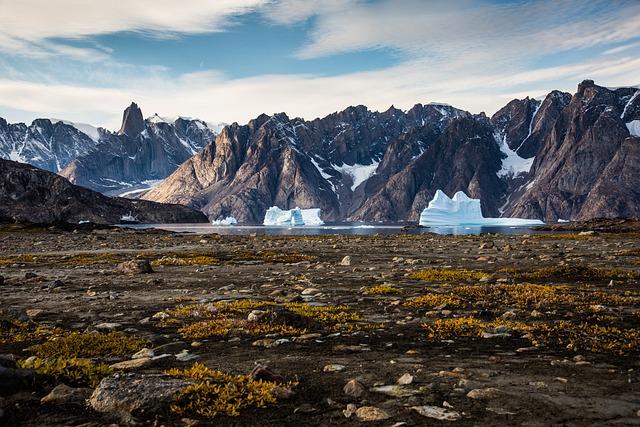
The idea of the United States gaining formal control over Greenland—a vast, sparsely inhabited Arctic territory with outsize strategic value—has periodically surfaced in American politics. For decades it was treated as a diplomatic oddity; today it is entangled with far more consequential dynamics: intensifying great‑power rivalry in the Arctic, rapid climate change, and escalating competition for critical minerals and emerging sea routes.
Any realistic scenario in which Washington tried to move beyond its current military footprint toward direct authority over Greenland would collide with a dense web of legal, political and practical barriers. These range from international law and Denmark’s sovereignty to NATO commitments and the rights and aspirations of Greenland’s mostly Inuit population. The following analysis explores how such a process could theoretically proceed, and why it would be extraordinarily difficult to achieve in practice.
How Could the U.S. Legally Gain Control of Greenland? Sovereignty, Treaties and International Law
For Washington, there is no shortcut to taking control of Greenland. Any legitimate pathway would require consent from both Denmark—Greenland’s sovereign state—and Greenland itself, which already exercises extensive self-rule and is steadily expanding its autonomy.
Under contemporary international law, a handful of lawful mechanisms exist for changing territorial status:
- Cession by treaty – one sovereign state transfers territory to another through a negotiated agreement.
- Self‑determination processes – the resident population freely chooses a new political status, often via referendum.
- Joint or shared administration – carefully crafted arrangements in which two or more actors share responsibilities that can, over time, evolve into a modified sovereignty framework.
In Greenland’s case, any of these avenues would require:
– Formal approval in Copenhagen, Nuuk and Washington.
– Alignment with Denmark’s constitution and Greenland’s self-rule framework.
– Compatibility with NATO’s defense planning and treaty obligations.
– Assurance that the rights of Indigenous Inuit communities—whose territories and livelihoods are at the center of the island’s future—are protected in line with international standards.
The UN Charter and evolving norms around decolonization and Indigenous self‑determination would impose further limits. Any arrangement that appeared coerced—through economic pressure, security threats or diplomatic isolation—would likely be challenged as illegitimate. Greenland’s gradual shift toward greater autonomy since the late 20th century reinforces the principle that decisions about the island’s ultimate status must originate from Greenlanders themselves, not be decided over their heads.
Key pressure points would include:
- Consent of the governed – Greenland and Denmark would almost certainly need transparent referendums, constitutional amendments, or both. Without clear, democratic endorsement, any deal would face legal challenges and enduring political contestation.
- NATO and Arctic security obligations – Greenland is part of the North Atlantic security architecture. A change in sovereignty or control would need to preserve alliance cohesion, clarify basing and overflight rights, and avoid destabilizing regional arms control norms.
- Resource sovereignty – Greenland sits atop valuable fisheries, hydrocarbons (though currently politically sensitive), and critical minerals such as rare earths. Clarifying who owns and benefits from these resources would be politically explosive.
- Indigenous rights instruments – standards such as the UN Declaration on the Rights of Indigenous Peoples (UNDRIP) emphasize free, prior and informed consent for projects and decisions affecting Indigenous lands and resources.
| Legal Path | Core Requirement | Main Vulnerability |
|---|---|---|
| Cession by treaty | Formal Denmark–U.S. agreement | Severe political backlash in Denmark and Greenland |
| Self-determination | Transparent, internationally observed referendum | Disputes over turnout, fairness and representation |
| Joint administration | Detailed, multi‑level governance framework | Unclear ultimate sovereignty and legal accountability |
Why Greenland Matters Strategically: Arctic Power Politics and Potential Rival Reactions
From a U.S. defense perspective, Greenland is not a distant curiosity; it is a central node in the North Atlantic and Arctic security architecture. The area stretching from Thule (now Pituffik) Space Base toward the North Pole hosts key early‑warning systems, satellite and space surveillance facilities, and provides a staging ground for Arctic air and naval operations.
Control or even significantly expanded influence over Greenland would help Washington consolidate a strategic arc connecting North America, the North Atlantic and the Arctic Ocean. This arc underpins:
– Missile warning and defense – radar and sensor systems tracking ballistic missile launches from Eurasia.
– Undersea monitoring – networks to detect submarines and under‑ice naval activity.
– Secure communications infrastructure – including potential routes for trans‑Arctic data cables critical to global internet traffic and military command-and-control.
– Access to Arctic sea lanes – as climate change opens the Arctic Ocean, routes near Greenland could become more viable for commercial shipping, shortening transit times between Asia, Europe and North America.
At the same time, Greenland’s geology is drawing rising interest. As of the mid‑2020s, the International Energy Agency and other bodies highlight the concentration of global production and reserves for critical minerals—such as rare earths, cobalt and nickel—needed for clean energy technologies. Greenland is believed to host significant deposits of rare earth elements and other strategic minerals, making it a potential alternative to existing supply chains that are heavily reliant on a small number of producer states.
But any dramatic U.S. move to assert deeper control would reverberate far beyond Greenland itself. Likely responses include:
- Russia – already investing heavily in Arctic bases, icebreakers and coastal infrastructure along the Northern Sea Route, Moscow would almost certainly intensify its military build‑up and surveillance, framing U.S. moves as a threat to its nuclear deterrent and Arctic sovereignty.
- China – which brands itself a “near‑Arctic state,” could step up its presence through scientific research stations, investments in ports and mining operations, and state‑backed commercial ventures aimed at embedding economic influence rather than military power.
- NATO and EU allies – European partners, including Denmark and Iceland, would push for close coordination to avoid internal alliance rifts, emphasizing stability, environmental protection and freedom of navigation over territorial rearrangements.
Militarization is not the only risk. Many analysts anticipate a parallel competition in economic and political influence, where infrastructure projects and investment terms could matter as much as troop deployments. That contest would likely feature:
- Expanded Arctic patrols – more frequent flights by long‑range aircraft and naval transits by major powers.
- Larger, more complex exercises – multinational drills testing search‑and‑rescue, anti‑submarine warfare and rapid response in extreme conditions.
- Targeted capital flows – investments in Greenlandic mining, transport hubs and digital infrastructure by non‑Western actors seeking a foothold.
- Diplomatic coalitions – initiatives in forums like the Arctic Council or the UN to tighten rules on military activity, environmental standards and shipping in polar waters.
| Actor | Primary Arctic Objective | Probable Response to Expanded U.S. Role |
|---|---|---|
| United States | Secure North Atlantic and Arctic access; protect homeland and allies | Increase basing, radar coverage, undersea surveillance and allied coordination |
| Russia | Safeguard Northern Sea Route and strategic nuclear forces | Strengthen Arctic brigades, air defenses and coastal infrastructure |
| China | Gain access to resources and future polar shipping corridors | Expand scientific presence, state‑linked investments and logistical partnerships |
| EU/NATO allies | Preserve regional stability and open sea lanes | Seek closer policy alignment with Washington, while urging restraint and environmental safeguards |
Promises of Prosperity vs. Local Realities: Resources, Environment and Indigenous Rights
From Washington’s vantage point, deeper engagement with Greenland would naturally be framed around economic opportunity: jobs, infrastructure, technology transfer and security partnerships. On the island, however, the conversation is far more complex.
Greenland’s roughly 56,000 residents live in small, widely dispersed communities across a fragile Arctic environment. For many Inuit communities, resource projects are double‑edged. Large‑scale mining, new airports or expanded ports could bring income, training and public revenue—but they could also disrupt:
– Traditional hunting and fishing grounds.
– Seasonal migration routes for wildlife like whales, seals and caribou.
– Ice and coastal conditions that underpin Indigenous travel and subsistence practices.
This tension is amplified by climate change. The Arctic is warming at more than twice the global average, accelerating ice melt and coastal erosion. While retreating ice may expose new mineral deposits and shipping lanes, it simultaneously undermines food security, infrastructure stability and cultural continuity for local populations.
Greenland’s governance framework and international law both now place significant weight on free, prior and informed consent. Any U.S.‑backed project—let alone a larger political agreement—would need to satisfy higher expectations than those that prevailed during earlier eras of colonial or Cold War decision‑making. Greenlandic leaders and Indigenous organizations are especially focused on:
- Ownership and revenue sharing – who ultimately owns sub‑surface resources, how profits are distributed, and whether local communities receive a substantial, long‑term share of benefits.
- Decision‑making authority – whether Greenlandic and Inuit institutions exercise real control, including the ability to halt or reshape projects that threaten key interests.
- Environmental protection – the robustness of impact assessments, monitoring, and legally binding cleanup and restoration obligations.
- Cultural and linguistic protections – guarantees for Inuit language use, preservation of sacred sites and support for traditional livelihoods.
| Typical U.S. Offer | Likely Local Concern |
|---|---|
| Major mining and critical‑mineral projects | Risk of pollution in fjords, damage to fisheries and hunting territories |
| Military base expansions and new facilities | Restricted access to land and sea, noise, safety issues and long‑term contamination |
| Large‑scale infrastructure investments (airports, ports, fiber‑optic cables) | Dependence on foreign contractors, limited local capacity building and debt or revenue imbalances |
| “Strategic partnership” agreements | Fear that practical self‑rule could be weakened and local priorities sidelined |
What Policy Paths Are Actually on the Table? Diplomatic Strategies, Safeguards and Conditional Cooperation
Given the scale of political risk, U.S. and Greenlandic policymakers are more likely to pursue incremental, sovereignty‑neutral arrangements than dramatic status changes. Instead of full‑blown acquisition, current thinking leans toward targeted cooperation packages in areas such as defense, research and infrastructure, each embedded within stringent conditions.
In Washington, planners emphasize step‑by‑step arrangements that:
– Expand or modernize basing rights at existing facilities.
– Support joint Arctic science and climate research zones.
– Co‑finance selected infrastructure corridors—such as ports or airstrips—that serve both civilian and defense needs.
These would be linked to explicit benchmarks on environmental compliance, transparency and local participation.
In Nuuk, where the long‑term goal of greater self‑determination remains deeply rooted, officials insist that any U.S. role must be firmly anchored in legal safeguards. That typically includes:
– Clear Greenlandic authority over land use and resource licensing.
– Oversight mechanisms for dual‑use infrastructure, ensuring that civilian benefits are real and sustained.
– The right to revisit or terminate arrangements that undermine autonomy or violate agreed standards.
Both sides are also considering “snap‑back” clauses—contractual mechanisms allowing either party to suspend or roll back components of an agreement if environmental rules are breached, democratic norms erode, or human rights concerns emerge.
To translate such concepts into durable policy, negotiators are exploring how to root any deal firmly in domestic legislation and international norms, insulating it from short‑term political swings. Proposals circulating among policymakers often include:
- Binding consultation bodies – standing forums where Greenlandic municipalities, Inuit organizations and national authorities review and approve major projects.
- Phased, reviewable agreements – cooperation packages that expire or require renewal after set periods, tied to performance and public support.
- Independent review mechanisms – third‑party audits of environmental practices, financial flows and human‑rights compliance.
- Designated environmental “no‑go zones” – ecologically or culturally sensitive regions fully off‑limits to heavy industry or new military installations.
| Policy Option | Key Safeguard | Political Prerequisite |
|---|---|---|
| Security Pact | Joint command and oversight structures for Arctic operations | Formal approval by the Danish parliament and NATO consultation |
| Economic Compact | Legally defined profit‑sharing and local content requirements | Binding Greenlandic referendum or parliamentary endorsement |
| Infrastructure Partnership | Independent financial and environmental audits | Regular U.S. congressional review and Greenlandic government sign‑off |
The Conclusion
As Greenland’s strategic profile rises and debates in Washington, Copenhagen and Nuuk become more intense, the notion of the U.S. simply “taking over” the island looks increasingly detached from legal, political and moral realities. Any direct acquisition effort would collide with robust international norms, the entrenched sovereignty of Denmark, strong Greenlandic demands for self‑determination and the risk of serious friction within NATO and with other major powers.
In the near and medium term, U.S. influence in Greenland is far more likely to expand through partnership than through a change of flag: targeted investments, deeper security cooperation, climate and scientific collaboration, and carefully negotiated economic deals. The form and extent of that engagement will ultimately depend not just on Washington’s strategic ambitions, but on how Greenland’s 56,000 residents choose to balance economic opportunity with environmental protection, cultural survival and political autonomy.
As the Arctic warms and new sea lanes, resources and vulnerabilities emerge, Greenland’s importance in global affairs will only intensify. Whether the island remains within the Danish realm with broad autonomy, pursues full independence, or designs some new hybrid arrangement, the United States will remain a pivotal actor. Yet any attempt to convert that role into outright control would confront hard limits—testing both the reach of American power and its commitment to the principles of self‑determination, rule of law and Indigenous rights in the 21st‑century Arctic.