



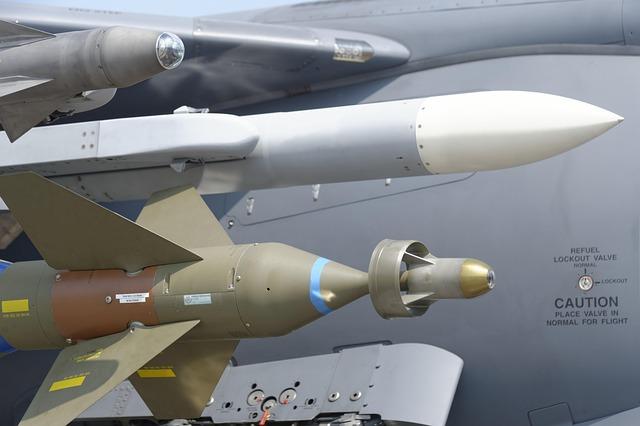
Defense officials, technologists and defense-industry executives will gather in Arlington, Virginia, on May 13–14 for “Loitering Munitions USA,” a two‑day forum dedicated to one of the most rapidly advancing areas of modern warfare. Taking place just outside the Pentagon and covered by InsideNoVa.com, the conference will examine how loitering munitions—frequently referred to as “kamikaze drones”—are transforming battlefield operations, acquisition priorities and long‑term U.S. defense strategy. With ongoing conflicts in Europe and the Middle East demonstrating heavy reliance on these systems, attendees are expected to confront urgent questions about capability gaps, ethical boundaries and America’s ability to compete with rival powers in this critical technology sphere.
Arlington to Host High-Level Summit on Loitering Munitions and “Kamikaze Drones”
Senior leaders from the U.S. Army, Marine Corps, U.S. Special Operations Command and partner nations’ militaries will meet with prime contractors, venture‑backed startups and specialized subsystem providers in Northern Virginia this May. Over the course of the event, commanders, acquisition chiefs and program managers will outline evolving needs for loitering munitions, while industry teams present agile kill‑chain solutions, AI‑driven target recognition and new models for human–machine collaboration.
Instead of relying solely on static displays, the conference will feature working groups, informal briefs and live technology walk‑throughs designed to influence near‑term and long‑range investment in precision‑strike and counter‑UAS capabilities. These interactions are expected to shape which technologies move from the lab to operational units and how quickly they do so.
The gathering will bring together:
- Defense policymakers aligning doctrine, funding and timelines under a unified strategy
- Program officers tasked with rapidly fielding combat‑ready systems at scale
- R&D leaders focused on sensor fusion, autonomy, networking and resilient data links
- Industry innovators building modular payloads and open‑architecture solutions
- Analysts and academics drawing lessons from Ukraine, Gaza and other current theaters
| Focus Area | Key Objective |
|---|---|
| Operational Concepts | Develop and refine tactics for highly contested airspace |
| Acquisition Paths | Compress timelines for prototyping and operational fielding |
| Technology Integration | Boost interoperability, resilience and cross‑domain connectivity |
| Allied Cooperation | Deepen shared standards, training pipelines and data‑sharing practices |
Loitering Munitions Push a New Evolution in US Military Doctrine
The rise of relatively low‑cost, maneuverable loitering munitions among peer and near‑peer adversaries is forcing the Pentagon to rethink decades of doctrine built around manned aircraft and massed artillery. Concepts like Joint All‑Domain Command and Control (JADC2) are being stress‑tested to incorporate persistent, unmanned strike systems operating alongside crewed platforms, ground‑based fires and cyber effects.
In this emerging environment, planners weigh not only lethality, but also survivability, signature management and decision speed. Loitering munitions capable of orbiting silently for hours introduce a different tempo of operations, where detection, targeting and engagement can happen in minutes—or seconds—once an opportunity appears.
This shift is reflected in:
- Revised training pipelines for air, land and maritime units
- Red‑team exercises that treat loitering munitions as both friendly assets and enemy threats
- Expanded experimentation at combat training centers and joint exercises
Key doctrinal focus areas now include:
- Survivability of forward bases: hardening dispersed outposts against persistent unmanned surveillance and strike
- Distributed logistics: supporting far‑flung launch cells and mobile units under constant aerial observation
- Rapid sensor‑to‑shooter links: shortening the kill chain from initial detection to weapons employment
Priority missions for loitering munitions:
- Counter‑armor: stalking and striking tanks and mechanized formations
- Suppression of enemy air defenses (SEAD): probing and degrading radar and missile sites
- Dynamic targeting: quickly engaging mobile command posts, artillery and high‑value fleeting targets
New technical requirements emerging from these missions include:
- AI‑enabled target recognition that can operate in cluttered, deceptive environments
- Resilient networking in contested spectrum to maintain control links and data flows under jamming
- Layered anti‑drone defenses that protect friendly forces from adversary loitering munitions and swarms
| Doctrinal Shift | Operational Effect |
|---|---|
| From reactive air strikes | To continuous overhead presence and near‑instant engagement |
| From static force posture | To widely dispersed, highly mobile launch and control nodes |
| From platform‑centric planning | To networked swarms and integrated manned–unmanned teams |
Deterrence and Escalation: How “Kamikaze Drones” Change the Strategic Calculus
Strategists argue that loitering munitions are also reshaping how the United States thinks about deterrence and escalation management. The capacity to saturate high‑value assets—air defenses, logistics hubs, command centers—with coordinated loitering strikes adds a more granular step between purely cyber actions and large‑scale manned air campaigns.
In recent war games and simulations:
- Commanders use loitering munitions to establish persistent “no‑go” zones over key terrain or infrastructure
- Adversary maneuver becomes riskier, even without the presence of large U.S. formations on the ground
- Decision‑makers gain scalable options to impose costs while managing political risk
At the same time, U.S. forces must prepare for adversaries employing similar tactics. That has spurred investment in layered counter‑loiter solutions—ranging from directed‑energy concepts and electronic warfare to kinetic interceptors—and in updated rules of engagement that address attribution, proportionality and rapid cross‑domain response.
Ethical and Legal Fault Lines as Precision Strike Technologies Spread
As loitering munitions and other precision systems proliferate from elite military inventories to mid‑tier forces and non‑state groups, ethicists and military lawyers warn that policy is trailing technology. Commanders on the ground now confront real‑time choices about how much lethal decision‑making authority to delegate to semi‑autonomous platforms.
Core principles of international humanitarian law—distinction, proportionality and meaningful human control—are being reexamined in light of weapons that can wait, watch and strike with limited human input. The challenge is especially acute in dense urban environments, where combatants and civilians often share the same space and infrastructure.
Key concerns include:
- How to define and enforce “human in the loop” oversight when engagements unfold in seconds
- How to evaluate civilian risk when targets move through apartment blocks, markets or refugee corridors
- How to assign responsibility when semi‑autonomous systems malfunction or are spoofed
On the international stage, regulatory initiatives remain fragmented. Voluntary norms and political declarations coexist uneasily with strong commercial demand and strategic competition. Export controls face an uphill battle in an era when smaller manufacturers can ship modular components, software updates and off‑the‑shelf systems across borders with limited scrutiny.
Analysts highlight several systemic vulnerabilities:
- Opaque supply chains that obscure where components originate and who ultimately uses them
- Limited end‑use monitoring, particularly in conflict zones or fragile states
- Inconsistent transparency standards among exporting and importing countries
| Issue Area | Current Status | Main Risk |
|---|---|---|
| International Law | Ongoing interpretation and debate | Uneven adherence and contested norms |
| Export Controls | Patchwork national and regional regimes | Uncontrolled spread to active conflict zones |
| Tech Governance | Reliance on voluntary industry and state norms | Weak enforcement and accountability mechanisms |
| Operational Doctrine | Under active revision across services | Unclear boundaries for human oversight and AI support |
- Key concern: How far to go in delegating lethal authority to semi‑autonomous loitering munitions
- Civilian impact: Heightened risk where combat and civilian life are closely intertwined
- Legal pressure: Applying existing IHL frameworks to emerging weapon categories
- Transparency gap: Limited visibility into exports, transfers and ultimate end‑users
From Experimentation to Everyday Use: Procurement and Integration Road Map
U.S. defense acquisition officials and industry partners are coalescing around a phased strategy to move loitering munitions from small‑scale experimentation into routine use across the joint force. The emerging procurement approach emphasizes synchronized requirements, rapid prototyping and data‑driven selection, supported by funding mechanisms that blend Research, Development, Test & Evaluation (RDT&E) with accelerated production pathways.
Core elements of this roadmap include:
- Ensuring loitering munitions plug into existing command‑and‑control networks from day one
- Standardizing digital interfaces to reduce integration time and cost
- Designing modular payload architectures so the same airframe can support multiple mission sets
- Evaluating systems not only on range and lethality, but also on resilience to jamming and cyber intrusion
To guide adoption over the next five years, the services are exploring concepts for embedding loitering munitions in joint fires cells, brigade combat teams and naval task groups. That effort is paired with parallel updates to doctrine, training and sustainment.
Planned priority actions include:
- Common training curricula for operators, fires planners, intelligence analysts and logisticians to ensure shared tactics and procedures
- Plug‑and‑play integration with existing ISR, electronic warfare (EW) and fires platforms, reducing bespoke engineering
- Tailored logistics and sustainment models compatible with dispersed, expeditionary operations
- Cybersecurity and data‑protection baselines for AI‑enabled targeting, mission planning and battle‑damage assessment
| Phase | Timeframe | Key Objective |
|---|---|---|
| Pilot Units | 2024–2025 | Introduce and evaluate early systems in select battalions and task forces |
| Scaled Adoption | 2025–2027 | Expand loitering munitions across joint and combined formations |
| Full Integration | 2027 onward | Institutionalize capabilities in doctrine, training, operations plans and budgets |
Looking Ahead: Why the Arlington Discussions Matter
As loitering munitions become a defining feature of modern conflict, the conversations slated for May 13–14 in Arlington will help shape how the United States and its allies adapt to this fast‑moving class of weapons. By bringing together defense planners, industry executives and technical experts, the event highlights both the rapid pace of innovation and the urgency of managing its strategic and ethical consequences.
For military organizations, policymakers and industry stakeholders, the conference offers:
- An up‑to‑date view of current and near‑term loitering munitions capabilities
- Insight into emerging doctrine, training and integration concepts
- Early visibility into potential guardrails, norms and governance mechanisms
Decisions informed by the Arlington discussions are likely to ripple far beyond the National Capital Region. They will influence how the Pentagon sets requirements, how industry invests in research and production, and how commanders plan and conduct operations in an era defined increasingly by unmanned, networked precision strike systems.