



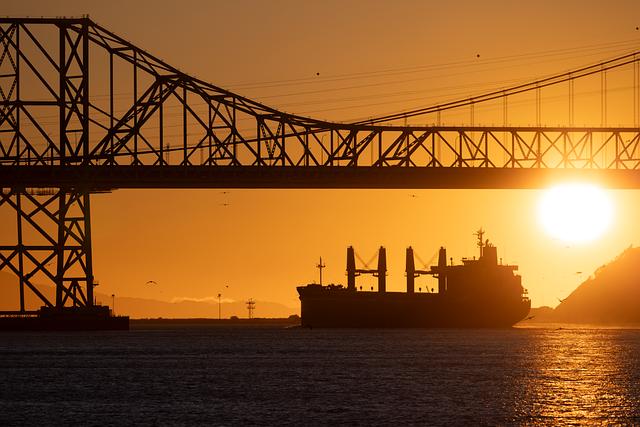
The United States has intercepted and seized a foreign‑flagged oil tanker operating near Venezuelan waters after determining that the vessel violated U.S. sanctions, then‑President Donald Trump announced on Friday. The operation represents a significant escalation in Washington’s broader campaign to restrict oil exports from the OPEC member, whose embattled government continues to face sweeping U.S. economic pressure. The action, first revealed by Reuters and later confirmed by U.S. officials, highlights the Trump administration’s readiness to employ forceful maritime enforcement tools to uphold its sanctions regime, even as critics caution that such moves may inflame geopolitical tensions and add volatility to global energy markets.
US seizure off Venezuela signals a new phase in sanctions enforcement at sea
The decision by U.S. authorities to board and detain a sanctioned crude tanker just off the Venezuelan coast illustrates a more assertive approach to maritime sanctions enforcement under the Trump era. Rather than relying solely on diplomatic pressure or financial restrictions, Washington has signaled that it is prepared to intervene directly on the high seas to disrupt revenue flows to President Nicolás Maduro’s government and its associated networks.
For global shipping, insurance and energy trading firms, the incident is a stark warning. It demonstrates that U.S. officials are willing to pursue vessels suspected of sanctions violations far from American ports, and to treat questionable cargoes and ownership chains as legitimate targets for interdiction. While U.S. agencies have framed the action as a focused strike on a vessel allegedly tied to designated entities, regional analysts note that such operations risk deepening frictions with Caracas and could complicate engagement with other energy producers and consumers that maintain ties with Venezuela.
At a time when oil markets are acutely sensitive to supply disruptions—especially in politically volatile regions—any forcible seizure of tankers can have a ripple effect. According to the International Energy Agency, seaborne crude accounts for roughly 60% of global oil trade, making maritime routes and shipping practices central to both energy security and sanctions compliance. As a result, market players are reassessing their exposure to Venezuelan-linked cargoes and reassessing the risk of transit through high‑enforcement areas.
Immediate operational shifts for shipping and trading firms
Shipowners, charterers and traders operating in or near sanction‑sensitive zones are already revisiting their risk calculations. Many are implementing defensive measures to reduce the likelihood of vessel detention, cargo delays or secondary sanctions exposure, including:
- Re-routing vessels to avoid waters where sanctions enforcement operations are more likely.
- Strengthening compliance checks on cargo origin, ultimate beneficiaries and chains of ownership.
- Re‑examining insurance policies to ensure coverage in the event of U.S. sanctions actions or asset freezes.
- Pausing or exiting deals that involve intermediaries with opaque structures or suspected Venezuelan ties.
| Key Actor | Primary Concern |
|---|---|
| US Government | Projecting deterrence and enforcing oil sanctions |
| Venezuela | Safeguarding export revenues and asserting sovereignty |
| Shipowners | Preventing vessel arrests and sanctions liability |
| Oil Traders | Keeping supply chains intact without violating sanctions |
Legal and diplomatic implications for maritime operators dealing with sanctioned Venezuelan entities
For shipowners, charterers, financiers and insurers, the tanker seizure underscores how quickly routine commercial activity can intersect with complex layers of U.S. primary and secondary sanctions, flag‑state obligations and port‑state enforcement. Operators that transport crude or products linked to Venezuelan state firms or other specially designated nationals (SDNs) face a range of consequences: freezing of assets, withdrawal of insurance cover, restrictions on dollar transactions and—where conduct is deemed willful—possible criminal prosecution.
Compliance functions are therefore under pressure to maintain detailed vessel and cargo histories, verify counterparties well beyond direct contractual partners, and track continuous changes in sanctions lists and advisories. Even inadvertent dealings with blacklisted actors can prompt lengthy investigations, vessel detentions and expensive cross‑border legal disputes.
Extraterritorial reach and diplomatic friction
Maritime interventions of this kind carry significant diplomatic repercussions. Flag states, coastal authorities and the home governments of beneficial owners must balance commercial interests against political alignments and U.S. expectations. Operators can be drawn into disputes involving the extraterritorial application of U.S. law, overlapping legal jurisdictions and contradictory instructions from regulators and port authorities.
In practice, these pressures are pushing many maritime companies to reshape their risk tolerance and adapt their operations, often by:
- Re-routing or cancelling voyages to ports or terminals perceived as high‑risk from a sanctions standpoint.
- Renegotiating charterparty clauses to more clearly allocate sanctions, detention and seizure risks between owners and charterers.
- Changing flags or classification societies where appropriate to lower exposure to certain regulatory regimes.
- Seeking local legal advice and diplomatic engagement in advance of high‑profile or politically sensitive port calls.
| Risk Area | Key Exposure | Typical Operator Response |
|---|---|---|
| Legal | Sanctions breaches, vessel or cargo seizure | Enhanced due diligence and tighter contractual protections |
| Financial | Loss of banking access and insurance cover | Diversifying funding sources and engaging alternative insurers |
| Diplomatic | Inter‑state disputes, blacklisting or port bans | Government liaison and industry association advocacy |
Risk assessment gaps in global shipping and insurance compliance
The tanker case has amplified concerns among compliance professionals that many existing tools and processes are still not fit for purpose in a fast‑moving sanctions environment. Traditional risk‑screening approaches—heavily dependent on static sanctions lists, manual checks and basic AIS tracking—struggle to capture evolving risk indicators such as shifting ownership structures, layered shell companies and opportunistic short‑term chartering.
Specialists in maritime intelligence note that while regulators and industry bodies have issued detailed advisories on deceptive shipping practices since 2020, many firms have yet to fully integrate those recommendations into their day‑to‑day workflows. Key behavioral patterns—such as extended loitering near embargoed coasts, unreported ship‑to‑ship transfers or repeated “dark” activities—are still too rarely incorporated into onboarding, customer risk scoring and transaction monitoring.
Systemic weaknesses in compliance frameworks
Industry materials reviewed by investigators suggest that many banks, trading houses and marine insurers continue to treat advanced sanctions screening as a procedural requirement rather than an intelligence‑driven discipline. Common weaknesses include:
- Fragmented data flows between brokers, P&I clubs, banks and operators, leaving critical information siloed.
- Uneven Know Your Customer (KYC) standards across jurisdictions, flag registries and corporate service providers.
- Limited human analysis of complex ownership webs, with overreliance on automated database checks.
- Reactive risk identification, where enhanced scrutiny often starts only after press reports or regulatory alerts.
| Risk Signal | Industry Response |
|---|---|
| Frequent or recent flag changes | Recorded but seldom escalated |
| Dark voyages near embargoed or high‑risk zones | Observed, with inconsistent follow‑up |
| Opaque or convoluted ownership chain | Noted but often tolerated if no direct SDN match appears |
Practical steps for energy traders and shippers to improve due diligence and avoid secondary sanctions
Across the energy and maritime sectors, compliance teams are responding to heightened enforcement by expanding screening routines, deploying sophisticated vessel‑tracking technologies and embedding legal oversight throughout the transaction lifecycle. To mitigate exposure to U.S. primary and secondary sanctions, firms engaged in crude and product trades with any connection to Venezuela or other sanctioned jurisdictions should:
- Cross‑check counterparties, beneficial owners and vessels against multiple sanctions lists (U.S., EU, UN and key national regimes) before fixtures or liftings.
- Monitor AIS data and routing patterns for unexplained gaps, signal spoofing and ship‑to‑ship transfers in or near sensitive waters.
- Scrutinize pricing, payment flows and intermediaries for indications that a transaction structure is designed to mask the true origin or destination of cargo.
- Trace cargo provenance more thoroughly, including documentation of loading ports, prior cargoes and terminal operators.
- Include robust charterparty and sales contract clauses that address sanctions events, with automatic termination, diversion and indemnity provisions.
Risk and legal departments are also formalizing governance structures around sanctions exposure. This typically involves establishing clear escalation routes to senior management when red flags appear, as well as creating and preserving audit‑ready documentation that can be provided to regulators on short notice. To push compliance expectations down the value chain, traders and owners frequently rely on contractual warranties, detailed KYC questionnaires and audit rights, while insurers and P&I clubs are revising underwriting standards and coverage terms in response to recent enforcement cases.
Companies that cannot demonstrate a proactive, forward‑looking sanctions strategy increasingly face not only the possibility of vessel detention or cargo loss, but also a broader loss of confidence from banks, insurers and service providers that are highly sensitive to reputational and regulatory risk.
Core elements of a stronger sanctions compliance toolkit
- Screen counterparties across U.S., EU and UN designations prior to concluding fixtures or lifting cargo.
- Investigate vessel history, including previous calls to sanctioned or high‑risk ports, and any recent changes in name, flag or ownership.
- Continuously monitor AIS and other telemetry for dark activity, spoofed locations and unusual rendezvous patterns.
- Fortify contracts with explicit clauses covering sanctions, diversion options, cooperation in investigations and indemnities.
- Keep thorough records of all risk assessments, internal approvals and external advice obtained in relation to higher‑risk voyages.
| Risk Area | Key Red Flag | Mitigation Step |
|---|---|---|
| Vessel | Recent or frequent change in ownership | Conduct enhanced ownership and control due diligence |
| Cargo | Incomplete or inconsistent origin documentation | Obtain independent third‑party verification of provenance |
| Payments | Reliance on offshore shell entities or complex payment chains | Subject to bank‑side screening, KYC refresh and closer AML review |
| Routing | Unexplained dark periods or deviations in high‑risk waters | Require route justification, continuous monitoring and, where needed, voyage adjustments |
In Conclusion
The tanker seizure near Venezuela is likely to intensify already strained relations between Washington and Caracas and reinforces the Trump administration’s determination to enforce sanctions on Venezuela’s vital oil sector. As legal proceedings unfold and both sides refine their strategies, the case will serve as a benchmark for how far the United States is prepared to go in policing economic restrictions on global shipping lanes—and how forcefully Venezuela and its partners will resist such measures. For the maritime and energy industries, it is a clear indication that sanctions compliance is no longer a back‑office function, but a strategic imperative that directly shapes commercial viability and geopolitical risk.