



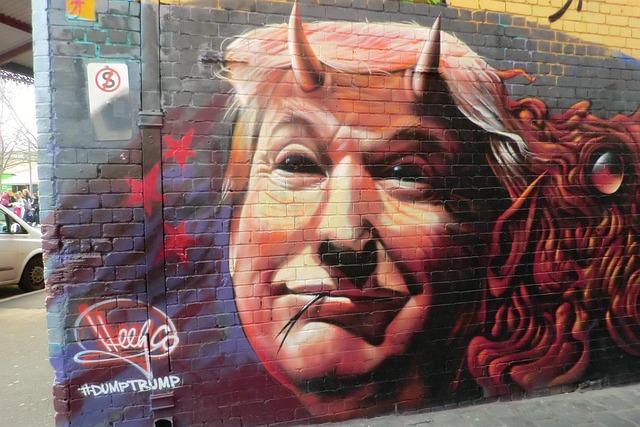
Donald Trump is signaling that, if he returns to the White House, he plans to turn his tough‑on‑crime campaign rhetoric into a sweeping national agenda—one that could radically expand Washington’s role in street‑level enforcement. Casting fears about public safety as a mandate for federal action, the former president has floated plans to send troops into American cities, toughen federal prosecutions, and roll back protections for criminal defendants and protesters.
Supporters applaud him as a decisive law‑and‑order leader. But legal scholars, civil rights groups, and a number of state and local officials warn that these proposals would ignite constitutional battles over policing, civil liberties, and the scope of presidential power. As crime and public safety continue to poll as top concerns for many voters, Trump’s agenda is emerging as a potential turning point in how power is divided between the federal government and the states—testing both long‑standing legal norms and the resilience of U.S. democratic institutions.
Federal Crime Crackdown vs. State Authority: A Looming Power Struggle
By vowing an aggressive federal response to street violence, immigration‑related offenses, and drug trafficking, Trump is effectively probing how far federal supremacy can stretch into territory historically controlled by governors, mayors, and local prosecutors. For decades, routine policing, charging decisions, and community‑level crime strategies have been the province of state and local governments. A nationally directed “crime offensive” would challenge that balance head‑on.
Legal experts say such a push would sharpen the clash between federal supremacy and long‑established state sovereignty doctrines. At stake is who sets priorities on issues like:
– Which offenses are prosecuted federally rather than locally
– What policing tactics can be encouraged, funded, or discouraged by Washington
– How far federal law can preempt state and city policies that diverge from White House priorities
Civil rights advocates caution that if Washington targets cities and states that resist this hard-line crime agenda, the result will be a wave of lawsuits grounded in the Tenth Amendment and constitutional limits on executive authority. Federal judges would likely be asked to move quickly, issuing emergency injunctions and fast‑tracking appeals to determine whether a president can effectively nationalize key aspects of local policing.
Red and Blue States Prepare for Diverging Paths
Behind closed doors, state attorneys general and legislators from both parties are already gaming out scenarios. Some conservative, red‑leaning states are signaling they may eagerly coordinate with Washington on stiffer enforcement. Others, particularly in blue states and progressive cities, are preparing to resist what they view as federal encroachment on local self‑governance.
Key pressure points include:
- Federal task forces embedded in local police departments and sheriff’s offices
- Conditional funding that ties vital grants to adoption of federal crime priorities
- Preemption battles over state or local laws that conflict with or obstruct national directives
| Front | Likely Response |
|---|---|
| Blue-leaning cities | Court challenges, sanctuary-style resistance policies |
| Red-leaning states | Cooperation and joint enforcement initiatives |
| Federal courts | Rapid tests of executive power limits |
Constitutional Limits: Military Deployment, Policing, and Civil Liberties
Constitutional scholars emphasize that any broad plan to deploy federal forces—or even active‑duty military—into civilian communities under a national crime banner will confront strict legal guardrails. The Posse Comitatus Act sharply curtails the use of the U.S. military for domestic law enforcement, and Supreme Court precedent has historically protected state and local control of everyday policing.
While the Insurrection Act creates narrow exceptions, legal experts warn that using it as a catch‑all justification for crime crackdowns would invite immediate legal challenges. Civil liberties lawyers are already sketching out lawsuits that could seek temporary restraining orders and emergency stays, leading to a defining Supreme Court showdown over how far a president can stretch the concept of “public safety.”
Civil Liberties on the Line: Surveillance, Protests, and Due Process
Rights advocates say an expansive federal crime campaign risks chipping away at core protections, including Fourth Amendment limits on unreasonable searches and seizures, and First Amendment safeguards for protesters, journalists, and bystanders.
They expect close scrutiny of:
- Surveillance tools deployed in high‑crime neighborhoods, online spaces, and protest areas—including facial recognition, license‑plate readers, and broad data sweeps
- Use-of-force standards when federal agents operate alongside local officers, often under different rules and accountability systems
- Detention and charging practices in accelerated federal prosecutions that can reduce plea‑bargaining leverage and appeal options
- Information sharing between intelligence agencies and local police departments, which raises questions about data retention and misuse
| Key Legal Flashpoints | Potential Challenge |
|---|---|
| Use of active-duty troops | Possible violation of the Posse Comitatus Act |
| Federal control of local patrols | Encroachment on state and local policing authority |
| Mass surveillance operations | Claims of unreasonable searches and privacy intrusions |
| Crackdowns at protests | Free speech, press, and assembly lawsuits |
Communities on Edge: Fears of Profiling, Overreach, and Everyday Disruption
In immigrant neighborhoods, Black communities with long histories of over‑policing, and other vulnerable areas, local leaders warn that stepped‑up raids, increased surveillance, and broader stop‑and‑search powers could turn entire districts into permanent enforcement zones.
Civil rights attorneys say the danger isn’t just a higher arrest rate—it’s the quiet normalization of profiling under a federal mandate that prizes raw enforcement statistics over nuanced, community‑oriented policing. Parents worry that school drop‑offs, commutes, and religious services could turn into points of contact with heavily armed federal or joint task‑force officers.
Some city officials are already quietly preparing contingency plans, such as:
– Emergency legal‑aid teams to respond to mass arrests or sudden raids
– Short‑term support funds for families separated by detention or deportation
– Partnerships with local health providers to address the psychological toll of constant enforcement pressure
Clashes with Local Reforms and Sanctuary Policies
Over the past decade, many cities have adopted sanctuary policies, entered consent decrees to correct abusive policing, or enacted ordinances to curb discriminatory practices. A hard‑line national crime agenda could collide with these local reforms, creating a patchwork of legal conflict.
Advocacy organizations warn that:
– Federal‑local partnerships with departments already under scrutiny for bias could inflame tensions
– Attempts to override sanctuary policies may spur widespread non‑cooperation and defiance
– Aggressive tactics could deepen mistrust in communities that are already reluctant to report crimes or serve as witnesses
In response, rights groups and community coalitions are preparing “defensive infrastructure” to blunt potential harms. Their toolkits often include:
- Know-your-rights trainings offered online and in multiple languages, explaining what residents can refuse or demand during stops, raids, and interrogations
- Hotlines to report abuse, unlawful searches, or patterns of harassment by federal or joint task‑force officers
- Rapid legal triage systems designed to deploy attorneys in real time during protests, sweeps, or workplace raids
- Data tracking projects to document and analyze patterns of selective enforcement across race, immigration status, or neighborhood
| Community | Main Concern | Planned Response |
|---|---|---|
| Immigrant hubs | Workplace and neighborhood raids | Coordinated legal defense networks |
| Black neighborhoods | Targeted traffic and street stops | Cop-watch teams and civilian observers |
| College towns | Campus and dormitory sweeps | Student-led civil liberties coalitions |
| Border cities | Expansion of checkpoints and patrol spillover | Local ordinances and legal challenges |
Policy Safeguards: How Lawmakers Can Protect Due Process and Oversight
Members of Congress and state legislators have a narrowing window to reinforce legal guardrails before any sweeping federal crackdown on crime tests the limits of partisan control over law enforcement. The goal, experts say, is not to block a “tough on crime” platform outright, but to ensure that its implementation cannot easily morph into a tool for political payback or ideological policing.
One priority is clarifying, by statute, that investigative decisions at the Department of Justice and federal law enforcement agencies must remain insulated from direct political orders. That could include:
– Clear rules requiring that when senior political appointees overrule career prosecutors on charging decisions, automatic triggers for judicial review are activated
– Limits on informal back‑channel communications about specific cases
– Stronger reporting and record‑keeping obligations for any deviation from established enforcement norms
Another proposal gaining traction among some legal reformers is the creation of an independent, Senate‑confirmed DOJ integrity watchdog with real subpoena power, a fixed term, and protection against politically motivated firing. This watchdog would be tasked with issuing rapid, public reports when patterns of politically skewed prosecutions or selective crackdowns emerge.
Turning Congressional Hearings into Lasting Oversight
Historically, high‑profile oversight hearings in Washington tend to be episodic and reactive. Critics say that’s not enough in an environment where a national crime agenda could be used as both a policy platform and a political weapon.
Reformers argue that Congress should build a more permanent framework of scrutiny that includes:
- Mandatory disclosure rules for any substantive contacts between White House officials and prosecutors about particular investigations or defendants
- Real-time logs of major enforcement policy shifts, shared simultaneously with both parties in Congress
- Whistleblower fast lanes allowing career agents, analysts, and attorneys to report improper pressure or retaliation to independent overseers
| Reform Tool | Target Risk |
|---|---|
| Statutory firewalls | Direct political orders to law enforcement |
| Public reporting clocks | Secret shifts in enforcement priorities |
| Independent counsel triggers | Retaliatory or selectively targeted prosecutions |
These measures would not prevent any administration from pursuing a hard‑line national crime agenda. But they would make it considerably more difficult to weaponize that agenda against political rivals, protesters, journalists, or disfavored communities without leaving a transparent, reviewable record.
In Conclusion
As Trump’s crime proposals move from campaign stagecraft to the possibility of real governance, the clash between an expansive concept of federal authority and entrenched limits on executive power is poised to sharpen. Whether—and how—a future administration can export a hard‑line crime crackdown to cities and states across the country will be tested in multiple arenas: on city streets, in state capitols, and, ultimately, in courtrooms that must reconcile public safety demands with constitutional constraints.
The outcomes of those fights will help delineate the outer boundary of presidential power and redefine the contours of American policing, civil liberties, and federal‑state relations for years to come.