

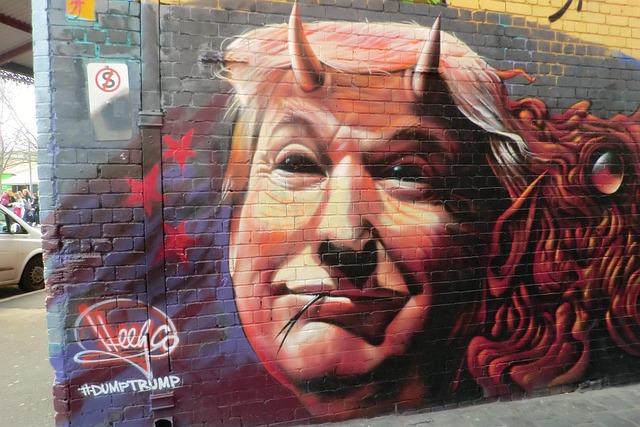
Trump Intensifies GOP Infighting Over Effort to Limit Presidential War Powers on Iran
Former President Donald Trump has opened a new front in his long‑running battle over Republican Party direction, publicly rebuking five GOP senators who sided with Democrats on a bipartisan proposal to restrict the president’s authority to take military action against Iran without prior congressional approval. In a flurry of statements and social media posts, Trump accused the senators of jeopardizing national security and eroding the strength of the presidency at a time of mounting global instability.
The episode highlights a growing ideological and constitutional clash inside the Republican Party over how much unilateral power any commander in chief should wield in decisions of war and peace. While Trump and his closest allies contend that strong executive discretion is essential to deter adversaries such as Iran, a bloc of more traditional conservatives argues that the Constitution requires Congress to reclaim its central role in authorizing the use of force.
This internal fight comes as lawmakers revisit decades‑old Authorizations for Use of Military Force (AUMFs) passed after the September 11 attacks and the 2003 invasion of Iraq. With U.S. forces still engaged in counterterrorism and advisory operations across more than a dozen countries, the debate over war powers has taken on new urgency, especially as public fatigue with “forever wars” persists and defense spending remains near historical highs—about $886 billion was authorized for national defense in fiscal year 2024.
- National security vs. congressional oversight: Trump casts the Iran war powers curb as dangerous appeasement; its GOP backers insist it is a constitutional course correction.
- Electoral stakes: The break with Trump provides fresh ammunition for primary challengers in states where loyalty to the former president remains a dominant litmus test.
- Defining Republican identity: The fight spotlights an unresolved question: Will the GOP follow Trump’s assertive, personality‑driven approach to foreign policy, or reembrace institutionalist skepticism about unchecked executive power?
| Republican Bloc | Position on Iran War Powers | Political Risk |
|---|---|---|
| Trump Loyalists | Reject new limits on presidential action | Potential backlash from moderates and independents |
| Institutional Conservatives | Support stronger congressional oversight | Vulnerability with the pro‑Trump base |
| Swing Republicans | Pursue compromise language on Iran | Exposure to criticism from both wings of the party |
GOP Struggles With Constitutional Role in Authorizing the Use of Military Force
Trump’s attack on the senators has turned what had been a quiet, behind‑the‑scenes disagreement into a full‑scale confrontation over the Republican Party’s constitutional priorities. Supporters of the war powers resolution argue that it is less a rebuke of Trump personally than a necessary rebalancing of authority under Article I of the Constitution, which assigns Congress—not the president—the power to declare war.
They point to two decades of expansive interpretations of post‑9/11 AUMFs, which have allowed both Republican and Democratic presidents to launch and sustain military operations without fresh votes in Congress. Critics inside the party, however, see any new constraints on the executive as a strategic gift to adversaries and a public sign of disunity at home. In their view, projecting an unambiguous willingness to use force—especially against actors like Iran—is central to deterrence.
The divide has effectively sorted Republican lawmakers into distinct camps, each guided by a different understanding of the party’s duty in matters of war:
- Institutionalists emphasize the framers’ concern about concentrating war‑making power in a single individual and warn against open‑ended or “blank check” authorizations.
- Loyalists prioritize presidential latitude and party discipline, arguing that internal dissent during crises undercuts U.S. credibility.
- Pragmatists try to limit their exposure to both the Trump base and voters wary of prolonged military engagements.
| GOP Camp | Core Priority |
|---|---|
| Institutionalists | Reassert Congress’s constitutional war powers |
| Loyalists | Preserve maximum commander‑in‑chief flexibility |
| Pragmatists | Minimize both political and policy risks |
To keep the conference from splintering further, senior Republicans have floated narrower, time‑limited authorizations, stronger consultation requirements, and more frequent reporting from the Pentagon. These trial balloons are designed to show responsiveness to constitutional concerns without dramatically curbing the president’s ability to act quickly.
Whether such compromises hold will depend in part on how aggressively Trump continues to single out GOP dissenters and whether voters reward or punish those who backed stronger checks on war powers. At stake is not just the next vote on Iran or any other hotspot, but the party’s long‑term identity as either a defender of congressional prerogatives or a champion of expansive executive authority.
Legal Experts Probe Boundaries of Presidential War Powers as Tensions With Congress Rise
Constitutional lawyers and national security law specialists say the Republican rift over Iran is part of a much larger, unresolved problem at the heart of U.S. foreign policy: the lack of a clear, shared understanding of how far presidential war powers extend without explicit congressional authorization.
The executive branch has long argued that modern threats—ranging from state actors like Iran to fast‑moving terrorist networks and cyber adversaries—require the president to respond swiftly, often in secret, and sometimes without the delay of a congressional debate. Over time, administrations of both parties have leaned heavily on the 2001 and 2002 AUMFs to justify operations that go well beyond the original fights against al‑Qaeda, the Taliban, and Saddam Hussein’s regime.
Many legal analysts contend that this accumulation of precedents has had the practical effect of sidelining Congress and normalizing military action undertaken with minimal public deliberation. They warn that unless statutes are updated and clarified, future presidents will continue to cite loosely related threats or alliances to fit new conflicts under the umbrella of old authorizations.
In recent hearings and expert roundtables, scholars and practitioners have zeroed in on several legal pressure points that are likely to shape any new framework for the use of force:
- Scope of existing AUMFs: Whether post‑9/11 authorizations can legitimately be stretched to cover new militant groups, regional affiliates, or entirely different theaters of operation.
- “Imminent threat” standard: How broadly the executive may interpret intelligence and risk assessments as justification for preemptive or preventive strikes.
- War Powers Resolution enforcement: The willingness and capacity of Congress to resort to tools such as funding restrictions, withholding authorizations, or litigation to compel executive compliance.
| Key Legal Question | Executive View | Congressional Concern |
|---|---|---|
| Who initiates new conflicts? | President retains broad flexibility as commander in chief | Major uses of force should require explicit authorization |
| How long can operations continue? | Indefinitely, if covered by prior AUMFs | Clear time limits and periodic reauthorization |
| What counts as “hostilities”? | Narrow definition that can exclude some airstrikes or support roles | Broader definition that triggers oversight and reporting |
Some experts also note that judicial involvement remains limited. Federal courts have often been reluctant to step into disputes between Congress and the president over war powers, citing political question doctrines and deference to the political branches. This hesitation further elevates the importance of clear statutes and robust legislative oversight in shaping the boundaries of presidential authority.
Policy Analysts Call for a Modern War Powers Framework and Bipartisan Guardrails
Think‑tank researchers, former Pentagon officials, and policy advocates across the ideological spectrum argue that the latest clash over Iran is a symptom of a deeper structural weakness that Congress has allowed to fester for years. They say that the 2001 and 2002 AUMFs have, in practice, functioned as a flexible legal toolkit for successive administrations, enabling military action in places that lawmakers never specifically contemplated when they first voted for those measures.
Constitutional scholars caution that this pattern has blurred accountability for decisions of war and peace. When authorizations are vague or outdated, it becomes harder for the public to know who should be held responsible for long‑running missions, unexpected escalations, or civilian casualties abroad. That uncertainty, critics say, erodes trust in both Congress and the presidency.
In response, a growing coalition of policy analysts is pushing for a refreshed war powers architecture anchored in bipartisan guardrails, transparency, and regularly scheduled review. Their recommended reforms commonly include:
- Sunset clauses for any new authorization, such as automatic expiration after two to five years, forcing Congress to re‑evaluate whether ongoing operations still serve U.S. interests.
- Clear geographic and mission boundaries that specify where and against whom force may be used, limiting the ability to expand conflicts into new regions without additional approval.
- Mandatory reporting requirements that compel the administration to provide Congress with frequent updates on objectives, financial costs, casualty numbers, and civilian impact.
- Cross‑party consultation mechanisms that require the executive to brief bipartisan leadership and relevant committees before major escalations or new deployments.
| Reform Idea | Main Goal |
|---|---|
| Time‑limited authorizations | Prevent open‑ended or “forever” wars |
| Narrow mission scope | Reduce legal loopholes and mission creep |
| Bipartisan review panels | Share political responsibility and ensure cross‑party buy‑in |
| Regular impact reports | Enhance transparency and public oversight |
Supporters of these reforms point to recent bipartisan efforts to repeal or replace outdated AUMFs as evidence that a new consensus may be possible, even in a polarized Congress. Some proposals would pair repeal of the 2002 Iraq authorization with a targeted, modern AUMF tailored to today’s threats, combining tighter limits with flexibility for unforeseen crises.
Closing Remarks
The current showdown over war powers authority—punctuated by Trump’s unusually harsh criticism of Republican senators—captures a larger struggle over how the United States should decide when to go to war and who gets the final say. The Senate’s willingness to back restraints on unilateral action, paired with fierce resistance from the former president and his allies, underscores a widening gap inside the GOP over executive power, constitutional roles, and America’s posture abroad.
How this conflict unfolds will shape more than one high‑profile vote on Iran or any other flashpoint. It will influence whether Congress reclaims a central role in authorizing the use of force, whether future presidents of both parties accept clearer statutory limits, and whether a sustainable bipartisan framework on war and peace can emerge in an era of rapid threats and deep domestic division.