



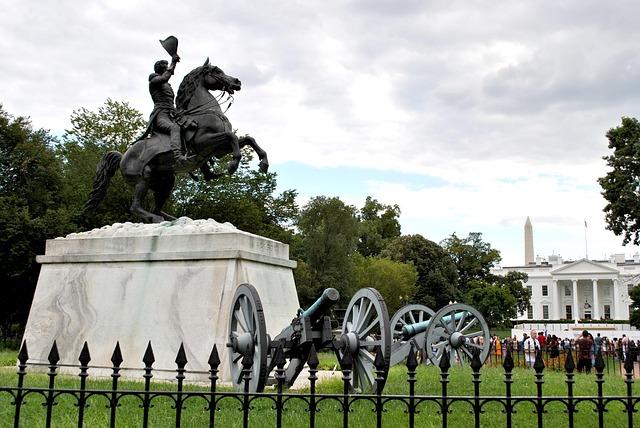
When Donald Trump arrived in Washington, DC, the impact of his hard-line immigration agenda radiated far beyond Capitol Hill. In neighborhoods across the city, immigrant residents describe a profound shift in how they move, work and interact with institutions. A climate of aggressive enforcement, backed by inflammatory rhetoric, coincided with new waves of racial profiling and constant, low-level harassment. Interviews with community members reveal a city that once felt relatively welcoming becoming sharply more hostile, as people began to fear routine encounters with police, security staff and even longtime neighbors. This article explores how Trump-era immigration policies and policing practices reshaped everyday life for immigrants in the nation’s capital—and why, for many, the conclusion is stark: “It’s not safe in DC as an immigrant.”
From “sanctuary” to suspicion: how racial profiling escalated in DC immigrant neighborhoods
In DC’s immigrant-rich areas, ordinary tasks—taking the Metro, crossing a park after dark, driving to an early-morning shift—have taken on a sense of risk. Residents and advocates report an uptick in stops, questioning and searches that appear to hinge more on someone’s appearance, accent or language than on any concrete evidence of wrongdoing.
Community organizers describe police units and security officers lingering near apartment complexes with large foreign-born populations, shadowing day laborers leaving known hiring corners, and pulling over older cars with out-of-state plates driven by people of color. To those who live there, the message is clear: certain bodies and languages are treated as suspicious by default.
Parents urge their children to keep school IDs on them at all times “just in case.” Restaurant workers, cleaners and home health aides quietly swap advice about which streets, stations and shortcuts to avoid if they want to minimize encounters with law enforcement.
- Latino and African immigrants report a noticeable rise in “random checks” and on-the-spot questioning.
- Street vendors say minor code issues—like a misplaced cart or missing label—now trigger probing questions about immigration status.
- Rideshare drivers recount being stopped for vague “traffic safety” reasons, only to be interrogated about where they were born and how long they’ve been in the US.
- Students describe officers asking about their nationality during searches near schools, bus stops and Metro entrances.
| Neighborhood | Main Concern | Common Police Action |
|---|---|---|
| Columbia Heights | Targeting of day laborers | ID checks near job corners |
| Mount Pleasant | Stops of street vendors | Vehicle and permit inspections |
| Petworth | Youth surveillance | Group dispersal and searches |
Everyday life under scrutiny: how enforcement fears reshape undocumented residents’ routines
For undocumented residents in DC, the fear of immigration enforcement is no longer confined to dramatic raids. It seeps into the most mundane aspects of daily life—school drop-offs, bus rides, doctor’s appointments and grocery runs.
Parents map out “safe routes” to work and school that skirt federal buildings, major transit hubs and intersections rumored to be under surveillance, even when it means getting up before dawn or adding hours to the day. Informal WhatsApp and Telegram groups ping with warnings about unmarked vehicles, checkpoint rumors and sightings of joint local–federal operations, causing workers to leave shifts early or avoid certain corridors altogether.
Activities that once felt routine are now carefully weighed against potential danger. People batch errands to minimize time in public spaces, postpone non-emergency medical visits, and stay away from large parks or events where heavy police presence is expected. Many undocumented residents withdraw into smaller, tightly knit social circles, relying on neighborhood businesses, churches and community centers that have publicly vowed not to cooperate with immigration enforcement.
The local service economy, which depends heavily on immigrant labor, has absorbed the fallout. Restaurant kitchens, hotel laundry rooms, ride-hail services and construction sites have all seen workers abruptly vanish or refuse assignments that require crossing specific parts of the city. Employers talk about worker shortages; advocates respond that people are weighing wages against the risk of detention or deportation.
To cope, families and workers have improvised new survival strategies:
- Rotating drivers in school and work carpools so no single person is consistently exposed to riskier routes or checkpoints.
- Cash-only jobs and side gigs designed to leave minimal documentation trails that could end up in shared databases.
- Informal childcare networks that allow children to stay home when immigration raids or police “sweeps” are rumored in the area.
- Emergency “go bags” kept near the door with key documents, cash and contact numbers ready in case of sudden arrests.
| Daily Activity | Before intensified enforcement | After intensified enforcement |
|---|---|---|
| Commute to work | Metro and buses | Side streets, carpools, walking |
| Grocery shopping | Large supermarkets | Small neighborhood stores |
| Healthcare visits | Public clinics | Community health fairs, telehealth |
| School engagement | Parent meetings in person | Reduced presence, phone updates |
What the numbers show: disproportionate stops and searches of Black and Latino immigrants
Data from the Metropolitan Police Department (MPD), obtained through public records requests, offers a stark picture of how Trump-era priorities played out on DC’s streets. Between 2017 and 2020, Black and Latino non-citizens were stopped at roadside checkpoints, along sidewalks and near transit hubs at rates far greater than their share of the city’s population—and out of proportion to their representation in crime statistics.
Internal guidance urged officers to be “vigilant” in and around transportation corridors and areas designated as “high-risk” neighborhoods. In practice, those labels overlapped heavily with longstanding Black and Latino communities in Northeast and Southeast DC. Civil rights attorneys argue that this quietly reoriented policing around immigration-adjacent enforcement, turning school runs, late-night shifts and weekend errands into potentially life-altering encounters.
Researchers who analyzed MPD and joint federal task force activity describe a pattern of low-yield, high-impact policing. The vast majority of stops resulted in no contraband, no arrest and no charges. Yet each interaction carried the possibility of referrals to immigration authorities, particularly if a person’s identification documents were questioned or absent.
Key trends documented by advocates and community surveys include:
- Stops of Black immigrants increasing along routes that connect predominantly Black neighborhoods to downtown and federal office corridors.
- Latino day laborers facing repeated early-morning searches near construction sites following coordinated “sweeps.”
- Mixed-status families recounting children being present during invasive traffic stops and vehicle searches.
| Group | Share of DC Population | Share of Police Stops |
|---|---|---|
| Black immigrants | 8% | 29% |
| Latino immigrants | 10% | 33% |
| White non-immigrants | 40% | 18% |
These disparities in DC align with broader national patterns. A 2022 analysis by the Vera Institute of Justice, for example, found that across major US cities, Black and Latino drivers were significantly more likely to be pulled over and searched despite lower rates of contraband discovery compared with white drivers. For immigrant communities in the capital, such statistics are not abstract—they mirror lived experiences of constant scrutiny.
Demands for change: reforms advocates say DC needs to protect immigrant rights
In response to these conditions, immigrant rights coalitions, public defenders and civil liberties organizations in DC are urging city leaders to move beyond symbolic “sanctuary” declarations and adopt enforceable safeguards that change what happens during actual police encounters.
A central demand is a clear legal firewall separating local government functions from federal immigration enforcement. Advocates want robust limits on when local agencies can share information with Immigration and Customs Enforcement (ICE), strict rules on cooperation at jails and detention facilities, and firm consequences for officers who cite perceived immigration status as a basis for stops or questioning.
They are also calling for expanded access to legal support, pointing out that immigration proceedings—unlike criminal trials—do not guarantee counsel. City-funded representation, they argue, can be the difference between deportation and family unity. On top of that, community groups are pressing for real-time oversight tools capable of tracking who is being stopped, where and why, broken down by race, language and national origin.
Proposals raised in public hearings and policy briefs often focus on making racial profiling a career-ending act rather than an unremarkable practice:
- Stronger sanctuary ordinances that close loopholes allowing agencies to cooperate informally with federal agents through data sharing or joint operations.
- Mandatory anti-bias and language-access training for officers, designed and evaluated with direct participation from immigrant communities.
- Data transparency via public dashboards that show stops, searches, complaints and outcomes involving immigrants in near real time.
- Community-based crisis response teams to handle mental health episodes, noise complaints and other nonviolent incidents without involving police.
| Key Reform | Goal |
|---|---|
| Non-cooperation with ICE detainers | Prevent local arrests from feeding directly into the deportation pipeline |
| Independent misconduct review board | Provide credible investigations and accountability for racial profiling claims |
| Right-to-counsel expansion | Guarantee legal representation in deportation and removal proceedings |
| Neighborhood outreach funding | Rebuild trust through know-your-rights workshops and community education |
Looking forward: can DC live up to its sanctuary image?
As Washington navigates new political cycles and shifting federal priorities, the imprint of the Trump years remains deeply visible in immigrant neighborhoods. The surge in racial profiling and intensified policing did not evaporate overnight with a new administration. Instead, it has permanently altered routines, reshaped how public spaces are used and deepened mistrust between immigrant residents and the institutions that claim to serve them.
For many, the debate is no longer framed as a simple question of whether the nation’s capital is “safe.” The more urgent concern is: who gets to feel safe, on whose terms, and at what cost? As federal policies ebb and flow, the lived experiences of people who were subjected to heightened surveillance and suspicion will continue to test DC’s claim to be a true sanctuary city—not just in official resolutions, but in daily practice.
Whether Washington can reconcile its global image as a beacon of democracy with the precarious reality faced by its most vulnerable residents will depend on the choices made now: honest reckoning with past abuses, meaningful reform of policing and immigration enforcement, and sustained political will to ensure that the fear that gripped immigrant communities during Trump’s Washington does not become a permanent feature of life in the city.