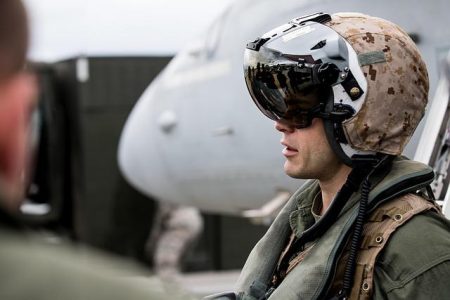




Miss District of Columbia, a 26-year-old Army Reserve officer and information technology analyst, has been crowned Miss USA, marking a striking evolution in how the pageant reflects contemporary American womanhood. Representing Washington, D.C., she emerged from a cohort of 51 contestants with a professional profile that looks more at home in a secure operations center than backstage at a national pageant. Her win, broadcast live to a nationwide audience, comes at a moment when the Miss USA competition is under sustained scrutiny about its cultural relevance, its vision of beauty, and its alignment with modern careers and identities.
When Camouflage Meets Couture: How Miss D.C. Is Recasting the Miss USA Brand
Onstage in a crystal-embellished gown, she carried herself with the same disciplined focus that governs her dawn training sessions and weekend drills. The usual image of a pageant contestant collided with that of a cybersecurity-minded officer: a 26-year-old Army Reserve officer and IT analyst fielding questions on digital threats, leadership ethics, and national security, then transitioning immediately into a high-fashion runway walk.
In those moments, the traditional Miss USA archetype visibly shifted. Instead of a purely glamour-centered persona, viewers saw a candidate whose background includes tactical briefings, secure networks, and data protection. In a space often criticized as emphasizing surface over substance, her professional history sounded closer to a defense dossier than a standard contestant bio.
Her story suggests that the modern Miss USA can navigate a command environment as fluently as she commands a stage. Away from the spotlight, her day-to-day life is governed by a different kind of checklist, one grounded in:
- Chain-of-command discipline that underpins her ability to stay composed, articulate, and focused under intense scrutiny.
- Technical expertise that fuels her advocacy for digital literacy, cyber hygiene, and safe online engagement.
- Service-centered values that recast the crown as a platform for public service and civic responsibility rather than celebrity alone.
| Role | Core Skill | Public Impact |
|---|---|---|
| Army Reserve Officer | Leadership & discipline | Embodies duty, resilience, and accountability |
| IT Analyst | Cyber awareness | Elevates cybersecurity and digital literacy advocacy |
| Miss USA | National visibility | Broadens the definition of beauty through service and expertise |
Service, Cybersecurity, and a Crown: Inside Her Triple-Demand Career
Her professional life runs on parallel tracks. On typical weekdays, she evaluates system vulnerabilities, responds to security alerts, and advises on risk mitigation strategies. During Reserve weekends, her focus shifts to live-training environments, readiness exercises, and mission planning. Friends note that her schedule often swings from security briefings and compliance meetings to tactical drills, with few true days off.
In uniform, soldiers look to her to interpret emerging cyber risks in an increasingly digitized battlefield environment. In her civilian IT role, clients depend on her to keep networks stable and confidential amid rising global cyberattacks. According to research from Statista, the number of reported data breaches in the United States surpassed 3,000 incidents in 2023 alone, underscoring how central her expertise has become to everyday life and national security alike.
Layered on top of these responsibilities is the newly added dimension of Miss USA—media interviews, travel, charitable engagements, and community outreach. Balancing all three requires an almost military level of time management. Those close to her describe a rigid structure anchored in three immovable priorities:
- Mission readiness for her Reserve unit, including ongoing cyber training, weapons qualification, and physical fitness benchmarks.
- Client security in her IT analyst role, from security patch cycles and system audits to active incident response.
- Public duties as Miss USA, such as school visits, charity galas, media appearances, and advocacy campaigns.
| Role | Core Task | Time Block |
|---|---|---|
| Army Reserve | Weekend drills, cyber exercises, readiness checks | Monthly & annual training periods |
| IT Analyst | Monitoring, compliance, incident response | Weekday business hours with on-call rotation |
| Miss USA | Appearances, advocacy, travel | Evenings, weekends & dedicated travel days |
Her team says the habits she developed in secure facilities—rapid triage of risks, clear communication in high-pressure situations, and unwavering adherence to protocol—now govern her public life as well. Whether she’s managing a social media presence, engaging with journalists, or representing the pageant at public events, the same mindset applies: every decision is weighed for potential impact, and no moment in the spotlight justifies compromising professional ethics or military standards.
From Crowned Contestant to Cultural Signal: What Her Win Means for Women in Uniform and Women in Tech
Her Miss USA victory does more than place a single role model on a national stage; it reshapes expectations about who can lead, serve, and innovate in highly visible ways. For women in the armed forces, seeing a commissioned officer step into the spotlight of a major beauty pageant challenges entrenched stereotypes that military leadership and femininity occupy opposing spaces. At a time when women make up roughly 17% of active-duty U.S. military personnel, according to the Department of Defense, her visibility provides a tangible, high-profile example of multidimensional service.
For women in technology, her full-time work as an IT analyst sends a powerful message that technical competence, security clearances, and coding skills can sit at the center of a public-facing platform rather than behind the scenes. In an industry where women still account for less than 30% of the global tech workforce, and an even smaller proportion of cybersecurity roles, her trajectory illustrates a different kind of career path: one in which a subject-matter expert is also a mainstream media figure.
Her impact resonates across multiple audiences:
- For servicewomen, her success bolsters calls for equal access to leadership tracks, more inclusive promotion boards, and broader public recognition of women’s contributions to national defense.
- For women in tech, she represents the rare convergence of deep technical skills, security-focused responsibilities, and national-level name recognition.
- For mentors, educators, and recruiters, her story offers a concrete case study that diverse candidates are not hypothetical—they are already operating at the intersection of service, STEM, and public influence.
| Sphere | Old Stereotype | Signal from Her Win |
|---|---|---|
| Military | Women as support staff rather than commanders | Leadership and command presence can wear both a crown and a uniform |
| Tech | Invisible “back-room” coder | IT analyst as visible, trusted, and influential public figure |
| Pageants | Emphasis on appearance over professional depth | Strategic, mission-driven leadership presented center stage |
In a single televised evening, she embodied a different possibility: that a woman can complete weapons training at dawn, deploy secure code in the afternoon, and address a prime-time audience at night—without being forced to choose which version of herself is “acceptable.”
Turning a Title into Action: How Miss USA Can Advance Veterans and STEM Initiatives
Because she straddles military service and the cybersecurity sector, advocates see her as unusually well-positioned to move the conversation around veterans’ issues and STEM access from rhetoric to results. Her platform offers an opportunity to align pageant visibility with concrete policy and programmatic goals.
Key areas where she can have impact include:
- Mental health care for reservists, highlighting the need for accessible counseling, destigmatized treatment, and consistent support during transitions between civilian and military life.
- Transition-to-tech apprenticeships that help separating service members convert military experience into industry-recognized certifications, internships, and entry-level roles.
- Scholarships for women veterans in cybersecurity and engineering to help close both the gender gap and talent gap in high-demand technical careers.
Her influence can extend from televised appearances to more targeted engagements: collaborating with veteran service organizations on policy briefings, joining Pentagon or Department of Veterans Affairs roundtables on talent pipelines, and pushing major tech and defense contractors to adopt transparent hiring benchmarks for veterans and military spouses.
Experts suggest she can treat her year as Miss USA as a pilot period for scalable programs, using her schedule to test what works on the ground. Potential initiatives include:
- Hosting quarterly “Uniform to Keyboard” town halls where veterans and reservists meet recruiters from tech, cybersecurity, and defense-adjacent industries.
- Launching a mentorship network that pairs women in uniform with female CTOs, CISOs, and senior engineers across the country.
- Advocating state-level tax incentives for companies that invest in veteran coding bootcamps, apprenticeships, and security training programs.
- Embedding STEM outreach into pageant-related tours, enabling students to sign up on-site for scholarships, coding workshops, and cyber camps.
| Focus Area | Action | Visible Outcome |
|---|---|---|
| Veterans’ Transition | Tech apprenticeship and career roadshows | Increased placement of veterans in entry-level IT and cybersecurity roles |
| Women in STEM | Targeted scholarship and mentorship campaigns | Growth in female enrollment and persistence in computer science and engineering programs |
| Mental Health | Awareness tours with clinicians and veteran advocates | Higher utilization of counseling, peer-support, and crisis resources |
| Policy Change | Briefings with lawmakers, agencies, and industry leaders | Legislation and corporate commitments supporting veteran tech training and hiring |
Final Thoughts
As the new Miss USA begins a year defined by national travel, media scrutiny, and advocacy work—while still answering to her military chain of command and fulfilling her responsibilities as an IT analyst—her story signals a profound shift in what pageantry can symbolize. At a time when Americans increasingly value public figures who combine professional credibility, service, and personal authenticity, Miss D.C.’s progression from Army Reserve officer and IT specialist to national titleholder illustrates a pageant culture in transition.
Her ascent suggests that the path to the crown now runs through leadership labs, coding sessions, and training ranges as much as through rehearsals and fittings. In doing so, she offers a portrait of a changing institution—and a reminder that the future of Miss USA may be defined as much by mission readiness and cybersecurity awareness as by evening gowns and stage lights.