



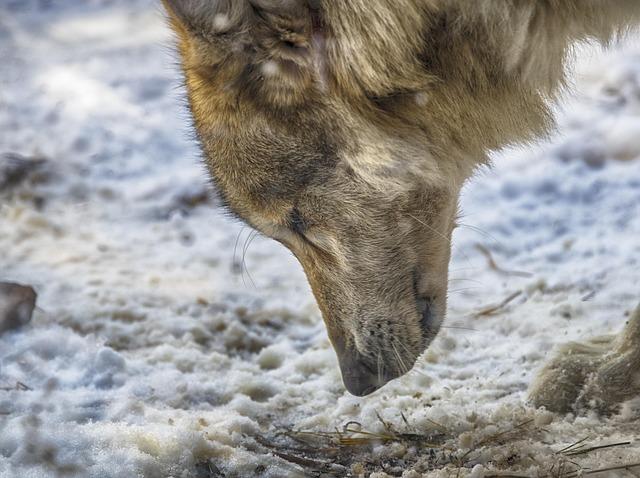
In a nation where political tribes rarely agree on anything, finding a shared starting point can feel impossible—especially on issues tangled up with identity, work, and deeply held values. So when the Washington Post set out to probe America’s divides, its reporters didn’t begin with immigration, guns, or elections. They began with wolves.
From high plains ranches to mountain towns and growing exurbs, arguments over the return of this apex predator revealed more than disagreements about wildlife rules. The clash over how, whether, and where to protect wolves cracked open how Americans think about power, fairness, expertise, and community. By listening to people talk about an animal most will never see, the reporting offered a revealing portrait of how they see the government, science, their neighbors—and democracy itself.
Wolves as a battleground in the urban–rural rift
The wolf debate has morphed into something much larger than an argument over predator control. It now functions as a proxy contest over who has the right to shape the American landscape—and whose voice matters when those decisions are made.
In many cities and fast-growing suburbs, wolves are held up as a conservation and scientific success story: proof that damaged ecosystems can heal and that the country is serious about biodiversity and climate-resilient landscapes. Documentaries, social media campaigns, and ecotourism ads reinforce that narrative.
Out on working lands where wolves actually roam, the same animal often represents federal overreach on four legs. For ranching families, tribal communities, and rural workers already navigating volatile markets and shrinking services, wolf reintroduction can feel like one more outside mandate delivered from faraway offices. Over time, those competing meanings have fused with partisan identity, making the wolf less a biological species than a political symbol.
As ballot initiatives, court fights, and agency hearings have unfolded—from the Northern Rockies to the Great Lakes—the map of public opinion has hardened into a cultural map of twenty-first-century America. Beneath the surface, the argument is less about collar frequencies and hunting quotas and more about three overlapping tensions:
- Trust in institutions – national agencies and research universities vs. county commissions, tribal governments, and local sheriffs
- Economic risk – outdoor recreation and tourism revenue vs. livestock, timber, and other working landscapes
- Cultural authority – peer-reviewed expertise vs. long memory, lived experience, and traditional ecological knowledge
| Urban Lens | Rural Lens |
|---|---|
| Emblem of ecological recovery and climate-era responsibility | Emblem of distant decision-makers setting local rules |
| Evaluated through population models, GPS data, and habitat studies | Evaluated through dead calves, stressed herds, and lost sleep |
| Policy as a declaration of values and moral priorities | Policy as a matter of daily survival and staying on the land |
These divides are sharpened by demographics. As of 2023, roughly 86% of Americans live in metropolitan areas, while less than 14% live in rural counties, according to the U.S. Census Bureau. That imbalance means policies crafted in state capitals and Washington, D.C., often reflect the worldview of people who encounter wolves on screens, not in their pastures. The result is a widening sense, in many rural communities, that their risks are being weighed by people who will never bear them.
What predator science reveals about trust, truth, and political communication
Wildlife biologists working on wolves discovered long ago that more charts and citations do not, by themselves, eliminate fear or anger. Fear of losing a year’s profit in one bad calving season is not neutralized by a population graph.
Where attitudes have softened, it has typically been through a blend of radical transparency, consistent listening, and shared risk-taking. Field teams return to the same ranches year after year, acknowledging collar failures, documenting both elk rebounds and calf deaths, and releasing unflattering numbers alongside encouraging trends. They don’t promise zero losses; they show, in detail, who is affected and what is being tried.
For political campaigns and policymakers, that approach has clear applications. “Predator” policies—on taxes, climate, public health, or border enforcement—carry winners and losers. Treating voters like partners instead of targets means:
- Admit limits: Spell out what is known, where the evidence is mixed, and what experiments are underway.
- Show receipts: Make underlying data and methods accessible, even when they complicate the message.
- Local voices first: Rely on trusted community figures to explain complex policies in familiar language.
- Share the risk: Be explicit about who bears which costs and what safeguards are in place.
Wolf outreach has also shown that local messengers and co-created solutions outperform polished talking points from outsiders. A rancher is more likely to tolerate a new fladry line or range rider program if a neighbor who tried it last winter explains what worked and what didn’t. The same pattern holds for tax credits, zoning reforms, or climate resilience plans: the message lands differently when it comes from someone who shops at the same grocery store and faces the same price of diesel.
In electoral politics, this means campaigns should treat county organizers, school board members, pastors, tribal elders, and union stewards not as backdrops in a photo op, but as primary narrators of policy.
| Wolf Science | Campaign Practice |
|---|---|
| GPS collars with publicly available tracking data | Open dashboards showing real-time policy outcomes |
| Rancher and tribal advisory groups helping design protocols | Community policy councils shaping proposals before they’re final |
| Systematic reporting of livestock losses—not just recovery wins | Honest accounting of policy side effects and unintended harms |
| Field days where skeptical residents can question biologists | Town halls that invite tough questions instead of staged applause |
In both science and politics, credibility is no longer granted by default. It is earned, slowly, by telling the whole story—even the parts that complicate your case.
Why wolf narratives move skeptical voters more than policy briefs
For many people, another policy memo on climate, land use, or regulation is easy to ignore. A story is harder to dismiss—especially when it starts with a specific scene: a stockman walking the fence line at 2 a.m., spotting fresh tracks in the mud, or hearing a howl drift across a frozen pasture.
Stories that weave together predators, pastures, and families at risk turn abstract governance questions into something immediate and legible. A wolf has a face and a set of jaws; a line item in the federal budget does not. When the stakes are presented through a concrete, emotionally resonant moment, listeners can quickly assess whether a leader understands the risks that rural households shoulder every day or is simply reciting carefully tested language.
When an elected official or candidate can talk about muddy boots, carcass inspections, and negotiations over compensation—without condescension—they stop sounding like a remote institution and start sounding like a witness.
Around kitchen tables, in grain elevators, at school sporting events, people do not swap PDFs. They trade accounts: when the pack first appeared; what the game warden advised; how neighbors argued over whether to call Wildlife Services; who showed up with a trailer the night the herd broke through the fence. Within those stories, listeners quickly sort key roles:
- Responsible caretaker vs. detached rule-maker
- Threatened local economy vs. distant, symbolic environmental goal
- Community solidarity vs. partisan performance
| Policy Brief | Wolf Story |
|---|---|
| Graphs, percentages, and projected outcomes | Specific calves, fence lines, weather patterns, and nights without sleep |
| Nationwide benchmarks and multiyear targets | One valley, one season, one family’s balance sheet |
| Information consumed privately and often forgotten | A narrative retold at local meetings and passed through word of mouth |
In a period of deep institutional distrust, narrative framing does more than hold attention. It becomes a quiet test of whether the person asking for support actually grasps who carries the burdens embedded in every statute, budget, or management plan.
Using wildlife conflicts to reopen cross-partisan dialogue
Wolf disputes are often treated as one more culture-war front: urban environmentalists versus rural landowners, red versus blue, data versus tradition. But they also offer a chance to do something different—to turn a charged conflict into a structured, practical conversation.
Instead of convening public meetings as pressure-release valves for anger, officials can design them as working sessions focused on specific, solvable problems: how to verify depredation, what mix of lethal and nonlethal tools is acceptable, how to structure compensation so it feels fair, and what level of risk communities are willing to live with.
That requires bringing together people who rarely sit at the same table: ranchers and outfitters, tribal representatives, hunters, small business owners, suburban homeowners, wildlife advocates, and local officials. Ground rules that emphasize listening before rebuttal, and facts before slogans, can prevent these gatherings from collapsing into shouting matches.
To make progress endure beyond a single election cycle, policymakers can create standing, cross-partisan advisory bodies that meet regularly, deliberate in public, and communicate in plain language. Their job is not to deliver ultimatums but to outline trade-offs and practical options.
Key design features include:
- Mixed representation from both red and blue counties, alongside tribal, rural, and small-town voices that are often underrepresented in statehouse debates.
- Shared metrics for success, such as verified livestock losses, wolf population health, hunter satisfaction, and local business impacts.
- Transparent data presented through accessible dashboards and community briefings to reduce suspicion of agency “spin.”
- Conflict-mapping sessions that chart where values truly diverge—and where unexpected agreement might exist, such as on fairness or local control.
| Policy Tool | Builds Dialogue By |
|---|---|
| Joint field tours | Putting skeptics and supporters on the same ground to see tracks, carcasses, and range conditions together |
| Bipartisan task forces | Forcing co-authored recommendations instead of competing press conferences |
| Citizen panels | Giving residents who are not professional activists a structured way to weigh evidence and trade-offs |
Similar tools can be used for other charged issues—water allocation, wildfire management, wind and solar siting—where local realities regularly clash with national narratives.
To Conclude
The modern fight over wolves is not just about one predator or one policy. It reveals how Americans judge risk and responsibility, how they decide which experts to trust, and how identity—rural or urban, red or blue, rancher or researcher—filters every piece of evidence.
As climate pressures mount, wildfires intensify, and new conservation flash points emerge, the same arguments that echo today in ranch kitchens, tribal council chambers, and town halls will reverberate through statehouses and Congress. If we pay attention to what people say about wolves—and to the silences between their words—we gain a sharper picture of the political terrain those animals now inhabit.
The central question is no longer only how many wolves Americans are willing to live alongside. It is what kind of country they want to be while doing so: one that imposes decisions from a distance, or one that wrestles honestly, together, with the costs and responsibilities of sharing a landscape.