



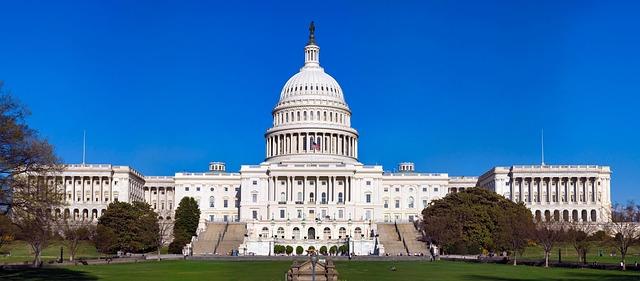
A partial shutdown of the United States federal government has gone into effect, even though congressional leaders in Washington struck a last-minute political deal aimed at keeping agencies funded. Because key appropriations expired at midnight, a wide array of federal functions are now curtailed, leaving hundreds of thousands of government employees facing furloughs or working without pay. Negotiators on both sides insist a longer crisis can still be avoided, but the episode highlights entrenched partisan conflict over spending and policy — and revives doubts about Congress’s capacity to manage the budget without lurching from one deadline emergency to the next.
Shutdown reveals deep budget dysfunction on Capitol Hill
The latest standoff is less about a single disagreement than about a budget process that has been running on borrowed time for years. Instead of passing the 12 individual appropriations bills through committees and floor debate well before the October 1 start of the fiscal year, lawmakers again leaned on eleventh-hour deals, short-term continuing resolutions (CRs), and procedural brinkmanship.
Agencies are forced to plan in 30- to 60-day windows, revising spending plans each time Congress temporarily extends funding. Critics argue this is evidence of the collapse of “regular order,” in which both chambers advance their spending bills on a predictable schedule. In practice, a small group of lawmakers in one chamber can hold up the entire process, betting that the threat of a shutdown gives them leverage they would not otherwise have in normal negotiations.
- Chronic reliance on temporary funding measures instead of full-year appropriations
- Fragmented authority and competing agendas across the House, Senate, and White House
- Incentives for delay fueled by partisan primaries and leadership power struggles
- No meaningful penalties for missing statutory budget deadlines
| Issue | Underlying Cause | Outcome |
|---|---|---|
| Late budgets | Absence of enforceable timelines | Recurring dependence on CRs |
| Policy riders | Massive omnibus bills with all-or-nothing votes | High-stakes standoffs |
| Shutdown threats | Small factions wield de facto veto power | Operational turmoil for agencies |
This partial shutdown has intensified discussion of structural overhauls designed to shift Congress away from crisis governing and toward a more rules-based, predictable budget system. Reform ideas range from automatic continuing resolutions that keep agencies operating when deadlines pass, to biennial budgeting cycles that reduce the number of high-risk funding fights. Others propose independent fiscal transparency tools that spotlight the hidden costs of delay, including the administrative burden on agencies and the economic drag of uncertainty.
Unless lawmakers change the political incentives that reward brinkmanship over compromise, analysts caution that every new fiscal year will begin with familiar scenes: countdown clocks on cable news, rushed short-term deals, and federal employees wondering whether their next paycheck will arrive on time.
Shutdowns damage daily services and erode public confidence
As federal departments pare back to legally defined “essential” operations, Americans encounter immediate disruptions in places that ordinarily run quietly in the background. Processing times for tax refunds stretch out. Passport and visa applications pile up. Access to national parks and public lands becomes unpredictable, and routine safety checks are postponed.
For every locked door or unanswered phone line, there is a chain of strain behind the scenes: frontline employees working without pay, supervisors juggling shifting guidance, and contractors abruptly told to pause ongoing projects. The shutdown’s visible effects quickly feed a broader sense that Washington can no longer reliably manage day-to-day governance, let alone mobilize rapidly in a crisis.
Communities that rely heavily on federal spending — such as bases that anchor military towns or clusters of universities and laboratories supported by research grants — feel the shock more acutely. Local businesses that depend on government workers as customers face sudden declines in revenue, reinforcing the perception that budget brinkmanship has become a recurring local economic risk rather than an occasional anomaly.
- Delayed services: Growing backlogs for passports, visas, benefit claims, and permits
- Reduced oversight: Fewer inspections for food safety, transportation systems, and workplace conditions
- Economic ripple effects: Restaurants, shops, and childcare providers near federal offices see sharp drops in traffic
- Worker uncertainty: Federal employees and contractors endure missed or delayed paychecks and unclear work schedules
| Service Area | Typical Impact |
|---|---|
| Travel Documents | Extended processing times and postponed appointments for passports and visas |
| Public Health | Reduced data collection, scaled-back field investigations, and slower reporting |
| National Parks | Limited hours or closures, safety issues, and deferred maintenance |
| Regulatory Oversight | Delayed inspections, compliance reviews, and enforcement actions |
Even relatively small interruptions accumulate into a broader narrative: basic government functions are vulnerable to the next dispute in Congress. When lawmakers tout a last-minute funding deal yet agencies still partially close their doors, people see a gap between public statements and lived reality. Over time, that gap deepens public skepticism about the reliability of federal institutions, as routine services become bargaining chips in partisan negotiations.
Uncertain funding raises economic risks and security vulnerabilities
Economists have repeatedly warned that this pattern of on-again, off-again federal funding is corrosive to long-term growth. The Congressional Budget Office has estimated in past shutdowns that even a short lapse in funding can shave tenths of a percentage point off quarterly GDP, with some of that loss never fully recovered. Businesses tied to federal contracts report postponing investments, freezing hiring, and delaying new product launches because they cannot predict when payments or project approvals will resume.
Key initiatives in infrastructure, housing, and scientific research are being forced to operate under contingency plans. That often means postponing upgrades, slowing down grant cycles, or limiting outreach programs that directly touch communities. Analysts describe this as a form of “stealth austerity”: even when a full shutdown is avoided or ends quickly, the lingering uncertainty and repeated near-misses quietly dampen growth and innovation.
- Delayed contracts disrupt small and mid-sized firms in sectors like defense, IT services, engineering, and construction.
- Credit markets factor in higher political risk, which can nudge up borrowing costs for both the government and private borrowers.
- Operational gaps at regulatory agencies hold up approvals for new medicines, major energy projects, transportation upgrades, and corporate mergers.
| Sector | Key Vulnerability | Immediate Impact |
|---|---|---|
| Cybersecurity | Postponed system upgrades and delayed patching | Longer exposure windows to cyber threats |
| Homeland Security | Staffing shortages and deferred overtime | Reduced screening and response capacity |
| Intelligence | Interrupted data analysis and collaboration | Slower detection of emerging threats |
National security officials warn that these funding disruptions are creating “blind spots” just as adversaries probe for weaknesses. When analysts are furloughed or reassigned, fewer eyes monitor suspicious cyber activity or extremist communications. Maintenance delays for systems overseeing critical infrastructure, airspace, or border security can leave aging equipment in service longer than planned.
Internal assessments describe a widening gap between what agencies are legally tasked with doing and the resources they can count on. Leaders must quietly triage: which programs to protect, which upgrades to delay, which investigations to pause. Former officials caution that when this improvisation becomes routine, it normalizes a lower level of readiness. The vulnerabilities created in this environment may only become fully visible when a crisis hits and the government must respond at full strength.
Pressure builds for bipartisan budget reforms and stable governance
Against this backdrop, policy experts, state and local leaders, and business groups are intensifying calls for Congress to replace recurring stopgaps with a more resilient budget framework. They argue that structural changes — not just better rhetoric — are needed to restore predictability for agencies, communities, and markets.
Among the most discussed structural changes are proposals for automatic continuing resolutions that keep agencies funded at current levels when deadlines are missed, multi-year spending deals for core programs such as defense and infrastructure, and clearer consequences when Congress fails to meet its own budget timetable. Economists and international observers warn that recurring brinkmanship has already affected how global investors view U.S. political risk, citing past market volatility and ratings-agency downgrades as early indicators rather than worst-case outcomes.
To escape the cycle of eleventh-hour deals, reform advocates are emphasizing pragmatic ideas that could attract support from both parties:
- Automatic fallback funding to prevent agencies from shutting down if Congress blows through key deadlines.
- Regular, transparent budget timelines with publicly tracked milestones so missed steps are visible to voters and markets.
- Independent fiscal scoring to reduce partisan disputes over cost estimates and long-term projections.
- Incentives and penalties linked to on-time passage of appropriations bills, such as limits on recesses or leadership perks when deadlines are ignored.
| Proposed Reform | Primary Goal |
|---|---|
| Automatic CR mechanism | Eliminate shutdowns as a negotiation tactic |
| Multi-year budgeting | Provide agencies with long-term planning stability |
| Bipartisan budget commission | Create a shared fiscal roadmap that outlasts election cycles |
Looking ahead: can Congress move from crisis to governance?
As negotiations resume on Capitol Hill, the central question is whether the fragile funding agreement can be turned into durable legislation quickly enough to prevent deeper disruption. Federal departments have already begun scaling back operations, and uncertainty is mounting among public-sector workers, contractors, and communities that depend on government activity.
The political stakes are rising by the day. How rapidly Congress can move from last-minute deal-making to predictable, long-term budgeting will shape not only the length and severity of this partial shutdown, but also the perceived credibility of the U.S. budget process in the months ahead. If this episode becomes another temporary patch rather than a catalyst for reform, it will likely reinforce the expectation — in financial markets, foreign capitals, and households across the country — that the next round of brinkmanship is only a matter of time.