


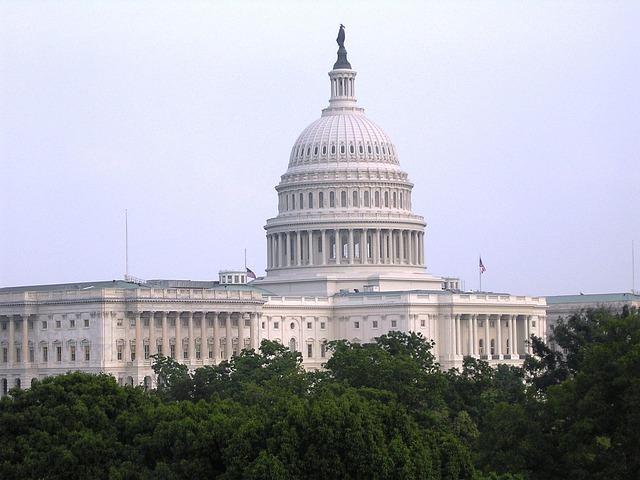
In Washington, where partisan spin, social media storms and competing narratives collide every hour, a very old rule of thumb keeps proving its worth: most of the time, the simplest explanation fits best. Political scandals, policy blow‑ups and manufactured crises are routinely framed as the product of shadowy cabals or intricate schemes. Yet, as The Economist and other observers have noted, the mess in the capital usually flows from clear incentives, fragile institutions and ordinary human misjudgment—not from genius-level plotting. This article explores why the most straightforward interpretation of events in Washington so often turns out to be correct, and what that reveals about how American politics actually functions today.
The hidden gravity of conventional wisdom in Washington
Policy debates in Washington rarely unfold on a blank slate. Ideas rise, stall or vanish inside a dense ecosystem of think-tank luncheons, donor retreats, classified briefings and cable-news green rooms. Out of this churn emerges a familiar category: “what everyone knows”. Once an idea about deficits, big tech, China, climate, or “crime in American cities” is echoed often enough, it stops feeling like a debatable claim and starts to function as the default setting for how problems are framed.
Staffers racing to draft amendments at midnight, junior aides assembling talking points before a Sunday show, and overworked agency officials writing regulations under deadline all draw from this pool of received wisdom. Offices on Capitol Hill often depend on a small, recurring universe of “trusted” experts and lobbyists, whose preferred framing effectively becomes the starting point for entire committees. Over time, educated guesses and partisan instincts congeal into quasi‑facts, narrowing the spectrum of options before any public debate formally begins.
The real influence here is mostly quiet, not conspiratorial. Veteran civil servants lean on habits formed in prior administrations. Political appointees import campaign slogans and donor-tested messages. Journalists, operating under their own time pressures, replicate those same frames in stories and panel discussions, feeding them back into the system. The result is a self-reinforcing loop in which policy tends to follow the most familiar story, rather than the most accurate one.
Whoever shapes that baseline narrative exerts disproportionate power over which proposals feel plausible and which sound “extreme” before any vote is cast. That framing quietly answers questions such as:
- Which emerging risks are treated as urgent priorities and which are dismissed as fringe obsessions
- Which spending lines are branded “must‑have” versus “wasteful” in budget negotiations
- Which allies are assumed to be dependable partners and which are portrayed as liabilities
- Which regulatory ideas are described as “common sense reforms” before anyone reads the fine print
| Source | How It Shapes Assumptions |
|---|---|
| Think tanks | Generate ready‑to‑use talking points, white papers and “model” legislation |
| Lobbyists | Repackage sectoral or corporate interests as broad, responsible consensus |
| Media panels | Signal which positions count as mainstream, risky or unserious |
| Party leadership | Define the outer edge of what members are allowed to call “realistic” |
The consequences are visible across issues. For example, debates over artificial intelligence or social media regulation increasingly follow templates built a decade ago for tech antitrust and online privacy. The underlying technology has changed rapidly, but the inherited “conventional wisdom” about innovation, national security and free speech still frames the options that staff and members consider.
Why bipartisan instincts still anchor the biggest Capitol Hill deals
To casual observers, Washington can look like a 24/7 partisan cage match. Yet the most consequential laws—the ones that keep the government funded, stabilize markets or reshape U.S. foreign policy—are usually hammered out in cross‑party negotiations that unfold far from the cameras. When the cost of failure is market panic, missed paychecks or geopolitical shock, leaders on both sides tend to rediscover a basic imperative: compromise or face chaos.
These deals are rarely elegant and almost never ideologically pure. They emerge from a series of trade‑offs that allow each party’s leadership to claim some victory while lobbyists, committee chairs and senior staff haggle over the language until the final hours. Over the last decade, this pattern has defined everything from pandemic relief packages to major infrastructure spending and semiconductor incentives.
- Shared fear: The threat of shutdowns, credit downgrades, troop funding gaps or voter anger pushes leaders toward agreement.
- Senate incentives: The filibuster and six‑year terms reward coalition‑building and marginalize those who cannot assemble 60 votes.
- Party asymmetry: Slim majorities in the House give small factions disproportionate leverage, often making cross‑party coalitions the only path to a governing majority.
- Committee culture: Long‑serving members on appropriations, finance, and armed services committees tend to preserve bipartisan norms that predate today’s social‑media politics.
| Issue | Public Rhetoric | What the Final Deal Looked Like |
|---|---|---|
| Debt ceiling | “No surrender,” “Not one dollar more” | Temporary spending caps, delayed fights, technical fixes to avoid default |
| Infrastructure | “Total obstruction,” “Never help the other side win a victory” | Large bipartisan package financing roads, bridges, ports, broadband and climate‑related upgrades |
| Ukraine and security aid | “America First” vs. “Stand with democracy” | Bundled legislation combining Ukraine, Israel and Indo‑Pacific support with border or enforcement measures |
Beneath these outcomes lies a straightforward calculation: visible governing failure is politically radioactive. Party leaders know that images of closed national parks, delayed Social Security checks, or allies left hanging can define an election cycle. As a result, they often stage fierce public clashes while simultaneously mapping out “landing zones” where a compromise can ultimately land.
The choreography tends to repeat. Hard‑liners issue maximalist demands. Moderates and committee leaders test how far the other party can realistically move. In the end, a coalition of institutionalists—far larger than their social‑media presence suggests—provides the decisive votes that keep the federal government functioning. The clashes are real, but so is the shared instinct not to steer the country into the ditch.
From obvious problem to actual law: how lobbyists and staffers make it happen
Even when a problem appears self‑evident to the public—crumbling bridges, veterans facing long wait times, a cybersecurity breach—straightforward reality does not convert itself into statutory language. That translation is handled by a relatively small circle of insiders who understand both the substance of policy and the mechanics of power.
Lobbyists arrive on Capitol Hill with pre‑digested facts, bullet‑point summaries, polling data, and suggested bill text. Seasoned congressional aides then refashion those materials into something their bosses can explain in a town hall, a local radio interview or a cable-news hit. The process is precise rather than glamorous:
- Lobbyists bundle industry data, advocacy research and donor priorities into accessible narratives and talking points.
- Staffers turn those narratives into draft legislation, negotiate technical definitions and anticipate political attacks.
- Committee chairs decide which version of the “solution” advances to hearings and markup, and which never leaves the binder.
| Stage | Primary Actors | Main Objective |
|---|---|---|
| Problem framing | Lobbyists, advocacy groups, outside experts | Define a “common‑sense” problem in terms that align with their interests |
| Drafting and revision | Senior committee and leadership staff | Embed preferred provisions in bill language while avoiding obvious legal or political landmines |
| Whipping and deal‑making | Party leadership, whips, committee chairs | Count votes, offer side deals, and trade amendments to assemble a passable coalition |
From the outside, the finished product can look like a clean, rational response to a widely recognized need. Up close, it is usually a negotiated compromise among the actors with the time, expertise and resources to remain engaged through months of hearings and markups. Tough provisions that might anger powerful constituencies are often softened or removed entirely. Staff attorneys refine the surviving text to withstand court challenges and survive in a 30‑second attack ad.
The end result frequently reflects public concerns in broad outline—more infrastructure, more support for veterans, stiffer sanctions, stronger data protections—but the details are structured around who appeared early in the process, who funded the research, and who drafted the technical clauses and footnotes. That is where much of the real policymaking occurs.
Building healthy scepticism without bringing government to a halt
If Washington is prone to accepting convenient stories and familiar explanations, the answer is not endless delay or permanent gridlock. Policymakers need ways to question their own assumptions quickly and systematically, so that scepticism improves decision‑making rather than paralyzing it.
One practical reform is to institutionalize “structured doubt” inside ordinary workflows. Instead of relying on rare blue‑ribbon commissions, agencies could require concise two‑page assumption memos for every major rule or initiative. These memos would spell out which claims must be true for the policy to succeed, what data supports them, and what early evidence would show that they are wrong.
A rotating “red team” of analysts—drawn primarily from career staff with diverse expertise—could then challenge those memos under strict time limits. The point is to pair speed with scrutiny: forcing hidden assumptions into the open without turning review into a pretext for doing nothing.
- Time‑boxed dissent: Build fixed windows for challenge and revision into policy development, after which decisions move forward.
- Automatic sunset clauses: Attach expiration dates to emergency and high‑risk measures so that they must be re‑evaluated in light of real data.
- Targeted pilot programs: Test new approaches in selected states, regions or agencies before imposing them nationwide.
- Cross‑party “assumption reviews”: Convene mixed panels of staff and outside experts to interrogate evidence rather than ideology.
| Tool | Primary Purpose | Key Safeguard |
|---|---|---|
| Assumption memo | Surface and document hidden premises behind major policies | Standard format and a publicly accessible summary |
| Red team review | Stress‑test proposals and identify weak points | Strict time limits to avoid indefinite delay |
| Pilot program | Collect real‑world performance data before full rollout | Pre‑defined metrics for success and failure |
| Sunset clause | Force periodic re‑authorization based on outcomes | Independent impact assessments prior to renewal |
Some agencies already use versions of these tools in cybersecurity, procurement and public‑health preparedness. Expanding them to fiscal policy, technology regulation and national security could help ensure that “common sense” assumptions are tested against facts rather than simply repeated until they harden into orthodoxy.
Insights and Conclusions
Strip away the theatrical flourishes, and the central insight about Washington is starkly uncomplicated. For all the talk of master strategists, “deep state” maneuvering or five‑dimensional chess, the capital still runs largely on visible incentives, public pressures and ordinary human limits. That does not make its decisions benign or its failures harmless. It does mean that observers usually gain more by studying open interests and structural constraints than by chasing elaborate hidden plots.
For voters, journalists and policymakers, the most reliable guide is often what sits in plain view: who is lobbying for what, which coalitions are forming, which deadlines are non‑negotiable, and which trade‑offs leaders are actually willing to make. In a city that thrives on the performance of complexity, the most underrated analytical habit is also the most basic: begin with the assumption that, more often than not, the obvious explanation is the right one—and then test it rigorously against the evidence.