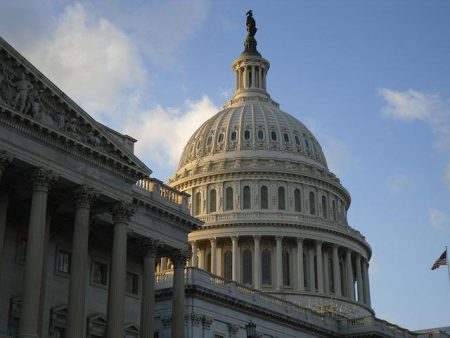



The Supreme Court is poised to decide whether a Trump‑era attempt to narrow birthright citizenship can stand, taking up a constitutional fight that could redefine how the Fourteenth Amendment has been understood for generations. In a high-stakes argument, the justices are examining whether the federal government may refuse citizenship to some children born on U.S. soil—directly confronting a principle that has shaped immigration and citizenship policy for well over 100 years. As the Court hears the case, PBS News is tracking developments inside the courtroom, closely following the justices’ questions and the potential impact on millions of current and future Americans.
Supreme Court tests the limits of presidential power over birthright citizenship
In a session that drew intense national attention, the justices pressed lawyers on whether a president can, by executive order alone, change who qualifies as a citizen at birth—or whether such a move collides with the straightforward language of the Fourteenth Amendment. The core question: Can the executive branch unilaterally reinterpret the Citizenship Clause, or must changes come from Congress or a constitutional amendment?
The justices’ questions focused heavily on the tension among three pillars of American governance:
– Executive authority and its outer boundaries
– Congress’s constitutional role in immigration and naturalization
– More than a century of judicial precedent affirming birthright citizenship
Some members of the Court voiced concern that allowing a single administration to overturn a long-settled reading of the Constitution could destabilize core rights and sow legal confusion. Others explored whether contemporary challenges—such as heightened border enforcement, global mobility, and organized “birth tourism”—justify a narrower understanding of the phrase “subject to the jurisdiction thereof.”
The argument also revealed ideological crosscurrents within both the conservative and liberal wings of the Court. While some justices emphasized institutional continuity and respect for precedent, others appeared more open to the idea that the executive branch has broader discretion in responding to new immigration and security realities.
Analysts following the hearing highlighted several themes:
- Text vs. Historical Practice: Should the plain text of the Fourteenth Amendment control, or must it be read through the debates and fears that animated Reconstruction-era lawmakers?
- Executive Order Boundaries: To what extent may a president reshape immigration and citizenship rules without fresh legislation from Congress?
- Consequences for Current Citizens: What happens to people who have built their lives on long-standing understandings of birthright citizenship?
| Core Question | Focus of the Justices’ Inquiry |
|---|---|
| Constitutional Text | Does the Fourteenth Amendment permit a president to narrow its reach without Congress? |
| Separation of Powers | Is altering citizenship rules inherently a legislative rather than executive function? |
| Real‑World Impact | Could the directive destabilize the status of millions of U.S.-born children? |
Reconstruction history and original intent at the heart of the Fourteenth Amendment debate
Throughout the argument, the justices repeatedly returned to the historical moment in which the Fourteenth Amendment was drafted. They probed what members of Congress in 1866 and 1868 intended when they adopted the Citizenship Clause in the shadow of the Civil War and emancipation.
Supporters of broad birthright citizenship grounded their arguments in Reconstruction’s central concern: that former Confederate states might deny full citizenship to formerly enslaved people and their children. They pointed to congressional debates showing that lawmakers sought to ensure a simple, automatic rule of citizenship at birth, designed to prevent states or future administrations from selectively excluding disfavored groups.
A key phrase—“subject to the jurisdiction thereof”—was described by these advocates as intentionally expansive. In their telling, Congress meant to include nearly everyone born in the United States, except for narrow categories such as children of foreign diplomats or occupying armies. Several justices pressed government lawyers on why Congress would have insisted on such sweeping protections if it envisioned flexible, easily altered rules that could vary by administration.
Conservative justices, however, pushed back with questions about how that 19th‑century understanding should apply to today’s migration patterns and geopolitical landscape. They raised hypothetical scenarios involving foreign tourists, undocumented parents, and deliberately arranged cross-border births to secure U.S. passports, asking whether the original understanding of jurisdiction can accommodate modern concerns about sovereignty, national security, and resource allocation.
Outside the Court, advocates underscored the practical stakes: a narrower interpretation could produce a sizable group of people born and raised in the United States who nevertheless lack clear legal status. They warned that uncertainty over citizenship could affect everything from school enrollment and employment to military service and voting eligibility.
Their arguments emphasized:
- Reconstruction context: The Amendment was crafted to prevent states from stripping or withholding citizenship based on race or ancestry.
- Clarity and uniformity: Lawmakers sought a bright-line, self-executing rule that did not depend on the shifting politics of individual states or administrations.
- Reliance interests: For more than a century, families have organized their lives—education, work, property ownership, and civic participation—around the guarantee of citizenship at birth.
| Year | Defining Event | Effect on Citizenship |
|---|---|---|
| 1868 | Ratification of the Fourteenth Amendment | Birthright citizenship enshrined in constitutional text |
| 1898 | United States v. Wong Kim Ark | Supreme Court confirms citizenship for a U.S.-born child of Chinese immigrants |
| 2024 | Challenge to Trump-era directive | Scope of birthright citizenship revisited under modern conditions |
Experts warn of sweeping implications for immigrants, civil rights, and federal power
Constitutional law experts observing the case say that upholding the Trump-era order would reverberate far beyond the specific text of the Fourteenth Amendment. It could fundamentally alter how power is divided among the president, Congress, and the states.
Civil rights lawyers caution that immigrant communities—including lawful permanent residents, refugees, and mixed-status families—could face deep uncertainty about whether their U.S.-born children will retain or be granted citizenship. That uncertainty may affect access to essential services, from Social Security numbers and driver’s licenses to federal student aid and public benefits.
Advocacy organizations anticipate a wave of lawsuits in federal courts across the country. They argue that narrowing birthright citizenship via executive action, rather than through a constitutional amendment or comprehensive legislation, would trigger protracted legal battles and further erode trust in federal institutions.
Policy analysts emphasize that the fight is also about institutional authority:
If the Court signals that presidents can substantially redefine who is a citizen, future administrations—regardless of party—may feel emboldened to push the edges of executive power in other high-stakes areas, including asylum rules, refugee admissions, voting rights enforcement, and anti-discrimination protections.
Behind the scenes, congressional staff and state officials are mapping out possible downstream effects, such as how uncertain citizenship rules could alter voter rolls, redistricting, and the population counts used in the decennial census. Because federal funding for housing, health care, and education is often tied to population data, even modest changes in who is recognized as a citizen could shift billions of dollars in government resources.
Key concerns raised by different groups include:
- Immigration advocates anticipate heightened fear in immigrant neighborhoods, potential drops in participation in public schools, and reluctance to seek medical care or social services.
- State governments worry that inconsistent federal guidance could produce conflicting standards for birth certificates, driver’s licenses, and state IDs.
- Business and industry groups voice anxiety about long-term workforce planning, particularly in sectors that rely on U.S.-educated children of immigrant families.
- Civil rights organizations warn that a ruling favoring broad executive authority here could be cited to justify restrictions on other constitutional protections.
| Stakeholder | Primary Concern |
|---|---|
| Immigrant Families | Uncertain or contested status of U.S.-born children |
| Federal Courts | Potential surge in constitutional and statutory challenges |
| Congress | Diminishing legislative role in defining citizenship |
| States | Disruptions to public records, voter rolls, and funding formulas |
Calls grow for legislative action and clearer standards before the Court rules
With the Court considering how far executive power extends over citizenship, many legal scholars and immigrant-rights advocates argue that lawmakers should not wait for a final decision. They are urging Congress and state legislatures to move quickly to clarify the law and reduce the risk of a prolonged period of uncertainty.
Proposals circulating among policy experts include adopting more explicit statutory language reaffirming who is entitled to citizenship at birth, and issuing updated federal guidance to ensure that hospitals, vital-records offices, and immigration agencies apply consistent rules nationwide. Without such clarity, observers warn, individual states and local officials might adopt their own interpretations, leading to a patchwork of documentation practices and potential conflicts over who is recognized as a citizen.
On Capitol Hill, bipartisan working groups are quietly exploring draft bills to codify current interpretations of the Fourteenth Amendment, relying on a combination of historical precedent, demographic data, and modern administrative practice. These efforts are still in early stages, but they reflect growing concern that leaving the issue solely to the courts may not adequately protect families caught in the middle.
Advocacy organizations have outlined several priorities:
- Reaffirm federal supremacy over citizenship rules to preempt conflicting state-level measures.
- Establish uniform documentation standards for birth certificates, Social Security assignment, and passport issuance.
- Fund legal aid and public education so that affected families receive timely, accurate information about their rights and responsibilities.
- Mandate rapid, transparent executive guidance in response to major Supreme Court rulings that alter immigration or citizenship policy.
| Key Actor | Top Near-Term Priority |
|---|---|
| Congress | Clarify and, if necessary, modernize citizenship statutes |
| States | Standardize vital records and identification procedures |
| Civil Rights Organizations | Track potential rights violations and support impact litigation |
| Courts | Articulate constitutional limits on executive and legislative power over citizenship |
In Summary
As the Supreme Court deliberates, the future of birthright citizenship hangs in the balance, with profound consequences for immigration policy, executive authority, separation of powers, and the everyday lives of millions of families. The ruling, expected later this term, will help determine how firmly the Fourteenth Amendment’s Citizenship Clause protects those born on U.S. soil—and how much latitude any president has to alter that protection.
PBS News will continue to follow the case as it develops, offering in-depth coverage of the Court’s reasoning, expert commentary, and reactions from legal scholars, lawmakers, and communities directly affected. For ongoing updates and comprehensive reporting on this and other major Supreme Court decisions, visit pbs.org/newshour and follow PBS News across all platforms.