

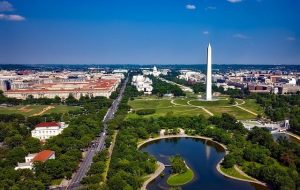


The United States Secret Service shot and killed an armed man on Saturday after he allegedly opened fire at a security checkpoint just outside the White House perimeter, according to federal officials. The exchange, which unfolded within seconds at one of the most closely monitored zones in the country, triggered an immediate lockdown of surrounding streets and pedestrian areas. While the presidential residence itself was not breached, the incident has intensified debate over how federal protective agencies balance rapid threat neutralization with transparency, accountability and civil liberties in high-risk environments.
Heightened tensions after fatal shooting at White House checkpoint
Witnesses reported a sudden burst of gunfire near an outer security post when the suspect allegedly drew a weapon and discharged multiple rounds toward the checkpoint. Secret Service personnel returned fire almost instantly, fatally striking the gunman and calling for medical support and backup units. Within minutes, nearby blocks were cordoned off, pedestrian traffic halted, and visitors in the vicinity ordered to shelter in place while agents swept the area for additional threats.
Federal investigators are now working to verify the suspect’s identity, trace the weapon, and determine whether the attacker had any links to extremist networks or prior threats against public officials. The FBI and the Department of Homeland Security are assisting in analyzing digital footprints, communications, and travel history, as authorities seek to understand the individual’s motive and whether any warning signs were missed.
At the same time, the shooting has reignited scrutiny of security posture around the presidential compound. In recent years, federal statistics have documented a steady stream of threats and disruptive incidents targeting political institutions and high-profile locations in Washington, underscoring the pressure on agencies like the Secret Service to detect dangers before they reach the outer perimeter.
Secret Service response under scrutiny: speed, tactics and proportionality
Security experts, civil-liberties advocates and former protection detail officers are offering sharply different interpretations of the Secret Service’s actions in the moments before and after the suspect was shot.
According to preliminary timelines released by authorities, only a brief interval—measured in seconds—separated the suspect’s first shot from the agents’ use of lethal force. Critics argue that such a compressed sequence raises questions about whether alternative tactics, such as verbal commands, cover and concealment, or less-lethal options, were meaningfully available or considered. They also contend that limited public footage makes it difficult to independently assess whether the suspect continued firing or posed an imminent threat at the instant agents discharged their weapons.
Veterans of presidential protection units counter that, at a White House security checkpoint, rules of engagement are designed around immediate elimination of credible armed threats. They emphasize that agents are trained to assume that any gunfire near the executive mansion may be an assassination attempt or diversionary tactic, leaving minimal tolerance for hesitation.
The Secret Service has announced an internal review of the incident and has pledged full cooperation with an external federal inquiry into whether standard operating procedures were rigorously followed.
Key aspects of the response now under examination include:
- Use-of-force continuum: Whether agents had a realistic opportunity to issue commands or employ non-lethal tools once the suspect fired.
- Checkpoint configuration: How barriers, visibility, angles of approach and lighting conditions influenced agents’ perception of imminent danger.
- Training and preparedness: Whether recent active-shooter and threat-interdiction exercises adequately mirrored the conditions at outer security posts.
- Communication and command: How quickly information about the suspect’s actions and location reached command centers and neighboring posts.
- Public transparency: The timing, accuracy, and detail of official statements compared with eyewitness accounts, social media clips and surveillance video.
| Key Question | What Investigators Seek |
|---|---|
| Reaction time | Precise timing between the suspect’s first shot and agents’ return fire |
| Threat assessment | Video, audio and ballistic evidence mapping the suspect’s movements and actions |
| Policy compliance | Comparison of field decisions with written Secret Service use-of-force policies |
| Officer conduct | Formal statements and after-action reports from involved agents and on-scene personnel |
Security protocols and training gaps revealed near presidential residence
The fact that an armed individual was able to approach and fire on a White House checkpoint—despite layers of barriers, cameras and armed officers—has prompted tough questions about how security systems function at their outer edges.
Former security planners note that even the most fortified locations contain vulnerable “friction points”: vehicle lanes, pedestrian choke points and visitor processing areas where crowd flow and human interaction can temporarily reduce standoff distance. These vulnerabilities can be exacerbated during shift changes, peak tourism hours, or periods of heightened political tension when agents are simultaneously screening more people and scanning for suspicious behavior.
Preliminary accounts suggest the suspect was quickly confronted and the threat was rapidly neutralized. Still, the mere occurrence of gunfire has renewed debate over:
- Risk assessments: Whether current evaluations of credible threats to the White House perimeter reflect the volume and sophistication of modern attacks.
- Access-control procedures: How vehicles, delivery trucks and pedestrians are screened as they move through concentric security rings.
- Technology integration: The degree to which surveillance cameras, license-plate readers, sensor networks and communication platforms are fused into a real-time operational picture.
More broadly, analysts say the incident illustrates the ongoing difficulty of preparing agents for split-second lethal-force decisions in densely populated, politically charged spaces. As threats evolve—from lone actors radicalized online to small groups coordinating via encrypted messaging and real-time mapping—traditional training may struggle to keep pace.
Among the reforms now being discussed in security circles:
- Enhanced live-fire and virtual reality simulations that replicate the stress and complexity of checkpoint confrontations and crowded streets.
- More robust psychological screening and wellness programs for agents at high-risk posts to manage fatigue, hypervigilance and burnout.
- Adoption of advanced threat-detection technologies, including AI-assisted video analysis, automated behavioral alerts and acoustic gunshot detection systems.
- Updated crowd and traffic management protocols along presidential routes and entry points to preserve safety while maintaining some level of public accessibility.
| Focus Area | Priority Change |
|---|---|
| Checkpoint Security | Greater standoff distances, layered barriers and refined screening procedures |
| Agent Training | More frequent and realistic scenario-based exercises with independent evaluation |
| Technology | Integrated, real-time threat analytics across cameras, sensors and communications |
| Public Interface | Clearer instructions and signage for visitors during both normal operations and emergencies |
Public access and civil liberties as perimeter lockdowns become routine
Incidents involving weapons near high-profile government facilities are accelerating a trend that has been building quietly for years: the gradual transformation of open civic spaces into overlapping security zones.
Around the White House and other federal landmarks, visitors increasingly encounter multiple stages of screening, dense networks of bollards and fencing, and heavily armed patrols capable of sealing off streets within minutes. While officials typically describe these restrictions as temporary responses to specific threats, the cumulative effect is that rolling lockdowns and pop-up exclusion zones are becoming a normalized feature of the civic landscape.
Civil-liberties groups warn that this slow shift carries serious implications. Spaces that once functioned as accessible backdrops for protests, press coverage and everyday sightseeing are more frequently defined by checkpoints, barricades and “keep out” lines. This, they argue, risks diluting core democratic values tied to the ability to observe government up close and to assemble spontaneously in visible, symbolic locations.
Security officials, for their part, stress that tightened perimeters reflect tangible risks, pointing to an uptick in threats and disruptions near government buildings documented in recent law-enforcement reporting. Yet critics see worrisome patterns emerging:
- Rapid checkpoint shutdowns that interrupt lawful demonstrations, on-the-ground reporting and routine public access.
- Prolonged exclusion zones that push gatherings, media positions and observers far from key decision-making spaces.
- Data-heavy screening processes—from ID scans to facial recognition pilots—that quietly expand surveillance footprints.
| Security Measure | Public Effect | Liberty Concern |
|---|---|---|
| Perimeter lockdown | Restricted movement around government buildings and streets | Constricts the right to assemble and demonstrate in visible locations |
| Checkpoint screening | Longer wait times and additional identification or bag checks | Raises privacy issues and questions about data retention |
| Expanded buffer zones | Greater distance between officials and the public or press | Reduces direct oversight and informal accountability |
Policy reforms urged: use-of-force transparency, oversight and mental health
In the wake of the checkpoint shooting, advocacy organizations and policing scholars are renewing demands for a more rigorous framework governing when and how federal agents use lethal force—and how those decisions are communicated to the public.
They argue that credibility requires more than internal reviews and occasional press conferences. Instead, they are pressing for:
- National standards for reporting armed encounters involving federal personnel.
- Prompt release of basic incident timelines, including the number of shots fired and the sequence of key events.
- Independent audits of agency investigations into shootings and critical use-of-force incidents.
Proposals gaining traction among reform advocates include the creation of standing civilian review panels with access to investigative files, automatic publication of redacted body-camera or surveillance footage where technology exists, and clear summaries of disciplinary outcomes in cases where policy violations are found. Supporters contend that such measures would help rebuild confidence, give the public a clearer understanding of what happens in fast-moving confrontations, and provide data to evaluate whether current training is preventing unnecessary deaths.
Alongside use-of-force transparency, mental health is emerging as a central piece of the conversation. Many recent security incidents near federal facilities have involved individuals displaying signs of psychological distress or behavioral instability. Policy specialists say agencies must be better equipped both to recognize these warning signals and to respond in ways that reduce the likelihood of violence.
Recommended steps include:
- Embedding licensed mental health professionals within threat-assessment and protective intelligence units.
- Improving lawful information-sharing channels between federal authorities and local health providers when individuals pose credible risks.
- Developing tailored de-escalation protocols for high-visibility checkpoints and public-facing posts.
- Tracking and publishing metrics that show how often mental health considerations influence tactical decisions.
| Reform Area | Key Measure | Intended Impact |
|---|---|---|
| Use of Force | Uniform national reporting standards for federal shootings | Comparable, data-driven analysis of incidents across agencies |
| Oversight | Independent civilian review bodies with investigative authority | Stronger external scrutiny and public accountability |
| Mental Health | Clinicians embedded in protective and investigative units | Earlier identification of high-risk behavior and potential interventions |
| Training | Mandatory crisis-response and de-escalation modules for agents | Reduced reliance on lethal force in encounters involving distressed individuals |
In Retrospect
The investigation into the fatal shooting near the White House remains underway, with authorities working to map the suspect’s path to the checkpoint, examine his background and determine whether he was acting on ideological beliefs, personal grievances, or a deteriorating mental state.
The Secret Service has stated that it will conduct a comprehensive review of the use of force and of the security posture at and around the affected checkpoint. Officials emphasize that the agency’s overriding mission is to protect the president, staff and surrounding public, and maintain that agents acted within established procedures designed for that purpose.
Yet as new details emerge, broader questions are likely to persist: how to secure some of the nation’s most recognizable democratic symbols without transforming them into permanently sealed fortresses; how to ensure that split-second decisions by armed agents can withstand public and legal scrutiny; and how to adapt protective strategies to a political climate in which threats to institutions are becoming more frequent, more visible and, in many cases, more volatile.