




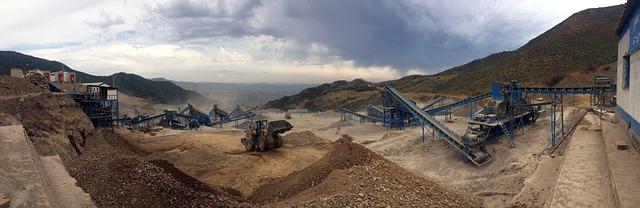
Federal regulators moved to confront unsafe, “corrupt” coal mines across Appalachia, vowing to finally rein in operators after a series of fatal explosions and collapses. But in the diminished coal towns of West Virginia, Kentucky and beyond, it was the miners—not the executives—who absorbed the most immediate damage. As Washington touted tougher oversight and record-breaking fines, mines shuttered, shifts disappeared and paychecks stopped, while some of the same corporate leaders linked to chronic safety problems quietly reappeared behind new company names.
This investigation explores how a crackdown designed to safeguard workers ended up leaving thousands of them unemployed, uninsured and unsure of what comes next in places where, for generations, coal has been the only reliable way to survive.
A safety drive that emptied pay envelopes instead of fixing mines
When federal inspectors swept through coal country with orders to shut down any operation deemed corrupt, hazardous or out of compliance, the campaign was heralded as a long-overdue victory for worker safety. On the ground, the story unfolded very differently. Mine owners faced large fines, revoked permits and public condemnation, but the people who had spent their careers underground emerged into the daylight with no jobs, no health insurance and few prospects.
In towns where a single mine was the economic backbone, sudden closures translated almost immediately into empty pay envelopes, mounting household debt and a slow exodus of families who could no longer cover mortgages, utility bills or car payments. Local officials posed alongside regulators at press conferences celebrating decisive enforcement actions. But a few miles away, former employees lined up at food pantries and unemployment offices, searching for replacement work that had all but vanished.
According to recent labor data, coal mining employment in the United States has fallen by more than half since 2011, with Appalachia bearing a disproportionate share of the loss. In some West Virginia counties, more than 1 in 5 residents now live below the federal poverty line, underscoring how fragile local economies were when regulators finally moved against unsafe mines.
- Rapid closures wiped out entire local economies in a matter of weeks.
- Displaced miners were pushed toward smaller, poorly monitored pits.
- Families lost both income and employer-sponsored health coverage.
- Local clinics documented spikes in untreated chronic disease and respiratory illness.
| Region | Mines Closed | Jobs Lost | Avg. Wage Before |
|---|---|---|---|
| Central Valley | 7 | 1,150 | $19/hour |
| Iron Flats | 4 | 640 | $21/hour |
| Coal Ridge | 5 | 980 | $18/hour |
From regulated shafts to shadow mines and off‑the‑books risks
For many miners, the new landscape has offered a cruel choice: accept unemployment and watch savings disappear, or take whatever work is available in operations that exist beyond the reach of inspectors. With little savings and few alternative industries nearby, a growing number have ended up in informal or “off‑the‑books” mines that operate in legal gray zones—sometimes on abandoned properties, sometimes under subcontracting arrangements designed to evade oversight.
In these sites, workers describe a stripped-down version of mining where no helmets are issued, no medical checks are performed and no questions are asked. Pay is often in cash, hours are irregular, and injuries may never be reported to authorities. Labor groups warn that by focusing enforcement narrowly on closing “bad actors” without building a safety net or replacement jobs, regulators have not eliminated danger so much as pushed it out of view.
Instead of breathing cleaner air or working with better equipment, miners say they now shoulder a harsher calculus of risk: either return to dangerous tunnels with even fewer protections, or leave coal altogether and try to start over in middle age with skills that do not easily transfer.
A mine safety system that caught violations but not catastrophe
On paper, the federal crackdown was supposed to transform an industry long scarred by disasters. In practice, the oversight system often amounted to a series of paperwork exercises that did little to change conditions at the mine face. Inspectors cycled through overloaded caseloads, checking off required visits but rarely staying long enough to distinguish substantive repairs from cosmetic fixes hurriedly staged for their arrival.
Serious violations routinely triggered fines that were later bargained down or left outstanding for years. Even mines with histories of collapses, fires and ventilation failures were able to keep operating while appeals dragged on, sometimes for entire production cycles. By the time regulators tried to shut down a repeat offender, the mine might already be nearing the end of its profitable life—or quietly preparing to re‑open under a new corporate identity.
In remote communities, miners describe a pattern in which warnings were raised internally, then muted or ignored. Whistleblowers recount an oversight regime that seemed more attuned to lobbying campaigns, production quotas and political pressure than to the complaints of people working underground. Audits frequently focused on checklists, training logs and signage, while the most dangerous hazards—like failing roofs, inadequate ventilation or combustible dust—received only cursory attention.
- Safety audits emphasized documentation over real-world conditions.
- Chronic violators continued operating while appeals stalled in court.
- Data gaps obscured patterns of near-misses, rising injury rates and recurring hazards.
| Year | Serious violations | Paid fines |
|---|---|---|
| 2019 | 245 | 38% |
| 2021 | 312 | 41% |
| 2023 | 367 | 44% |
Even as serious violations rose and only a minority of fines were fully collected, the broader enforcement framework remained largely unchanged. Critics argue that the system’s design—slow, reactive and heavily reliant on self‑reported data—almost guarantees that some mines will only face real consequences after tragedy has already struck.
Corporate reshuffling at the top, lasting injuries at the bottom
Federal regulators say the coal crackdown was intended to target executives and investors who profited from unsafe, environmentally destructive mines. Yet the way penalties were imposed meant that sanctions, suspensions and abrupt shutdown orders often hit hardest at the bottom of the corporate ladder. When enforcement intensified, corporate operators responded with rapid restructuring: splitting companies, moving assets offshore, selling mines to new subsidiaries or adopting fresh brand identities.
Miners, meanwhile, confronted the immediate fallout—lost wages, lapsed health insurance and unresolved medical claims stemming from years of exposure to dust, noise, heavy machinery and chemical fumes. Legal responsibility for unpaid severance or abandoned safety obligations was frequently obscured by webs of limited-liability entities and cross‑border ownership structures.
- Executives protected themselves through layered corporate shells and asset transfers.
- Communities absorbed waves of unemployment, foreclosures and health crises.
- States struggled to pursue penalties against companies with multi‑jurisdictional footprints.
- Workers were effectively treated as disposable compliance costs, not long‑term stakeholders.
| Player | Risk | Outcome |
|---|---|---|
| Parent Company | Regulatory fines | Restructures and relocates |
| Local Operator | License suspension | Rebrands under new entity |
| Miner | Job and health on the line | Laid off, often uncompensated |
Interviews with current and former miners, local officials and attorneys highlight a recurring pattern. When U.S. sanctions or aggressive compliance measures pinched large operators, corporate leaders moved swiftly to shelter capital, not to safeguard workers. Ownership chains frequently led through tax havens and opaque investment vehicles, making it difficult for regulators—or laid‑off employees—to trace who ultimately controlled the mine.
Workers recount showing up for what they assumed was a normal shift, only to be told on the spot that the mine was closing and that their benefits ended immediately. Weeks or months later, they would hear that the same tunnels were back in operation under a different logo, often with reduced wages, weaker contracts and fewer protections. The tools designed to crack down on corrupt operators, critics say, have been undermined by corporate agility, leaving those closest to the danger—the miners themselves—trapped in the blast zone of economic and physical risk.
What real mine safety reform would look like
Advocates and some regulators now argue that the only way to end the cycle revealed by recent inspections is to fundamentally redesign how mine safety laws are enforced. Instead of sporadic sweeps and headline‑grabbing crackdowns, they propose a continuous, data‑driven oversight system that tracks violations across entire corporate families and contractor networks—and acts before recurring hazards escalate into mass‑casualty events.
Reform proposals circulating in policy circles and state legislatures share several themes: mandatory public reporting of major violations; automatic shutdowns when specific high‑risk conditions are detected; and rules tying executive compensation to independently verified safety performance rather than pure tonnage or output. In this vision, the worst repeat offenders would face more than just larger fines. They would risk losing their operating licenses, and senior leaders could be subject to criminal prosecution for willful disregard of worker safety.
- Real‑time electronic reporting of ventilation status, dust levels and gas concentrations.
- Robust whistleblower protections backed by federal investigation and prosecution.
- Automatic, tiered penalties that escalate for recurring high‑severity violations.
- Joint liability for parent companies, contractors and subcontractors across the supply chain.
| Violation Pattern | Current Response | Proposed Response |
|---|---|---|
| Chronic dust overexposure | Isolated fines | Immediate shutdown & criminal review |
| Ignored hazard orders | Re‑inspection | License suspension |
| Retaliation against reporters | Civil complaint | Federal prosecution |
Worker organizations insist that any genuine reform must be grounded in the experiences of those who confront danger underground every day. They are demanding a direct voice in enforcement: mandatory seats for miners on safety committees, formal roles in inspections, confidential hotlines to federal investigators and legally protected authority to halt production when they encounter imminent hazards.
Industry lobbyists counter that aggressive sanctions and automatic shutdowns could push marginal mines out of business altogether, accelerating job losses in already struggling regions. Labor advocates respond that the current paradigm effectively prices worker injuries—and deaths—into the cost of doing business, allowing companies to treat fines as a manageable expense rather than a warning sign to overhaul operations.
Rebuilding coal communities while enforcing accountability
Underlying the debate over mine safety enforcement is a broader question: what happens to communities when the only major employer is also the biggest safety risk? In many parts of Appalachia, coal has historically funded schools, roads and public services, even as it left behind scarred landscapes and high rates of black lung disease.
Experts argue that any serious federal strategy must pair enforcement with investment—supporting job retraining, infrastructure upgrades and new industries that can offer living‑wage employment. Some pilot programs, such as federal grants for abandoned mine land reclamation and energy-transition initiatives, have begun to create alternative jobs in environmental restoration, construction and renewable energy. But these efforts remain uneven and often too small to absorb the wave of displaced miners.
Without a broader plan, enforcement risks repeating the same pattern: headlines about cracked‑down “corrupt” mines followed by years of quiet hardship in towns left without a tax base or a path forward.
The Way Forward
As the federal government intensifies its scrutiny of unsafe and allegedly corrupt mining operations, the human cost of reform is becoming impossible to ignore. For miners caught between financial survival and physical danger, the promise of accountability has too often arrived alongside mass layoffs, fractured communities and uncertain futures.
Policymakers maintain that tougher oversight is essential to avert catastrophic accidents and long‑term health damage underground. Yet in regions already strained by the long decline of coal, the immediate impacts are measured less in regulatory victories than in paychecks that stop coming and safety nets that never fully materialize.
The central challenge now facing Washington is whether it can reconcile these competing realities: enforcing meaningful accountability on powerful operators while ensuring that those who labored in risky conditions are not left alone to shoulder the consequences. For miners whose livelihoods and health remain on the line, the outcome will determine whether this latest wave of reform finally delivers justice—or simply adds another burden to a workforce that has already carried too much.


