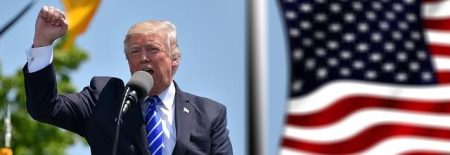



The United States has brought murder charges against former Cuban leader Raúl Castro, a stunning legal escalation that dramatically intensifies Washington’s pressure campaign on Havana. Unveiled as President Donald Trump adopts an increasingly hard line on Cuba, the case announces a new, openly confrontational chapter in already fragile U.S.-Cuba relations. This first-of-its-kind move raises the political and legal stakes for Cuba’s communist government while highlighting the administration’s broader effort to roll back years of engagement and tighten economic and diplomatic constraints on the island. As both capitals brace for the consequences, the indictment is set to probe the outer limits of U.S. criminal jurisdiction, international legal norms, and the fragile détente that had only recently emerged.
A historic US murder indictment of Raúl Castro upends the trajectory of Cuba policy
The decision by U.S. authorities to pursue murder charges against Raúl Castro disrupts a policy framework that has endured Cold War hostilities, mass migration episodes, and cautious thawing efforts. Legal analysts view the indictment as a decisive departure from the long-standing boundary between foreign policy decision-making and domestic criminal prosecution, effectively elevating the U.S. justice system into a primary instrument of coercive diplomacy.
Officials in Washington suggest that targeting Castro could become a template for additional measures directed at high-ranking Cuban officials, complementing parallel initiatives to reinforce sanctions and tighten financial restrictions. On Capitol Hill, lawmakers historically critical of Cuba are treating the case as proof that engagement strategies have fallen short. They are urging a wholesale re-evaluation of policies they argue failed to meaningfully shift Havana’s stance on human rights, democratic reforms, or political pluralism.
From the Cuban government’s perspective, the charges appear to confirm that the United States has decisively turned away from Obama-era rapprochement and toward a sustained strategy of isolation and regime pressure. Havana has condemned the indictment as a politically orchestrated maneuver, while regional governments weigh how closely to engage in a dispute that threatens to affect trade flows, migration agreements, and regional security cooperation.
Policy experts caution that the criminal case may derail quiet negotiations across multiple technical areas—ranging from energy and environmental cooperation to medical collaboration and border management—with ripple effects potentially felt throughout Latin America. Key pressure points now emerging include:
- Diplomatic engagement: Likely suspension or downgrading of working-level talks on security, migration, and counter-narcotics operations.
- Economic ties: Expansion of sanctions on state enterprises, restrictions on remittances, and new limits on tourism-related income.
- Regional alignment: Increased friction within the Organization of American States (OAS) over whether to support, oppose, or remain neutral on Washington’s legal strategy.
| Policy Area | Before Charges | After Charges |
|---|---|---|
| Diplomacy | Limited dialogue | Deep freeze |
| Sanctions | Targeted measures | Broader, punitive |
| Regional Stance | Mixed views | Sharper polarization |
Legal foundations and geopolitical stakes of prosecuting a former Cuban head of state
Behind the dramatic optics of a former Cuban president facing a U.S. indictment lies a complex blend of international and domestic legal mechanisms. Prosecutors are expected to invoke a combination of extraterritorial criminal statutes, evolving human rights doctrines, and the long-standing U.S. designation of Cuba as a state sponsor of terrorism to justify the case.
Legal scholars point to tools such as universal jurisdiction for the gravest crimes, the Helms–Burton Act, and expanded federal homicide provisions that reach conduct outside U.S. borders. These mechanisms are likely to be used to argue that senior officials can be held responsible for killings attributed to state security forces under doctrines of command responsibility. Yet, pushing these frameworks this far tests conventional understandings of state sovereignty and non-interference.
Among the central legal dimensions are:
- Extraterritorial reach: The assertion of U.S. criminal law over conduct that occurred abroad, involving non-U.S. nationals and events embedded in the internal affairs of a one‑party state.
- Command responsibility: The principle that top leaders may be held criminally liable for grave abuses committed by subordinates when they knew or should have known and failed to prevent or punish them.
- Precedent setting: The possibility that other countries, including U.S. rivals, could invoke similar reasoning to bring politically charged cases against American or allied officials.
| Legal Tool | Primary Aim |
|---|---|
| Sanctions Law | Economic isolation |
| Criminal Indictment | Personal accountability |
Beyond technical legal questions—such as how to gather evidence inside a tightly controlled state, protect witnesses, or enforce any eventual verdict—the indictment reverberates across the geopolitical landscape. Embedding a criminal prosecution at the heart of U.S. policy toward Havana reinforces the view that Cuba remains an emblematic adversary in Washington’s broader struggle with authoritarian regimes.
The charges are likely to reinforce Cuba’s ties with Russia, Venezuela, and other governments locked in confrontations with the United States, complicating cooperation on shared concerns such as migration, drug interdiction, and disaster response in the wider Caribbean. U.S. partners in Europe and Latin America—many of which have favored engagement with Havana—must now choose whether to back a legal approach presented as a human rights milestone or dismiss it as politicized lawfare.
In practical terms, the indictment deepens Cuba’s pariah status in many U.S. policy circles; signals to other entrenched leaders that legal exposure can extend beyond their terms in office; and injects a combustible judicial element into decades-long debates over regime change, transitional justice, and accountability across the Americas.
Consequences for US–Cuba relations, regional stability, and global power alignments
Bringing murder charges against a former Cuban head of state jolts a bilateral relationship that, until recently, had been slowly moving toward normalization. The U.S. move will likely stiffen Havana’s resolve, narrowing space for cooperation on critical issues like migration, counter-narcotics operations, and public health, and strengthening the position of hardliners on both sides.
Regional observers warn that this legal escalation could trigger a new cycle of tit-for-tat measures, including tougher financial constraints and additional restrictions on travel and remittances, reviving elements of a Cold War-style posture in the Caribbean basin. In the short term, governments across the Americas—especially those that cautiously welcomed earlier normalization—will come under pressure to clarify whether they see the indictment as a step toward justice or as a destabilizing overreach.
The broader context is a shifting global order in which major powers are competing for footholds in Latin America. While Washington frames the case as part of a principled stand against impunity, other actors will calibrate their responses through the lens of strategic influence and domestic politics. This recalibration is evident in the emerging positions of key players:
- US allies attempting to balance support for human rights and rule-of-law narratives with concern that the case could undermine regional stability and cooperation.
- Left-leaning Latin American governments portraying the indictment as an example of judicial overreach and a renewed attempt at unilateral U.S. dominance.
- Russia and China seeing an opportunity to deepen strategic, economic, and security ties with Havana by presenting themselves as counterweights to U.S. pressure.
| Actor | Likely Response |
|---|---|
| EU States | Cautious criticism, limited sanctions debate |
| OAS Members | Split statements, calls for dialogue |
| Russia/China | Public support for Havana, new deals |
| Caribbean Nations | Neutral stance, focus on economic fallout |
Strategic choices for Washington’s allies and international human rights institutions
For governments closely aligned with the United States, the indictment represents both a test of their commitment to accountability and a diplomatic minefield. Some may quietly cooperate with U.S. prosecutors—sharing intelligence archives, declassified documents, or expert testimony—while avoiding overt public endorsement to limit the diplomatic cost in Latin America, Africa, and Europe.
Others could adopt a more visible posture, using multilateral venues to advocate for targeted sanctions, travel bans, and asset freezes against senior Cuban figures linked to past abuses. By presenting these measures as part of a broader push for accountability, rather than as a narrow U.S.-Cuba dispute, they may seek to preserve support from domestic constituencies and international partners.
In parallel, several Western capitals are evaluating whether to tie future trade, investment, or development initiatives to Havana’s willingness to engage with judicial processes and human rights monitoring—while striving to preserve essential collaboration on migration management, security cooperation, and health diplomacy.
International human rights organizations and regional courts face an equally delicate balancing act. Their potential responses include:
- Issuing joint statements insisting on due process, transparency, and the independence of any legal proceedings.
- Opening or expanding investigative files on alleged extrajudicial killings, enforced disappearances, and long-standing patterns of repression in Cuba.
- Promoting victim-centered mechanisms such as truth commissions, historical clarification initiatives, and reparations programs targeting those who suffered abuses.
- Assessing whether the case strengthens or weakens international norms against impunity, particularly in situations where prosecutions are perceived as politically motivated.
To manage the political sensitivities, some watchdog groups and tribunals are considering broadening their focus to examine abuses committed by multiple governments and non-state actors in the region. By embedding the Castro indictment within a wider agenda for regional accountability, they aim to reduce accusations of selective justice and reinforce the universality of human rights norms.
Conclusion
As the Trump administration intensifies its drive to isolate Havana, the unprecedented murder charges against Raúl Castro mark a decisive escalation in the use of legal and diplomatic instruments against Cuba’s communist leadership. Cuban authorities vow resistance, while U.S. officials hint that additional actions could follow, suggesting a prolonged period of confrontation rather than cautious engagement.
Whether and how the United States can enforce these charges, and what tangible impact they will have on the balance of power in U.S.-Cuba relations, remain open questions. What is clear is that the indictment deepens an already entrenched divide, tests the reach of American jurisdiction in politically sensitive cases abroad, and underscores that, at least for now, confrontation—not rapprochement—is setting the tone across the Florida Straits.