

Infantino Hails United States as “Welcoming Country” Ahead of Expanded Club World Cup
FIFA president Gianni Infantino has doubled down on his public backing of the United States as host of the expanded Club World Cup, describing the country as “a welcoming nation” during a recent stop on his nationwide venue tour. The 32‑team tournament, scheduled for 2025 and spread across multiple U.S. cities, is being billed as the most commercially ambitious Club World Cup in history.
Infantino has used his appearances to emphasize the United States’ ability to stage global football events at scale, pointing to its multicultural fan base, extensive sports infrastructure, and proven track record with major tournaments. From the 1994 World Cup to the record attendances at recent friendlies and international club tours, U.S. cities have become familiar hosts for high‑profile matches that routinely draw huge in‑stadium and television audiences.
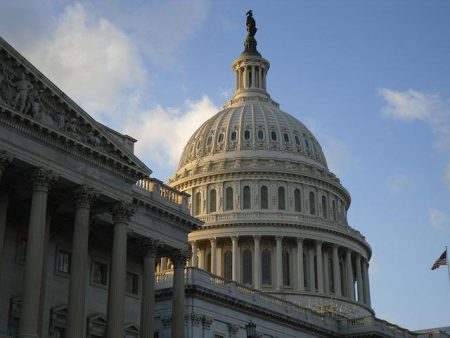
His remarks unfold at a charged political moment. With U.S. debates over immigration, national identity, and border policy dominating headlines, Infantino’s framing of the United States as open and inclusive puts world football’s governing body directly into the conversation, as FIFA deepens its long‑term presence in the American market.
Stadium Tours, Growing Audiences, and the Push for a New Football Era in the U.S.
As he moves through a cross‑country schedule of potential and confirmed host cities, Infantino has portrayed the expanded Club World Cup as a natural next step for a country whose sports industry has both global reach and domestic appetite for marquee events. City delegations have responded with their own pitches, presenting stadiums not just as match venues, but as showpieces for international audiences and investors.
Local officials highlight three main selling points:
- Diverse audiences already tuned in to global football through the Premier League, La Liga, Liga MX and the UEFA Champions League.
- High‑capacity, modern stadiums that routinely host NFL games, concerts and major college football events.
- Record viewership growth across streaming and cable platforms for international soccer in the U.S. market.
Television ratings and attendance figures back up the optimism. In recent years, high‑profile club friendlies have filled NFL stadiums from Texas to California, while MLS and NWSL have set new benchmarks for crowd sizes and media deals. According to industry estimates, soccer is now the fourth‑most watched team sport in the United States among fans aged 18–34, outpacing some traditional American pastimes in key demographics.
Behind closed doors, tourism boards and stadium authorities stress their investments in transport networks, security systems, and fan‑experience technologies—from upgraded public transit links to digital ticketing and cashless concessions. They see the Club World Cup as an ideal platform to showcase these upgrades to a global audience.
| Host City | Stadium Capacity | Key Priority |
|---|---|---|
| Los Angeles | 70,000+ | Global media visibility |
| New York/NJ | 80,000+ | Corporate hospitality |
| Miami | 65,000+ | Latin American fan outreach |
Opportunity Meets Scrutiny: Human Rights and Fan Concerns Around Mega‑Events
The enthusiastic rhetoric surrounding the Club World Cup coexists with a more critical conversation about the true costs of mega‑events. Human rights organizations, labor advocates, and supporter groups have become increasingly vocal about issues such as:
- Working conditions for stadium and hospitality workers.
- Ticket pricing and the risk of pricing out local fans in favor of tourists and corporate clients.
- Short‑term projects that may leave behind underused or “white elephant” facilities.
In response, FIFA has promoted updated hosting requirements and compliance frameworks, promising stricter oversight on labor rights, accessibility, and sustainability. U.S. organizers argue that, with existing multipurpose stadiums and relatively robust labor laws, the risk of abandoned infrastructure is lower than in many past tournament hosts. Still, skeptics insist that transparency on contracts, public subsidies, and community impacts will be critical.
Local bid committees see a rare chance to translate temporary matches into enduring benefits. Their long‑term priorities often include:
- Tourism boosts that extend beyond the tournament window, using new marketing campaigns and travel partnerships.
- Expanded youth programs funded through tournament‑related revenues and legacy funds.
- Upgraded facilities that support MLS, NWSL, college soccer, and grassroots play for years after 2025.
The tension between short‑term spectacle and long‑term legacy has become a defining issue not only for the Club World Cup, but for every major football event that follows.
How U.S. Soft Power and FIFA’s Strategy Intersect
Infantino’s praise for the United States as a “welcoming country” is more than a diplomatic flourish; it is a deliberate recognition of the American ecosystem of influence, infrastructure and investment that underpins FIFA’s long‑term strategy.
By positioning the U.S. as an ideal base for expanded global competitions, FIFA is tapping into:
- A deep corporate sponsorship pool, including tech giants, financial institutions and consumer brands eager for international reach.
- A highly developed media market that values live sports as appointment viewing, especially in the streaming era.
- A political establishment that sees mega‑events as instruments of soft power, capable of shaping global perceptions of the United States.
In many ways, the Club World Cup and the upcoming 2026 World Cup co‑hosted by the U.S., Canada, and Mexico offer Washington a parallel stage for foreign policy. Stadiums, fan festivals, and media coverage become arenas where the U.S. can present itself as diverse, technologically advanced, and globally engaged—without the formalities of diplomatic summits.
The agendas of key stakeholders align in several notable ways:
- For FIFA: The U.S. provides an anchor market to stabilize commercial revenues, experiment with new formats, and expand its footprint beyond traditional European and South American strongholds.
- For U.S. officials: Hosting major tournaments supports narratives of openness and pluralism, crucial in an era of global competition and strategic rivalry.
- For sponsors: American events deliver global visibility, advanced data analytics, and integrated advertising opportunities across broadcast, streaming, and social platforms.
| Objective | FIFA Angle | U.S. Soft Power Angle |
|---|---|---|
| Global Reach | Boost club brands | Showcase U.S. cities |
| Revenue | Secure sponsors | Attract investors |
| Influence | Shape football rules | Shape global narratives |
Economic Stakes: Infrastructure, Tourism and Urban Legacy
U.S. host cities are racing to calculate the potential windfall from hosting Club World Cup matches, running projections for hotel occupancy, restaurant revenue, and local transport use. Previous major tournaments provide some benchmarks: studies of the 2019 Women’s World Cup and recent continental championships show significant short‑term spikes in tourism spending and visibility for host regions.
For American cities, the anticipated benefits include:
- Visitor surges as international fans, media, and corporate guests converge for several weeks.
- Higher usage of airports and public transit, justifying upgrades to terminals, rail links, and bus networks.
- Short‑term employment in sectors such as hospitality, event management, security and transportation.
City planners are keen to avoid a purely temporary boom. Many are using the Club World Cup as a leverage point to secure funding for:
- Improved transit connections between stadiums and city centers.
- Renovated training grounds and community sports complexes.
- Expanded digital infrastructure supporting global broadcasting and high‑density mobile connectivity.
Behind the promotion lies a more cautious set of questions. How much public money should support private stadiums? What accountability mechanisms can ensure that investments serve local residents, not just visiting fans? Urban economists warn that the overall value of hosting will depend on how well cities integrate tournament projects into broader development strategies.
Increasingly, experts argue that success should be measured less by headline visitor counts and more by:
- Year‑round use of upgraded facilities by local clubs, schools, and community organizations.
- Improved mobility that benefits commuters long after the final whistle.
- Durable branding that attracts conferences, concerts, and additional sports events.
For many metropolitan areas, the Club World Cup represents a pivotal test: whether they can turn a brief spotlight into sustained, inclusive growth.
Turning FIFA’s Endorsement into Lasting U.S. Soccer Engagement
For U.S. soccer stakeholders, Infantino’s endorsement and the arrival of the expanded Club World Cup bring both a windfall and a challenge. Simply hosting a world‑class tournament will not guarantee a lasting transformation of the domestic football landscape. To capitalize fully, American soccer must shift from episodic spectacles to a continuous, interconnected ecosystem.
That requires stronger coordination among MLS, NWSL, U.S. Soccer, and grassroots organizations. A shared, strategically aligned calendar could link Club World Cup dates with:
- City‑wide watch parties and fan festivals.
- Youth academy showcases and tournaments.
- Community clinics and school‑based football programs.
Digital strategy will be just as important as matchday experience. With more fans consuming highlights on phones and tablets, the U.S. soccer community will need:
- Bilingual content (especially English and Spanish) tailored to both casual and dedicated viewers.
- Short‑form highlights for newer fans and busy viewers.
- Deeper tactical analysis and long‑form storytelling for emerging “soccer nerds.”
Partnerships with schools, universities, and other U.S. sports leagues can help normalize soccer as an everyday part of the American sports conversation rather than a novelty associated only with World Cups. Leveraging cross‑promotions with major leagues—such as shared ticket bundles or joint community initiatives—can expand reach beyond existing soccer fans.
Reimagining Stadium Experiences to Build Lifelong Fans
Inside the stadiums, the expanded Club World Cup offers a unique opportunity to convert one‑time visitors into repeat supporters of domestic leagues. U.S. venues, already among the most technologically advanced in the world, can be reoriented around immersive, fan‑first football experiences.
Key strategies include:
- Smart ticketing systems that link Club World Cup seats with discounted access to MLS, NWSL, and local cup matches.
- Data‑driven outreach that reconnects with attendees—through email, apps or text—within 24–48 hours to offer personalized content and future match offers.
- Localized culture in and around stadiums, from regional food and music to supporter sections that encourage chanting, tifos and authentic football atmospheres.
- Community give‑backs such as free youth clinics, equipment donations, or local field renovations tied to each major matchday.
These measures can help ensure that the excitement of the Club World Cup doesn’t end once the trophy is lifted, but instead feeds into growing season‑ticket bases, youth participation, and broader cultural acceptance of soccer in the U.S.
| Goal | Key Action | Timeline |
|---|---|---|
| Convert visitors to fans | Club World Cup ticket bundles with MLS/NWSL | Before 2025 kickoff |
| Grow youth pipeline | School-based programs linked to local clubs | Next 12–18 months |
| Deepen digital reach | Bilingual short-form match content | Immediate and ongoing |
In Retrospect
As Gianni Infantino’s venue tour continues and preparations accelerate for both the expanded 2025 Club World Cup and the 2026 World Cup, his depiction of the United States as a “welcoming country” reflects a broader strategic gamble. FIFA is betting that the American market can anchor its next phase of global growth, while U.S. leaders view world football as a potent tool for cultural diplomacy and economic development.
At the same time, the intense spotlight on FIFA’s governance, human rights record and financial priorities has not dimmed. Competing narratives now surround the organization: one focused on opportunity, inclusion and shared spectacle, the other centered on accountability, transparency and social impact.
How these storylines intersect on U.S. soil will shape more than the success of a single tournament. The outcomes will influence FIFA’s credibility, the long‑term trajectory of soccer in the United States, and the evolving role of mega‑events in global politics and local communities alike.