


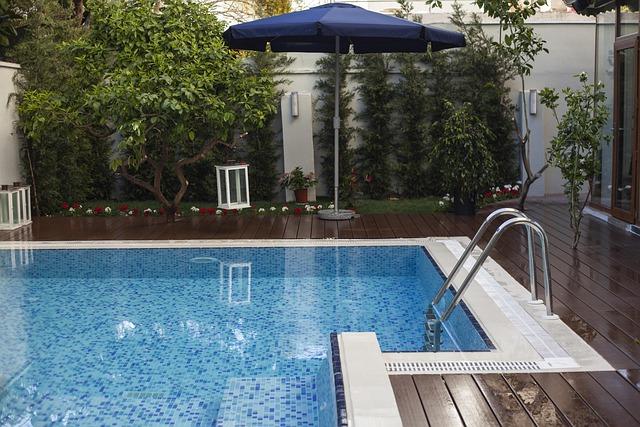
Before-and-after photos of Donald Trump’s flagship Scottish golf resort have reignited arguments over the former US president’s environmental and financial priorities, after a reported £14.2m “revamp” seems to have produced little more, visually, than a vivid blue swimming pool. The overhaul of Trump Turnberry—often presented as one of the centrepieces of his global real-estate empire—was pitched as a top-to-bottom luxury upgrade. Instead, the new imagery is fuelling questions about how the surrounding coastal landscape has been altered, whether the visible changes reflect the cost, and what it means politically to showcase such conspicuous wealth during a period of economic pressure for many households. As detractors probe what that multimillion-pound figure truly purchased, the resort’s bright new focal point has become a lightning rod in the broader examination of Trump’s business operations and environmental record.
Trump Turnberry’s £14.2m revamp: image upgrade or substantive change?
Trump Turnberry’s renovation has taken what many saw as an aging, slightly faded trophy asset and refashioned it into a sharper, media-ready stage for guests, events and political photo opportunities. The exterior has been re-stuccoed and repainted, lawns meticulously edged, and stonework buffed to a high sheen. The showpiece is the newly tiled, electric-blue swimming pool, whose saturated colour dominates drone footage of the central courtyard.
Inside the resort, design choices have shifted away from heavy carpets and dark, ornate fabrics toward lighter, more coastal-inspired finishes. The result still carries the unmistakable Trump taste for grandeur, but now wrapped in a softer, resort-style package that looks engineered for high-resolution photography and social media clips rather than for quiet, old-guard luxury. Where the property once evoked a time-locked 1980s fantasy, it now reads as a curated set—designed to be endlessly filmed, posted and repurposed in campaign material.
Beneath the glossy surface, however, critics argue that the most obvious outcomes are cosmetic. Heritage details that play well in marketing materials have been carefully preserved, while older quirks and less flattering remnants of the estate’s age appear to have been concealed or removed entirely. New cabanas and loungers, sculpted hedges, and choreographed sightlines funnel visitors and cameras toward the same controlled angles, turning the pool and courtyard into a permanent backdrop.
- Pool zone: Retiled in a sharp electric blue, ringed with loungers, umbrellas and cabanas
- Grounds: Landscaping reshaped to draw the eye toward the pool and courtyard axis
- Interiors: Brighter textiles, lighter furniture and refinished stone surfaces
- Lighting design: Redesigned specifically to flatter TV broadcasts, drone footage and smartphone video
| Feature | Before | After |
|---|---|---|
| Pool | Muted, aging tiles | High-contrast electric-blue finish |
| Façade | Weather-beaten exterior | Repainted, “camera-ready” frontage |
| Guest areas | Ornate, heavy décor | Airier, contemporary resort aesthetic |
| Landscaping | Unstructured borders | Carefully manicured, directed vistas |
From gold-leaf glamour to a blue pool: what the before-and-after images show
The contrast in the images is striking. Where the visual story was once dominated by chandeliers, intricate carpets and gold-leaf accents, the reworked property now orbits around a single, highly controlled element: the pristine blue pool. Heavy curtains and deep colour schemes have been replaced by cleaner lines, paler walls and simplified furnishings. The design language pushes attention outward—toward sunlit terraces and the water feature—rather than inward to gilded ceilings.
The new photos make clear how the resort’s definition of “luxury” is being rewritten. Instead of layering on more ornamentation, the setting now trades in a minimalist version of affluence: pastel fabrics, uncluttered spaces and symmetry tailor-made for Instagram grids. It’s less about private-club opulence than about a lifestyle fantasy that can be captured in a single wide-angle shot.
- Earlier style: Darker hues, reflective surfaces, dense decorative details
- Current emphasis: Open views, outdoor lounging areas, pared-back décor
- Intended message: Transition from sealed-off grandeur to a lifestyle “set-piece”
| Element | Before | After |
|---|---|---|
| Primary focal point | Gold-trimmed interiors | Expansive, central pool |
| Colour palette | Gold, deep reds | White, soft neutrals, blue |
| Overall mood | Formal, enclosed and club-like | Casual, open, resort-driven |
Across the image sets, the renovation looks less like a structural reinvention and more like a calculated exercise in rebranding. The gilding hasn’t disappeared; it has been relegated to subtle trim, while cameras gravitate toward the reflective surface of the pool, neatly aligned sunbeds and geometry that reads perfectly from above. In effect, the £14.2m program has produced an emblematic blue rectangle that now does as much work in shaping the Trump narrative—both commercially and politically—as any campaign rally.
Scrutiny over the £14.2m budget: are the numbers justified?
The reported price tag on Trump Turnberry’s upgrade has raised eyebrows among architects, heritage campaigners and analysts who study public and private capital projects. Many have asked whether the visibly dominant pool and courtyard changes can plausibly account for that level of spending. Several experts suggest that a large share of the cost likely went into what one adviser called “prestige spending”—the kind of behind-the-scenes consulting and acceleration that polishes a brand more than it improves the bones of a building.
While elite resorts routinely undertake seven- and eight-figure renovations, industry benchmarks indicate that comparable pool and courtyard improvements can often be completed for significantly less, particularly outside major metropolitan markets. In Scotland, where construction and labour costs are high but still generally lower than London or New York, the unplugged figures have led to new questions about procurement, contractor selection and long-term value.
Concerns raised by critics and sector watchers include:
- Functional gains appear limited, with much of the work oriented toward visuals rather than capacity, accessibility or sustainability.
- Opaque procurement processes around major contracts, with little public information on how competitive bidding—if any—was handled.
- Uncertain future maintenance costs for high-spec finishes, including the pool’s surface and extensive landscaping in a coastal climate.
| Item | Typical Cost Range | Reported Scope |
|---|---|---|
| Pool resurfacing & redesign | $300k–$500k for high-end resorts | Custom, electric-blue finish with bespoke detailing |
| Landscaping & hardscaping | $150k–$400k for comparable courtyards | Premium decorative plantings, sculpted lawns, new paving |
| Design, consulting & project management | $200k–$600k on similar schemes | Expanded advisory team, branding consultants, accelerated timelines |
Contextually, these numbers land in a moment when the global hospitality sector is still recovering from the pandemic. Industry data shows that luxury resort occupancy has rebounded strongly in some markets, but rising interest rates and construction costs have pushed many operators to favour targeted, efficiency-driven upgrades over splashy, purely cosmetic ones. Against that backdrop, a headline figure like £14.2m for what appears to be mostly surface-level change is bound to attract scrutiny.
Environmental concerns around Trump Turnberry’s transformation
The updated pool and surrounding grounds also revive long-running concerns about Trump’s environmental legacy in Scotland. Previous development at Trump-branded golf properties in the UK has drawn criticism from local campaigners and conservation groups, who argue that coastal ecosystems and wildlife habitats have been subordinated to branding and real estate priorities.
At Turnberry, questions now centre on:
- Water usage and chemical load: Large resort pools require significant water, pumping and treatment, raising issues in an era of increasing focus on resource efficiency and microplastics from pool maintenance products.
- Coastal landscape alteration: Additional hardscaping, lighting and landscaping can have knock-on effects on local flora and fauna, especially in sensitive coastal areas.
- Climate optics: The symbolic impact of an oversized, electric-blue pool at a time when extreme weather, rising sea levels and energy costs are front-page issues across the UK and US.
Environmental organisations in Scotland have repeatedly urged high-profile resorts to shift spending toward renewable energy, biodiversity projects and shoreline protection. Against that backdrop, the Turnberry makeover—dominated in imagery by a large leisure pool—has been held up by critics as emblematic of the gap between Trump’s branding and contemporary sustainability expectations.
Trump branding, Turnberry and 2024 campaign optics
The gleaming cerulean pool at Trump Turnberry functions as more than a hospitality amenity; it’s a strategic visual pivot in the wider Trump brand. The former president’s team appears to be moving away from a purely gold-plated, casino-era aesthetic toward the sunlit, leisure-focused look that dominates modern lifestyle marketing. It’s a style that plays well in drone flyovers, campaign commercials and influencer-style clips alike.
In an election cycle where every backdrop is fodder for social media and cable news, the Turnberry renovation doubles as a content engine. Instead of shots of dark, gilded ballrooms, campaign imagery can now lean on sweeping courtyard vistas, poolside walk-and-talk interviews and donor events framed by reflective water. The message: not just wealth, but effortless, aspirational ease.
For political strategists, these visuals serve several purposes:
- Reinforcing the builder persona: Even without cranes and hard hats in the frame, the project underlines Trump’s long-cultivated identity as a developer who “gets things done.”
- Generating social-first content: The resort’s drone-friendly layout, symmetrical pool and staged seating areas lend themselves to viral clips and sponsored posts.
- Softening the brand: Poolside photo ops and outdoor press availabilities create a more relaxed tone than formal podium speeches surrounded by gold trim.
| Old Visual Cue | New Visual Cue | Intended Signal |
|---|---|---|
| Heavily gilded interiors | Blue pool, terraces and open skies | Relaxed, contemporary affluence |
| Indoor podiums and boardrooms | Outdoor interviews and poolside stages | Energy, accessibility and informality |
| Static clubhouse backdrops | Drone-optimised vistas and courtyards | Images engineered for feeds and timelines |
Whether this makeover actually shifts voter perceptions is another question. Recent polling in both the US and UK suggests that voters are increasingly sensitive to displays of extreme wealth and showy consumption, particularly during a cost-of-living crisis. That tension—between the political benefits of projecting success and the risks of looking out of touch—runs through every photo of the Turnberry pool.
The bigger picture: spectacle, substance and what comes next
Taken as a whole, Trump Turnberry’s £14.2m “transformation” looks less like a structural reinvention and more like a fresh coat of symbolism applied to an existing narrative. The electric-blue pool photographs beautifully, but it also condenses many of the long-standing questions that have followed Trump from his New York properties to the White House and back to his resorts: who gains most from these investments, what trade-offs are made along the coastline and behind the scenes, and how much of the story is about image rather than substance?
As the before-and-after images continue to circulate online and in news coverage, they have become more than tourism marketing. They serve as a compact visual metaphor for Trump’s enduring approach to business and politics: bold surfaces, carefully curated vistas and a constant bid to control what the camera sees. Voters, guests and observers are left to decide whether this latest makeover represents a genuine renewal of a historic property, a distraction from deeper issues, or simply another example of the same old playbook—repackaged in electric blue.