

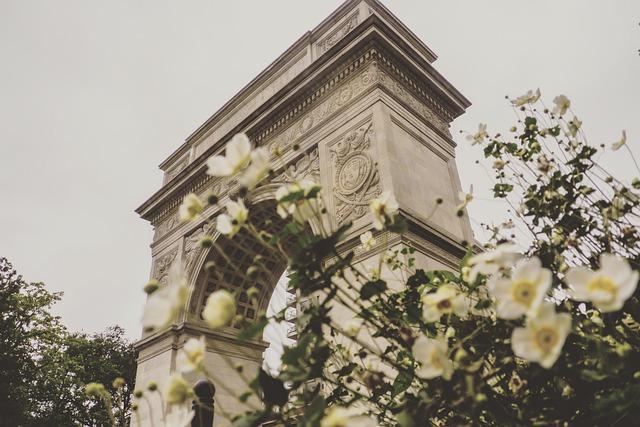
A pivotal federal design panel has given the go‑ahead to a contentious proposal for a monumental arch in Washington, D.C., championed by former President Donald Trump, moving the high‑profile project past one of its toughest procedural barriers. The ruling, issued after extensive scrutiny of the arch’s design, symbolism, and impact on the historic core of the capital, does not guarantee construction—but it does shift the project from speculative concept to a serious contender for the city’s skyline. The green light has reignited debate over who is memorialized in the nation’s capital, how those decisions are made, and what kind of political legacy should be physically embedded in the National Mall.
Trump Washington arch project clears critical design hurdle
The proposed Trump Washington arch has advanced significantly with the federal commission’s endorsement of a revamped design, marking the completion of a crucial early review. The commissioners backed a more restrained, neoclassical vision that replaced earlier, more ostentatious ideas with a cleaner silhouette they argued would sit more comfortably among Washington’s long‑established monuments and memorials.
The decision follows months of private design charrettes, security briefings, and negotiations over how the arch would interact with the city’s height restrictions and treasured viewsheds. Compromises were hammered out on everything from the thickness of the piers to the placement of security barriers, all aimed at ensuring that the new structure would fit into Washington’s carefully protected visual order.
Although the approval focuses primarily on aesthetics and urban context rather than final construction, it reshapes the political and technical trajectory of the Trump Washington arch project. With the concept design accepted, planners can now pivot to structural engineering, cost modeling, and intense discussions over who will pay for the monument and how. According to internal reports, officials evaluated several core questions before issuing their decision:
- Visual impact: How the arch aligns with historic avenues, view corridors, and the broader National Mall composition.
- Security compliance: Whether modern defenses can be embedded discreetly without turning the site into a fortress.
- Public access: Ensuring that visitors retain meaningful access to plazas, walkways, and viewing areas.
| Review Stage | Status | Next Step |
|---|---|---|
| Concept Design | Approved | Detailed engineering |
| Environmental Review | Ongoing | Impact statements |
| Funding Plan | In negotiation | Public–private framework |
The Trump Washington arch thus moves from a polarizing idea toward an integrated part of federal planning, even as the ultimate decision on whether it will be built remains several years away.
Scale, symbolism, and the reshaping of the National Mall
New renderings describe a towering, ceremonial arch roughly equivalent to a 12‑story building, deliberately calibrated to stand out while still deferring to the Washington Monument’s defining presence on the skyline. The structure is oriented to frame long views toward the U.S. Capitol, positioning the arch as both a literal and metaphorical gateway between branches of government and eras of political power.
The piers are heavily detailed, featuring carved inscriptions, bronze relief panels, and subtle bands of integrated lighting designed to give the monument a distinct night‑time identity. Rather than floodlighting the entire form, designers propose programmable illumination that would trace the arch’s outline after dusk, shifting the monument’s role from daytime threshold to nocturnal marker visible across parts of downtown.
In keeping with long‑standing planning rules for the National Mall, the arch’s footprint is tightly defined to maintain critical sightlines between existing memorials. By minimizing the ground plane and carefully shaping adjacent plazas, planners say they can prevent the new structure from visually overwhelming neighboring landmarks.
- Material palette: pale limestone cladding over a reinforced concrete skeleton, chosen to echo the tone of nearby federal buildings.
- Lighting system: programmable LED arrays with strict dimming protocols and special event modes.
- Security design: protective bollards and barriers concealed as benches, planters, and low walls within the landscape plan.
- Visitor access: an elevated observation level accessed via stairs and discreetly placed elevators within the piers.
| Feature | Scale | Symbolic Aim |
|---|---|---|
| Arch height | Approx. 130 ft | Prominent gateway that still cedes primacy to the Washington Monument |
| Span width | Approx. 90 ft | Stage‑like frame for national ceremonies, marches, and public gatherings |
| Relief panels | 12 panels | Curated depiction of recent political history and policy milestones |
| Plaza area | 2.5 acres | Multi‑use forecourt for official events, spontaneous assemblies, and civic rituals |
Project advocates argue that the Trump Washington arch would signal a new phase in the evolution of the Mall, much as past additions—the Vietnam Veterans Memorial in the 1980s or the Martin Luther King Jr. Memorial in the 2010s—reshaped how visitors navigate and interpret the space. The proposed plazas around the arch are expected to redirect some pedestrian flows away from the Reflecting Pool, creating an alternative gathering point that could host everything from presidential ceremonies to large‑scale demonstrations.
Opponents counter that the arch’s massive vertical form and explicit association with a single presidency risk concentrating too much symbolic weight in what has traditionally functioned as a shared national commons. They warn that inscribing one recent administration into the Mall’s core layout could set a precedent for future, highly partisan monuments and destabilize the long‑term balance of commemorations there.
Precedent, access, and security: local and preservationist concerns
Local planners, neighborhood organizations, and preservationists caution that while the design may be refined, major questions remain about how the Trump Washington arch would affect everyday movement and security in central Washington. The area surrounding the planned site already ranks among the most heavily policed and surveilled public spaces in the United States, with frequent road closures during high‑profile events. Adding a large new focal point, they say, could intensify those pressures.
Heritage advocates are especially wary of the cumulative impact of new checkpoints, metal detectors, and hardened edges to protect VIPs and official ceremonies beneath the arch. Even if current plans rely on “invisible” defenses, they argue that future security upgrades—prompted by protests, threats, or political events—could gradually turn open lawns and plazas into a maze of barriers.
Within the federal government, agencies responsible for safeguarding both people and property are already gaming out scenarios: How to keep tourist flows moving during peak season, where to permit First Amendment assemblies, and how broad any security perimeter would need to be if the arch becomes a regular rallying point for both supporters and opponents of the former president. Some officials worry that once substantial, permanent protective infrastructure is installed for such a prominent monument, future efforts to scale it back will be politically untenable.
Preservation groups have begun circulating alternative proposals, some of which reduce the arch’s height or relocate associated security infrastructure farther from existing monuments in order to preserve the open, democratic feel of the Mall’s core spaces.
- Key concern: Potential for permanent or recurring street closures around established monuments and memorials.
- Security tools: Preference for removable barriers and modular crowd‑management systems over fixed fencing.
- Access issues: Guaranteeing adequate space for protests, vigils, and media coverage without unduly restricting movement.
- Oversight: Complex coordination among federal agencies, the District government, and the National Park Service.
| Issue | Risk | Stakeholders |
|---|---|---|
| Street closures | Reduced public mobility and increased congestion | Residents, commuters, local businesses |
| Security perimeter | Expansion of restricted zones into currently open areas | Police, Secret Service, federal security agencies |
| Historic setting | Altered views and potential erosion of the Mall’s symbolic neutrality | Preservation groups, planning commissions |
| Protest access | Constraints on demonstrations and organized dissent | Civil liberties advocates, activist organizations |
These debates echo larger national conversations about monument culture in the United States, where cities have simultaneously removed controversial statues and considered new commemorations. The Trump Washington arch now sits at the center of that tension, embodying competing visions of memory, power, and public space.
Timeline, funding, and where the public fits in: next steps in federal review
With concept approval secured, the Trump Washington arch project enters a lengthy, multi‑layered review process that will determine whether it becomes a permanent fixture or remains an unrealized plan. Agencies anticipate a structured schedule of evaluations touching on environmental impacts, security resilience, transportation effects, and historic preservation requirements.
The most uncertain element is still how to pay for the monument. Proponents are exploring a hybrid model that blends congressional appropriations with private philanthropy and, potentially, naming arrangements for auxiliary spaces such as visitor centers or educational programs. Construction cost estimates will be refined during the engineering phase, but planners have already warned that delays in securing funding could push ground‑breaking well beyond the next federal election cycle. In practice, that would alter both the financial assumptions—given rising construction and security costs—and the political context in which final decisions are made.
As regulatory agencies refine their analyses, the public will have multiple chances to weigh in. Officials plan a layered approach to outreach, combining traditional notice‑and‑comment procedures with design briefings and targeted engagement of nearby communities, advocacy organizations, and frequent Mall users. They say that feedback on traffic, crowd management, and the arch’s impact on iconic vistas will be crucial before any final authorization to build is issued.
- Staggered reviews will allow different components—security infrastructure, transportation improvements, and architectural finishes—to receive separate approvals.
- Hybrid funding models under consideration would pair public oversight with the speed and flexibility of private donations.
- Multiple comment windows are being slated, including digital portals, community meetings, and formal public hearings.
| Phase | Target Window | Public Role |
|---|---|---|
| Environmental & Security Review | Late 2026 | Written comments |
| Funding & Appropriations | Early 2027 | Budget testimony |
| Final Design Confirmation | Mid 2027 | Public hearings |
Whether the Trump Washington arch ultimately rises or not, the review process itself is likely to influence how future monuments are proposed, financed, and debated in the capital—especially in an era when public opinion, security concerns, and partisan identity are so closely intertwined.
Final Thoughts
The commission’s approval of the arch’s conceptual design marks a major inflection point for a proposal that has already sparked intense political, cultural, and architectural argument. As the Trump Washington arch proceeds through environmental, financial, and security reviews, supporters and critics will be watching not only the fate of this particular monument, but also what it reveals about how the United States chooses to memorialize its recent past. However the process ends, the debate over the arch is poised to leave a lasting imprint on both the physical landscape and the symbolic identity of Washington, D.C.