


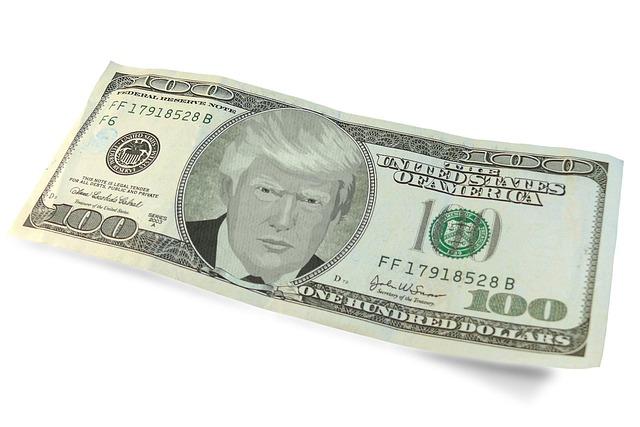
U.S. companies are quietly overhauling everything from product blueprints to shipping routes in order to blunt the impact of the escalating tariffs born from Donald Trump’s trade war. Instead of simply paying higher duties or pushing those costs onto customers, firms are dissecting tariff rules line by line and reengineering their offerings to slip into cheaper customs categories. This shadow transformation highlights how deeply trade policy now shapes corporate decision-making—and how far businesses are willing to go to stay profitable while technically operating within U.S. tariff rules.
Inside the New Tariff Playbook: How Companies Redesign Products to Dodge Duties
In factories stretching from Mexico to the Midwest, tariff codes are now treated almost like design specifications. Engineering teams, sourcing managers, and trade lawyers work side by side, tweaking products just enough to fall under more favorable customs classifications.
Instead of lobbying Washington for relief, many firms are:
- Moving a circuit board so a device performs a “primary” function recognized in a lower-duty code.
- Adjusting the percentage of metal versus plastic in a product so it qualifies under a cheaper materials category.
- Breaking up finished goods into multiple shipments of “parts” and “subassemblies” that are taxed differently when they enter the U.S.
A networking device, for instance, might gain a basic home-automation feature so it can be declared as a “smart home accessory” rather than specialized telecom gear. A U.S. home décor importer might request that stools arrive without pre-installed legs, allowing them to be labeled as “components” instead of fully assembled furniture. To consumers, the items look nearly identical on the shelf. On paper, however, they fall into an entirely different tariff universe.
Behind these decisions sits the Harmonized Tariff Schedule, once a dense reference book for customs professionals that has quietly become a survival guide for product managers and CFOs. Companies pore over every line, looking for legally defensible ways to fit their goods into less costly classifications.
The New Cottage Industry: Trade Lawyers, Brokers, and Tariff Consultants
Supporting this wave of redesign is a rapidly growing ecosystem of specialists—trade attorneys, customs brokers, supply chain analysts, and tariff consultants—who orchestrate these changes from sketch to shipment. The process is typically systematic and data-driven:
- Prototype adjustments are mapped out with engineers and compliance experts.
- Small trial shipments are sent through U.S. Customs and Border Protection (CBP).
- CBP responses and rulings are analyzed, and products are refined until they settle into a more favorable tariff bracket.
Common strategies include:
- Reframing primary function: Adding, dropping, or emphasizing certain features so the product’s “principal use” fits a lower-duty code.
- Changing material mix: Altering the percentage of wood, metal, plastic, or fabric to cross key tariff thresholds.
- Modular product design: Shipping in pieces—knockdown kits, partial assemblies, or separate components—to leverage different duty rates for parts versus finished goods.
- Country-of-origin engineering: Relocating light assembly or finishing operations to countries that qualify for better tariff treatment under U.S. rules of origin.
| Original Product | Design Shift | Tariff Outcome |
|---|---|---|
| Steel-framed dining chair | Switched to mixed wood-steel construction | Moved into a lower mixed-material customs bracket |
| Wi-Fi hub | Enhanced with basic home-automation controls | Reclassified as smart home equipment with reduced duties |
| Hand tool combo pack | Shipped and sold as separate tools instead of a single kit | Avoided the higher rate applied to complete tool sets |
When “Tariff Engineering” Meets the Law: Gray Zones and Regulatory Exposure
Every clever redesign aimed at tariff savings carries a legal risk. The line between legitimate tariff planning and unlawful misclassification is thin—and CBP is increasingly skeptical when goods appear “reengineered” mainly on paper.
One core test is whether a product or its components undergo “substantial transformation,” meaning that enough meaningful work has been done to justify a new classification or country of origin. While CBP recognizes that firms may optimize their designs to fit existing tariff codes, the agency is also stepping up enforcement against schemes that appear to manufacture a new label rather than a genuinely different product.
When CBP believes companies have crossed that line, it can trigger:
- Detailed audits and re-inspections.
- Shipment detentions and delays at ports.
- Retroactive duty assessments that claw back years of perceived savings.
- Civil penalties, and in serious cases, seizures of goods.
How Compliance Teams Are Redrawing Internal Boundaries
Inside corporations, compliance manuals are being rewritten to distinguish acceptable “tariff engineering” from tactics that look like evasion. Internal risk memos increasingly caution against:
- Purely cosmetic redesigns—extra screws, dummy ports, or meaningless add-ons that have no commercial value beyond reclassification.
- Token assembly in third countries—minimal work performed abroad purely to shift country-of-origin labels without real value added.
- Overly aggressive interpretations of the Harmonized Tariff Schedule that hinge on strained or highly technical readings.
- Weak documentation—incomplete bills of materials, missing contracts, or vague production records that can’t stand up to a CBP post-entry review.
| Risk Area | Potential Outcome |
|---|---|
| Incorrect or manipulated origin claims | Back payments of duties, fines, and potential forfeiture of goods |
| Superficial or deceptive redesigns | Cargo seizures, prolonged clearance times, and reputational damage |
| Insufficient records and traceability | Failed audits, heightened future scrutiny, and delayed entries |
Supply Chains Under Pressure: How Tariff Workarounds Reshape Production, Pricing, and Jobs
The impact of tariff-driven redesigns extends far beyond a CAD drawing. Every small tweak at the factory level ripples through sourcing contracts, logistics networks, retail pricing, and labor markets.
In many plants, products that once rolled off the line as complete units are now split into “modules” or “subassemblies” to meet tariff requirements. A pump may be exported without its motor. An appliance might ship in two cartons—one with the frame, another with electronics—so the components can be classified differently upon entry.
These operational shifts trigger:
- New tooling and production sequences for suppliers.
- Additional quality checks when components are assembled late in the chain.
- Revised logistics routes that add stops in countries with more favorable tariff status.
On the pricing side, the effect is often hidden. Retail shelf tags rarely mention a “trade surcharge,” but distributors and retailers adjust prices, rebates, and wholesale discounts to reflect imported cost changes. According to recent trade data, U.S. tariff revenues surged after 2018, and academic studies from institutions like the Peterson Institute and the Federal Reserve have found that much of the cost burden ultimately lands on U.S. businesses and consumers—even when companies try to mask it through complex price structures.
The Human Cost: Workers and Skills in a Tariff-Optimized Economy
The scramble to avoid import duties is also rearranging people’s work lives. As production migrates to countries with preferential treatment or lower tariffs:
- Technicians in new manufacturing hubs gain overtime and expanded responsibilities.
- Employees in long-established locations may see reduced hours, plant slowdowns, or closures.
- Warehouse and retail staff must familiarize themselves with reconfigured products whose main difference is tariff treatment, not customer-facing features.
Within corporations, trade compliance and logistics specialists have moved closer to the center of strategic decision-making. In some firms, the voice of the customs lawyer now carries as much weight in product planning meetings as that of the lead designer. Innovation is increasingly steered not only by consumer preferences but also by the latest twist in tariff policy.
Day-to-day operations are being reshaped by:
- Re-engineered components that exist primarily to change a product’s customs category, not its user experience.
- Chained, multi-country assembly lines optimized to minimize exposure to any single tariff barrier.
- Dynamic pricing algorithms that factor in evolving duty rates, trade agreements, and routing options in near real time.
- Reskilled and redeployed workforces moved away from discontinued lines into new “tariff-optimized” product families.
| Stage | Primary Shift | Mainly Affects |
|---|---|---|
| Production floor | Components separated, origin and classification recalculated | Engineers, line workers, quality teams |
| Transport & routing | Alternative corridors, extra stops, and consolidation points | Freight operators, logistics planners, customs brokers |
| Retail & end market | Subtle changes in prices, bundles, and visible features | Sales staff, resellers, final customers |
Policy and Strategy: How to Close Tariff Loopholes Without Crippling Trade
Policymakers and business leaders now face a delicate balancing act. Overly broad, product-level tariffs encourage creative workarounds and fuel uncertainty; overly aggressive enforcement can disrupt legitimate commerce and supply chains that consumers depend on.
A more sustainable approach involves using targeted, data-driven tools that focus on economic substance instead of legal technicalities. Tools at regulators’ disposal include:
- AI-assisted classification systems that detect unusual shifts in product design or origin right after tariff changes.
- Risk-based audits that prioritize importers and product lines with atypical patterns of redesign or rerouting.
- Time-limited “watch lists” for categories that noticeably spike or morph following tariff announcements.
Trade negotiators can also use these pressures as leverage in talks with partners. Rather than permanently ratcheting up duties, they can offer tariff relief in exchange for verifiable commitments on labor protections, environmental standards, and reciprocal market access—reducing the incentive for companies to engage in endless “cat-and-mouse” games over product codes.
What Forward-Looking Executives Should Do Now
For corporate leaders, tariff exposure can no longer be treated as a back-office issue. It belongs on the board agenda alongside cyber risk and regulatory compliance. Companies that want to stay ahead of repeated tariff cycles will:
- Diversify production and sourcing to avoid overreliance on any one country or region.
- Co-design components with multiple suppliers, ensuring that manufacturing can shift quickly if trade rules change.
- Invest in strong internal compliance and trade intelligence teams prepared for deeper CBP scrutiny.
- Work through industry groups to push for clearer, more predictable tariff interpretations and timelines.
In parallel, policymakers can reduce uncertainty for compliant companies by defining clearer boundaries between acceptable tariff planning and evasion. That means publishing transparent guidance, including examples of permissible redesigns, and offering phase-in periods when major tariff changes are introduced so firms don’t rush into last-minute, high-risk engineering contortions.
Some practical policy levers include:
- Clarify classification standards through public, example-rich rulings and scheduled reviews that update codes as technology evolves.
- Support genuine reshoring and nearshoring with targeted tax credits or incentives, rather than opaque tariff exemptions.
- Expand trusted trader programs that reward companies sharing detailed supply chain data and undergoing independent audits with faster, less intrusive customs processing.
- Deepen coordination with allies so tariff schedules and enforcement practices are aligned, making it harder to exploit cross-border routing schemes.
| Policy Objective | Primary Instrument | Signal to Business |
|---|---|---|
| Reduce loophole abuse | Risk-based inspections and targeted audits | Highly engineered redesigns will face closer review |
| Safeguard legitimate trade | Enhanced trusted trader frameworks | Transparent compliance yields faster, more predictable clearance |
| Increase stability | Clear guidance and advance transition timelines | Fewer surprise tariffs, fewer emergency supply chain pivots |
In Retrospect
It is still uncertain whether the current wave of tariff-inspired redesigns and supply chain detours will endure once political winds shift. What is clear is that tariffs have already altered the architecture of global trade. As companies quietly redraw products, routes, and sourcing strategies to navigate Donald Trump’s trade war and its aftermath, they are also redrawing the map of globalization—one component, one shipping label, and one tariff code at a time.