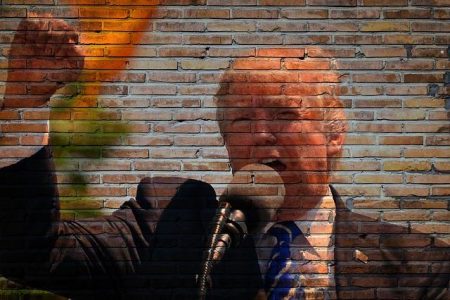



Former President Donald Trump’s recent promise to seek the release of jailed Hong Kong media magnate Jimmy Lai is reshaping the political conversation in Washington just as U.S. officials finalize plans for a high-level summit with Chinese leaders. Lai—founder of the shuttered pro-democracy newspaper Apple Daily—has emerged as one of the most visible faces of Beijing’s sweeping crackdown under Hong Kong’s national security law. With his trial ongoing and a possible life sentence hanging over him, lawmakers in both parties are urging the Biden administration to elevate Lai’s case, along with the broader issue of political prisoners in Hong Kong, to a central test of U.S.-China diplomacy and Washington’s commitment to human rights.
Trump’s vow on Jimmy Lai clashes with Biden’s calibrated China strategy
Donald Trump’s campaign promise to “bring Jimmy Lai home” has jolted the debate in Washington at a moment when the Biden administration is emphasizing managed competition and selective cooperation with Beijing. While Trump has not detailed how he would secure Lai’s release, his statement has galvanized a bipartisan coalition on Capitol Hill that sees the upcoming summit as a moment of truth for U.S. resolve on political prisoners and press freedom.
These lawmakers insist that Lai’s case belong on the core summit agenda, not just in side conversations, and argue that high-level engagement with China should be conditioned on demonstrable human-rights progress—not focused solely on strategic stability, trade, and technology.
Behind the scenes, the divide between Congress and the White House is becoming increasingly apparent:
- Human rights as a priority: Many members of Congress want direct, public demands for Lai’s release and clearly defined penalties for officials implementing Hong Kong’s national security law.
- Guarding diplomatic channels: Biden advisers are wary of triggering a major confrontation with Beijing that might derail cooperation on fentanyl flows, AI risk frameworks, climate discussions, and military crisis hotlines.
- Election-year calculations: Both parties are sharpening their China messaging ahead of November, cautious that appearing either too aggressive or too accommodating toward Beijing could be weaponized in the campaign.
| Key Actor | Stated Goal | Risk Factor |
|---|---|---|
| Congress | Force Lai’s case onto summit agenda | Retaliatory moves from Beijing |
| White House | Maintain strategic dialogue with China | Blowback from domestic critics |
| Trump camp | Project a tougher, clearer China stance | Whether the pledge can actually be fulfilled |
Congress seeks to turn Jimmy Lai into a benchmark for the Xi summit
As President Biden prepares for a pivotal meeting with Chinese President Xi Jinping, pressure from Capitol Hill is intensifying. A bipartisan group of lawmakers is insisting that Jimmy Lai’s imprisonment move from being a standard “concern” in U.S. talking points to a concrete test of whether engagement with Beijing can yield real-world human-rights outcomes.
They argue that claims of “responsible competition” will ring hollow if Washington sidesteps the detention of a prominent pro-democracy publisher whose trial has come to symbolize the dismantling of Hong Kong’s promised autonomy. Members of Congress point not only to Lai but also to the broader pattern of arrests of activists, journalists, and opposition figures since the national security law took effect in 2020.
In hearings, letters, and public remarks, these lawmakers are calling on the administration to transform previous commitments—including Trump’s campaign promise regarding Lai—into specific, measurable demands during the summit.
They are presenting Lai’s case as:
- A gauge of leverage: Using the attention around a single well-known detainee to test whether summit diplomacy can secure tangible concessions.
- A rare bipartisan unifier: Demonstrating unusual Republican–Democrat alignment on pressing Beijing over Hong Kong and broader human-rights abuses.
- A link between strategy and values: Embedding civil liberties benchmarks into the metrics by which U.S.-China talks are judged.
| Key Actor | Summit Objective |
|---|---|
| Congressional China Hawks | Public, non-negotiable demand for Lai’s release or improved treatment |
| White House | Weave human-rights pressure into a broader stability-focused agenda |
| Beijing | Avoid setting a precedent of conceding to foreign pressure on internal legal cases |
Rights groups push Magnitsky sanctions and targeted pressure on Beijing
Human-rights organizations are urging Washington to go beyond rhetorical condemnations and employ its most potent targeted tools, including the Global Magnitsky sanctions program, against Chinese and Hong Kong officials tied to the erosion of civil liberties and the detention of Jimmy Lai.
Advocates maintain that focused financial sanctions and travel bans aimed at top security officials, prosecutors, and judges handling national security cases would send a clear warning that crushing dissent in Hong Kong carries personal consequences. They emphasize that such actions would be most effective if coordinated with key allies, pointing to rising concern in Europe and Asia over shrinking press freedom and civic space in the city.
Recent reports from international watchdogs underscore those concerns. According to groups such as Reporters Without Borders, Hong Kong has plunged in global press freedom rankings since 2020, reflecting newsroom raids, arrests of journalists, and the closure of independent outlets.
Policy experts caution, however, that sweeping sanctions on broad sectors of China’s economy could play into Beijing’s narrative of Western containment and risk unintended blowback. Instead, they advocate a narrower, more surgical blueprint that zeroes in on those directly complicit in rights violations and on institutions enabling censorship and surveillance. Their proposals include:
- Listing named officials under the Global Magnitsky regime for their role in prosecuting dissidents and overseeing national security cases.
- Enforcing visa bans on senior figures managing Hong Kong’s national security apparatus.
- Targeting state-affiliated media, tech, and data firms that facilitate censorship, digital surveillance, and transnational repression.
- Tying certain bilateral exchanges and dialogues to demonstrable improvements in political rights and due process protections.
| Tool | Target | Intended Signal |
|---|---|---|
| Global Magnitsky Sanctions | Named officials, security chiefs | Personal accountability for human-rights violations |
| Asset Freezes | State-linked enterprises and intermediaries | Raise costs for institutional backers of repression |
| Travel Restrictions | Senior cadres and their family members | Limit access to Western education, finance, and safe havens |
Linking Jimmy Lai’s fate to a global press freedom agenda
Within Congress, senior lawmakers are increasingly framing Jimmy Lai’s imprisonment as a proxy battle over press freedom far beyond Hong Kong. Their argument: if Beijing can silence an internationally known media owner without significant consequences, smaller outlets and individual journalists from the region to the diaspora will face even greater danger.
Draft proposals circulating on Capitol Hill would direct U.S. negotiators to anchor Lai’s case within a broader initiative to protect independent journalism. Under this approach, Lai becomes a stand-in for hundreds of lesser-known reporters, editors, photographers, and online commentators operating under mounting pressure in Hong Kong and mainland China, as well as Chinese-language media abroad.
Diplomats familiar with the discussions say the emerging strategy centers on a coordinated, allied response that raises the political and economic costs of targeting journalists. Among the ideas being floated:
- Joint sanctions targeting officials, security services, and entities directly involved in media crackdowns and prosecutions.
- Aligned travel bans on senior security and propaganda officials across multiple democratic countries.
- Conditional trade, technology, and investment engagement linked to credible, verifiable steps to protect press freedom and cease harassment of journalists.
| Allied Priority | Proposed Action |
|---|---|
| Press Safety | Include enforceable media protections in summit communiqués and follow-up mechanisms |
| Legal Pressure | Coordinate Global Magnitsky-style sanctions lists and share evidence dossiers |
| Public Messaging | Issue synchronized statements highlighting Lai and other emblematic cases |
Insights and Conclusions
As Biden and Xi move toward their next meeting, Jimmy Lai’s case has evolved into a measuring stick for Washington’s willingness to challenge Beijing over human rights—and for the durability of pledges made on the U.S. campaign trail. Whether Trump’s promise to “bring Jimmy Lai home” becomes part of a sustained, bipartisan push at the summit, or is overshadowed by security and economic concerns, will help define the next phase of America’s China policy.
The outcome will reverberate beyond Hong Kong. It will send a powerful signal to dissidents, journalists, and activists worldwide about how much political capital the United States is prepared to invest in defending free expression when it collides with great-power diplomacy.