


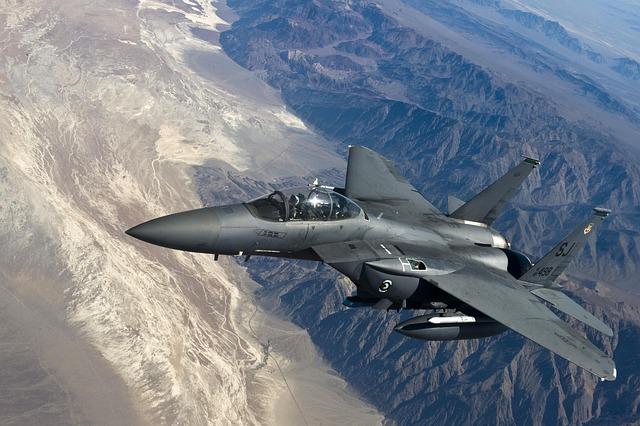
A U.S. military fighter jet went down in a sparsely populated stretch of Washington state, sparking a fast-moving wildfire and triggering an urgent, multi-agency response. The aircraft crashed in steep, rugged country, sending a towering column of smoke into the sky that could be seen from nearby communities and major roadways. Ground crews and firefighting aircraft were quickly deployed in an effort to contain the blaze, while military investigators and local law enforcement moved swiftly to secure the wreckage and surrounding area.
Authorities have not yet disclosed what led to the crash or released full details about the mission profile. Officials confirmed that the pilot survived and was taken for medical evaluation, but urged residents to stay alert as shifting winds and dry fuels threatened to push the flames toward more populated zones. Evacuation notices and road closures were issued in some areas, highlighting how rapidly a single aviation accident can escalate into a broader wildfire emergency.
Federal investigation focuses on pilot ejection and possible jet malfunction
Federal authorities are now piecing together the chain of events that ended with the pilot ejecting from the jet just before impact. According to early reports, the aviator declared an in-flight emergency and followed established ejection protocols, which mandate that the pilot’s survival take absolute priority over preserving the aircraft. Rescuers reached the pilot, who is reported to have sustained non-life-threatening injuries, and transported them for further treatment and debriefing.
Investigators have recovered data from the jet’s flight systems, onboard recorders, and radio transmissions. These sources, along with radar tracks and eyewitness accounts, are being used to reconstruct the final minutes of the mission. The probe is examining the jet’s mechanical performance, the pilot’s decision-making under stress, and the surrounding atmospheric and terrain conditions at the time of the incident.
A coordinated team from the Federal Aviation Administration (FAA), the National Transportation Safety Board (NTSB), and military safety units is leading the review. The group is analyzing whether maintenance history, operational tempo, or training demands may have played a role. Among the primary questions on the table:
- Mechanical failure: Whether an engine issue, flight-control anomaly, or structural problem forced the emergency.
- Systems reliability: How avionics, cockpit warning systems, and the ejection seat performed as the situation deteriorated.
- Operational factors: The aircraft’s altitude, speed, mission type, and the pilot’s workload in the closing moments.
- Environmental impact: How the impact, debris, and fuel ignited the surrounding dry vegetation and accelerated wildfire spread.
| Key Element | Current Status |
|---|---|
| Pilot Condition | Stable, under medical and operational evaluation |
| Flight Recorder | Recovered, data analysis in progress |
| Cause of Crash | Undetermined, subject to federal and military investigation |
| Wildfire Origin | Attributed to crash impact and debris ignition |
Military training routes and wildfire risk come under renewed scrutiny
The blaze that erupted around the crash site has intensified debate over how the Pentagon weighs fire danger when approving low-level flight routes and live training areas. Military risk assessments traditionally concentrate on pilot survivability, midair collision avoidance, and aircraft integrity. However, local leaders in fire-prone regions contend they are seldom fully informed about how repeated sorties over drought-stricken landscapes can elevate wildfire risk.
As the western United States continues to face hotter, drier summers—with the 2023 and 2024 fire seasons ranking among the costliest on record according to the National Interagency Fire Center—critics argue that existing models no longer capture current realities. Falling debris, high-speed impacts, and spilled fuel can ignite vegetation in seconds, especially when relative humidity is low and wind speeds are high.
Emergency planners and defense analysts are calling for a broader lens that blends aviation safety with wildfire science. They point to several critical variables that they say should be fully integrated into planning and oversight:
- Seasonal fire indexes that factor in drought intensity, wind patterns, temperature anomalies, and historical burn scars.
- Flight density thresholds that trigger mandatory route adjustments, higher minimum altitudes, or temporary stand-downs when conditions are extreme.
- Debris-field modeling to estimate where flaming wreckage or hot components are most likely to land and what fuels they will encounter.
- Response-time benchmarks that synchronize base fire crews and rural departments for rapid initial attack on crash-related fires.
| Factor | Current Focus | Proposed Shift |
|---|---|---|
| Pilot Safety | Primary consideration | Equally balanced with wildfire and community risk |
| Fire Modeling | Limited, incident-specific | Embedded in routine mission planning |
| Local Input | Irregular and reactive | Structured, recurring consultation |
Rural response capacity and air quality challenges exposed by crash and wildfire
Volunteer-driven fire districts and small municipal departments across eastern Washington found themselves stretched thin as they confronted both the wreckage and the quickly expanding wildfire. Crews had to coordinate search-and-rescue operations for the downed pilot, protect scattered homes and ranch structures, and battle advancing flames over steep, brush-covered slopes—all with limited personnel and equipment.
Mutual-aid agreements were activated almost immediately, pulling in engines, tenders, and crews from neighboring counties. Even so, the surge in demands—managing evacuations, traffic diversions, temporary airspace restrictions, and communication with state and federal partners—highlighted how fragile regional capacity can be when a high-risk military event coincides with peak fire conditions.
Beyond the flames themselves, the crash raised significant air quality concerns. Rural towns and tribal communities downwind reported heavy smoke, chemical odors, and reduced visibility. In addition to typical wildfire particulates, residents worried about exposure to burning jet fuel, composites, and other synthetic materials used in modern fighter jets.
County health departments issued advisories urging people to stay indoors, use air purifiers where possible, and limit outdoor activity for children, older adults, and those with heart or lung disease. Yet many offices lacked the real-time monitoring equipment and specialized staff needed to quickly distinguish between wildfire smoke and potential toxins from the wreckage.
Local leaders warn that without sustained investments in training, air-monitoring technology, and wildfire-ready infrastructure, communities along military training corridors will remain vulnerable when aviation accidents cascade into complex public health and environmental emergencies.
Growing demand for stronger flight safety rules and joint military–civilian wildfire strategies
In the wake of the Washington state fighter jet crash, lawmakers, regulators, and community advocates are pushing for a comprehensive reassessment of how combat training flights intersect with wildfire risk and public safety. Many aviation policies still center on airspace deconfliction, noise abatement, and collision avoidance, while giving less weight to the wildfire hazards associated with high-performance aircraft over desiccated terrain.
Proposals under discussion would require more rigorous, seasonally adjusted risk assessments for training missions, along with tighter limits on low-altitude routes during periods of “high” or “extreme” fire danger as identified by national and state indices. Advocates also want real-time coordination between military operations centers and state emergency management agencies when conditions deteriorate rapidly, such as during red flag warnings.
Wildfire scientists and emergency managers are arguing for a unified framework that treats flight safety, land management, and fire mitigation as parts of a single system rather than separate concerns. Draft concepts circulating among policy makers envision regional task forces that bring together base commanders, air traffic controllers, state foresters, tribal representatives, and local fire chiefs to share data and jointly plan responses.
Among the measures being closely examined:
- Dynamic flight planning that automatically reroutes or adjusts training missions away from high fire-danger zones identified through daily meteorological data and fuel-moisture readings.
- Joint readiness drills simulating crash-induced wildfires, with clear roles for military responders, state agencies, county fire districts, and tribal emergency services.
- Shared surveillance assets, including military infrared sensors and drones, to enhance early wildfire detection and situational awareness during routine training sorties.
- Standardized reporting protocols that ensure pilots and range controllers can quickly relay observations of new ignitions or changing fire behavior to regional dispatch centers.
| Proposed Measure | Primary Goal |
|---|---|
| Seasonal flight risk maps | Reduce training over areas with extreme fire potential |
| Joint command hotlines | Accelerate crash, ignition, and evacuation notifications |
| Shared fire-weather briefings | Align sortie scheduling with daily fire-danger ratings |
| Integrated after-action reviews | Continuously refine safety and wildfire protocols after each incident |
To Wrap It Up
Officials emphasize that the root cause of the fighter jet crash remains under active investigation and could take months to fully determine. Authorities are encouraging anyone who witnessed the aircraft’s final moments, saw debris fall, or captured video of the incident to contact investigators.
Fire crews continue to patrol the burn area, extinguish hot spots, and evaluate damage to rangeland, infrastructure, and wildlife habitat. Residents in affected zones are being urged to comply with evacuation orders, heed roadblocks, and follow air quality advisories until conditions improve.
The incident has once again highlighted the inherent risks of low-flying military aircraft operating over communities and increasingly flammable landscapes. As the investigation unfolds, military leaders and civilian officials are expected to outline new steps aimed at tightening flight safety protocols, enhancing wildfire preparedness, and better protecting people living in the shadow of critical training routes.