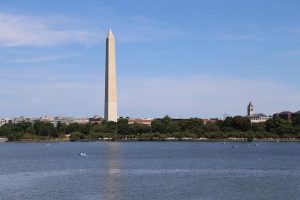


Donald Trump has blamed “vandals” for scuttling his proposed $14 million upgrade of Washington DC’s Lincoln Memorial Reflecting Pool, framing the idea’s demise as the result of lawlessness and bureaucratic sabotage. In his telling, a bold patriotic project was strangled by chaos in the nation’s capital. Yet planning files, agency correspondence, and interviews with people directly involved reveal a far less dramatic reality—one rooted in cost overruns, legal reviews, and unresolved design questions rather than smashed monuments.
The documentary record paints a picture of a concept that never progressed beyond early-stage discussions, raising doubts about how feasible it ever was, who would pay for it in the long term, and whether it complied with the strict rules that govern the National Mall.
Trump’s “vandalism” explanation vs. the practical obstacles that really froze the Reflecting Pool plan
In Trump’s version of events, a $14 million “beautification” of the Reflecting Pool was abandoned because the federal government refused to safeguard it from supposed “vandals” and “radicals.” He casts himself as a would-be benefactor blocked by a lawless city and hostile officials.
But when you look at internal records and public documents, a different story emerges: one where the obstacles were tedious but entirely predictable—federal procurement rules, design standards for historic sites, and concerns about how a heavily visited landmark would function during and after construction. In other words, the same hurdles that complicate almost any large-scale project on federal land.
Planners and former officials point to a series of standard friction points, including:
- Uncertain funding commitments across multiple fiscal years and agencies
- Disagreements over design, especially how new features might alter historic vistas from the Lincoln Memorial toward the Washington Monument and U.S. Capitol
- Strict environmental and preservation mandates that apply across the National Park Service
- Shifts in political leadership that repeatedly reordered priorities at key agencies
Rather than a dramatic showdown between a president and street agitators, the project stalled in the same way many Washington initiatives do: through a slow accumulation of questions, delays, and unmet requirements.
| Trump’s Stated Reason | Substantiated Factor |
|---|---|
| “Vandalism and chaos ruined the plan” | Funding uncertainty and incomplete approvals |
| “No one would protect it” | Unresolved questions over permanent security and design features |
| “Radicals blocked the project” | Routine environmental, legal, and historic-preservation review |
How federal oversight actually stopped the $14 million Reflecting Pool renovation idea
Emails, legal memos, and planning notes obtained through public records requests show that the Reflecting Pool overhaul did not fail in a single moment or due to a protest event. Instead, it encountered steady resistance from the very oversight bodies charged with guarding the integrity of the National Mall.
Within the National Park Service, staff attorneys raised basic but crucial questions: Could a politically branded, privately driven renovation of such a symbolic site comply with federal preservation law? Would it set a precedent for future one-off proposals tied to individual officeholders rather than long-term, nonpartisan planning?
At the same time:
– The Commission of Fine Arts, which reviews design quality and visual impact on federal land, expressed unease about how new structures or alterations might disrupt the carefully planned sightlines that define the Mall’s iconic look.
– The National Capital Planning Commission, the region’s central planning authority, highlighted potential conflicts with public-access norms, long-term transportation planning, and previously approved master plans for the area.
Rather than issuing a blunt “no,” these agencies did what they usually do with proposals that raise red flags: they requested more information, asked for revisions, and opened additional lines of review—slowing the project to a crawl until it effectively fell off the agenda.
Among the internal concerns repeatedly cited were:
- Historic character and whether new elements would undermine the linear axis from the Capitol to the Lincoln Memorial
- Security consequences of additional structures or barriers in an already sensitive area
- Financial clarity, including the identity and influence of donors, and who would pay for upkeep once the initial splashy spending ended
- Maintenance obligations for a federal system that already struggles with a chronic multi-billion-dollar deferred maintenance backlog
| Agency | Primary Concern | Practical Effect |
|---|---|---|
| National Park Service | Compliance with preservation laws and agency policies | Extended legal and policy reviews, no clear sign-off |
| Commission of Fine Arts | Impact on the Mall’s visual coherence and symbolism | Requests for substantial design revisions |
| National Capital Planning Commission | Regional planning consistency and public accessibility | Postponed approvals and additional information requirements |
Following the paper trail: contracts, permits, and environmental rules behind the failed Reflecting Pool revamp
When you track the Reflecting Pool proposal through contracts, permits, and environmental filings, the story becomes even clearer: the obstacles were structural and procedural, not the result of vandalism in the streets.
Local and federal procurement records point to a loosely assembled effort built around:
- Short-term and piecemeal contracts that changed scope mid-process
- Cost estimates that climbed over time, a common issue in large public works
- Unclear project phasing that made it difficult for regulators to assess full impacts
Environmental documents flagged classic issues encountered across U.S. infrastructure projects:
– How would heavy construction equipment affect the Reflecting Pool’s foundations and surrounding lawns?
– What protections would be in place to prevent polluted runoff into the Potomac watershed?
– Could the pool’s filtration and circulation systems—already upgraded in past renovations—cope with any redesign?
Each of these questions produced conditions and caveats, leading to more paperwork, more inspections, and more revisions.
The permitting record tells a similar story, with patterns such as:
- Late or incomplete applications for construction, trenching, and utility work
- Environmental reports that required resubmission due to missing data or analysis
- Change orders that swapped materials or construction methods after initial review
- Compliance notices citing concerns about erosion controls and worksite management
| Document Type | Problem Identified | Result |
|---|---|---|
| Contract Amendment | Expanded scope without proportional budget clarity | Additional financial strain and need for renegotiation |
| Permit Notice | Submission after key deadlines | Temporary work stoppages and rescheduled inspections |
| Environmental Review Memo | Insufficient safeguards for stormwater and sediment control | New protective measures and extended review timelines |
Taken together, these records show a project constrained less by disorder in the streets and more by the predictable frictions of governance—especially in an era when environmental and historic-preservation standards are under heightened public scrutiny. The clash was not between a president and vandals, but between aspirational branding and the exacting, often slow-moving rules that shape any significant intervention on the National Mall.
What should happen next? A blueprint for responsible change on the National Mall
Planners, historians, and civic advocates argue that the Reflecting Pool controversy should be a turning point in how proposals for the National Mall are conceived, discussed, and evaluated. Instead of grand claims made in speeches or interviews, they want a process grounded in transparency, public input, and realistic budgets.
Their vision centers on a few core principles:
- Clear public disclosure of who is proposing a project, what it would change, and how it would be financed over the long term
- Structured opportunities for public engagement, from design workshops to open hearings where residents, veterans, disability advocates, and historians can comment
- Accessible environmental and historic-impact assessments that are published online in plain language, not just buried in technical PDFs
- Commitments from federal agencies to share timelines, budgets, and major design decisions before work begins
The idea is simple: if the Mall is “America’s front yard,” then its evolution should be governed less by unilateral political branding and more by a transparent, collaborative process that treats it like any beloved public space.
On the financial side, experts are pushing for more rigor and less spectacle. Instead of attention-grabbing lump sums, they want:
- Itemized cost breakdowns publicly available before approval
- Competitive bidding for contractors, with clear conflict-of-interest rules
- Independent cost-benefit and lifecycle analyses that factor in decades of maintenance, not just construction
- A permanent citizen advisory panel to review major Mall proposals and monitor follow-through
Their frequently repeated recommendations include:
- Public project dashboards that track scope, costs, milestones, overruns, and delays in real time
- Regular community listening sessions involving local residents, advocacy organizations, and visitors’ groups
- Open design competitions for major changes, with judging panels that combine technical experts and everyday Mall users
| Priority | Recommended Approach |
|---|---|
| Transparency | Publish contracts, schedules, design changes, and review results in real time |
| Budget Discipline | Independent financial audits and cost reviews before construction starts |
| Public Participation | Formal seats for citizens and civic groups in decision-making for large Mall projects |
Final Thoughts
Trump’s story of a sabotaged $14 million Reflecting Pool renovation reveals less about any genuine battle with “vandals” and more about his instinct to reinterpret familiar Washington landmarks as venues for personal drama and grievance. National Park Service files, the documented renovation history of the pool, and the absence of corroborating evidence for a Trump-funded overhaul all tell a markedly different story from the one he promotes.
For more than a century, the Reflecting Pool has mirrored evolving political narratives in the capital. This latest episode is another reflection—of how competing memories, selective framing, and the erosion of shared factual baselines now shape debates over even the most physical, documented spaces. The fate of the pool itself is a matter of public record, preserved in permits, contracts, and agency correspondence. The fate of the story being told about it—bent and repurposed for political effect—may prove much harder to straighten out.