




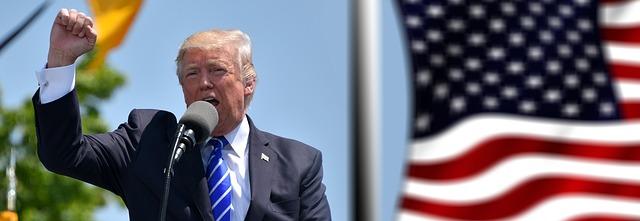
Former President Donald Trump headlined the Faith and Freedom Coalition’s annual policy gathering in Washington, D.C., delivering a keynote address to conservative activists, pastors, and religious organizers. The conference, covered by PBS, gave Trump an opportunity to strengthen his standing with evangelical voters, reiterate his positions on social and cultural battles, and draw a sharp contrast with the Biden administration as the 2024 election approaches. Speaking to an energized crowd, he focused heavily on abortion, religious liberty, and the public role of faith, highlighting the enduring clout of evangelical Christians inside the Republican Party.
Evangelical Voters Signal Their 2024 Priorities at Faith and Freedom Coalition Meeting
Inside the overflowing ballroom, audience reactions functioned as a real-time barometer of conservative Christian priorities for 2024. Standing ovations followed mentions of conservative judicial appointments and religious liberty protections, while proposals hinting at compromise on hot-button cultural issues drew more cautious applause. Over the course of the weekend, attendees repeatedly emphasized that their support in the presidential race will depend on a candidate’s willingness to resist what they describe as government intrusion and a secular culture that sidelines people of faith.
In hall conversations, prayer circles, and breakout sessions, activists described what amounted to a checklist for any serious Republican contender. The most frequently cited concerns included:
- Federal court appointments and control of the Supreme Court for decades to come
- Abortion restrictions, including support for state-level bans and stronger federal limits
- Religious liberty protections for churches, faith-based schools, charities, and nonprofits
- Education policy, especially parental rights, curriculum oversight, and school choice
- Israel policy and a robust U.S. role in the Middle East
Between speeches, volunteers passed out voter guides, collected signatures for petitions, and offered campaign materials from multiple Republican candidates. The result was a hybrid gathering: part policy summit, part strategy session, and part organizing launchpad for the fall campaign.
| Priority Area | Voter Expectation |
|---|---|
| Courts | Nominate consistently conservative judges and justices |
| Life Issues | Support tougher abortion limitations and enforcement |
| Religious Liberty | Strengthen protections for faith-based organizations and individuals |
| Education | Advance school choice, bolster parental control, and curb federal mandates |
Trump Intensifies Culture War Messaging and Promises Major Policy Rollbacks
On stage, Trump leaned into themes that have animated his alliance with evangelical and socially conservative voters since 2016. He cast himself as a champion of “traditional values” confronting what he depicted as a militant secular left, and he framed debates over classrooms, gender identity, and public expressions of faith as pivotal to the nation’s future. By presenting these disputes as make-or-break moral conflicts, he sought to energize religious conservatives who see the current cultural climate as hostile to their beliefs.
His speech featured pointed criticism of public school curricula, abortion access, and LGBTQ+ protections, describing them as symptoms of a broader cultural crisis. The language was often uncompromising, emphasizing sharp lines between his vision and that of the Biden administration. This approach reflects a deliberate strategy: embrace highly polarizing narratives to galvanize evangelical turnout and consolidate support among core Republican primary voters.
Alongside his rhetoric, Trump outlined a series of concrete promises to reverse key elements of Biden-era policy and refocus federal power on conservative priorities. He pledged to rely on executive orders and legislation to push authority back to states, elevate “parental rights,” and reorient federal agencies on issues from education to healthcare. Among the proposals he highlighted were:
- Rolling back federal protections related to gender identity in schools, sports, and federally funded programs
- Reinstating national restrictions on abortion funding and access, including limits on federal dollars for providers
- Restructuring federal agencies so that religious-liberty claims receive heightened deference in rulemaking and enforcement
- Targeting diversity, equity, and inclusion (DEI) initiatives across government and public education for defunding or elimination
| Policy Area | Current Direction | Proposed Shift |
|---|---|---|
| Education | Expanded federal guidelines on inclusion and civil rights | State-defined standards, reduced federal oversight, broader parental authority |
| Abortion | Patchwork of state-by-state restrictions after Roe’s reversal | Stronger national limits, stricter enforcement, and tighter federal funding rules |
| Religious Liberty | Case-specific protections shaped by recent court rulings | Elevate religious claims in agency rules and federal programs |
| Social Policy | DEI-focused initiatives in agencies and schools | Rolling back or defunding DEI programs and related mandates |
Religious Liberty and Abortion Stand at the Center of the GOP’s Policy Debate
Throughout the conference, speakers cast the upcoming election as a decisive struggle over religious conscience protections and the future of abortion law, effectively turning both into core tests for Republican candidates. Legal battles over faith-based exemptions, conscience-based refusals in healthcare, and school policies on gender and sexuality were presented as evidence that religious conservatives face mounting pressure in public life.
This framing bolstered calls for a policy agenda that links judicial nominations, executive branch rulemaking, and federal regulations to a single priority: safeguarding the capacity of religious individuals and institutions to live out their beliefs in education, commerce, and medicine. Many speakers argued that recent Supreme Court decisions have opened the door to significantly broaden such protections, and they urged continued focus on the courts as the linchpin of long-term change.
Abortion politics, meanwhile, surfaced as both a rallying point and a strategic dilemma. Since the Supreme Court’s 2022 Dobbs decision, which overturned Roe v. Wade, at least 14 states have implemented near-total bans or highly restrictive laws. Yet Republican strategists at the conference acknowledged that public opinion remains divided: national polling in 2024 shows that a majority of Americans favor legal abortion in at least some circumstances, even as many support stricter limits later in pregnancy.
Against this backdrop, activists debated how aggressively to pursue federal action. Some pressed for a sweeping national standard, while others warned that pushing too far in swing states could jeopardize broader GOP gains. Still, the conference messaging converged on several shared priorities:
- Codifying conscience protections for medical professionals and faith-based hospitals that object to certain procedures
- Restricting late-term abortions and testing public support for tighter gestational limits
- Prioritizing judicial appointments likely to interpret religious liberty and fetal protections expansively
- Engaging churches and ministries as turnout engines in competitive states and districts
| Issue | GOP Priority | Political Risk |
|---|---|---|
| Religious Liberty | Broaden statutory and constitutional protections | Potential clashes with civil rights and anti-discrimination laws |
| Abortion Limits | Clarify national vs. state roles in setting restrictions | Possible backlash among suburban and independent voters |
| Judicial Picks | Nominate judges aligned with the conservative legal movement | Motivates progressive activists and opposition turnout |
Church-State Boundaries, Elections, and Democratic Norms Under the Microscope
Policy analysts caution that the rhetoric on display at the Faith and Freedom Coalition conference is intertwined with far-reaching promises about religion’s role in public institutions, raising questions about constitutional limits and democratic norms. Constitutional scholars point out that proposals to expand religious influence over schools, public funding, and the judiciary could test long-standing readings of the Establishment Clause, which restricts government endorsement of religion.
They encourage voters to probe beyond headline phrases such as “religious liberty” or “putting faith back in public life” and examine practical implications: Which religious perspectives would policy favor? How would dissenting or minority beliefs be treated? Would policies protect pluralism in a religiously diverse country, or privilege certain traditions over others?
Nonpartisan watchdog organizations are also tracking a range of campaign pledges that, if enacted, could reshape checks and balances and the administration of elections. With numerous states revising election laws since 2020—and ongoing disputes over voting access and vote counting—these groups argue that voters should pay close attention to the details behind reform proposals, not just their slogans.
Key areas they recommend scrutinizing include:
- Changes to election administration, particularly who has authority to count, audit, and certify results
- Plans for deploying federal power against perceived ideological enemies, including media, universities, and advocacy groups
- Judicial litmus tests that prioritize expansive views of executive power and religious authority
- Revisions to civics and history education that present a narrow religious or ideological lens as the definitive national narrative
| Campaign Claim | Key Question for Voters |
|---|---|
| “Put God back in government” | Will all faiths—and those with no religious affiliation—receive equal treatment? |
| “Clean up our elections” | Do proposed changes enhance transparency and fairness, or increase partisan control? |
| “Protect religious freedom” | Are protections extended broadly, or concentrated on particular religious groups? |
| “Rebuild American values” | Who defines those values, and which communities might feel excluded? |
Looking Ahead: Evangelical Influence and the 2024 Campaign Trail
As the 2024 presidential race accelerates, Trump’s appearance before the Faith and Freedom Coalition underscores how pivotal evangelical and conservative Christian voters remain to the Republican coalition. His speech previewed themes he is expected to repeat on the campaign trail—judicial appointments, abortion limits, education battles, and expansive claims of religious liberty—while testing how those messages resonate with movement leaders and grassroots organizers.
The conference itself, long a required stop for Republican hopefuls, served as both showcase and sounding board. It offered Trump a high-profile platform but also functioned as a measure of how his agenda aligns with a crucial segment of the GOP base that has played a decisive role in past primaries and general elections. Whether his message can extend beyond this committed audience and appeal to persuadable voters in battleground states remains an open question—and one that could shape the outcome of the 2024 race.
PBS will continue to track how candidates from both parties court faith-based constituencies, as well as how debates over religion, culture, and democracy influence the broader trajectory of the 2024 presidential campaign.


