



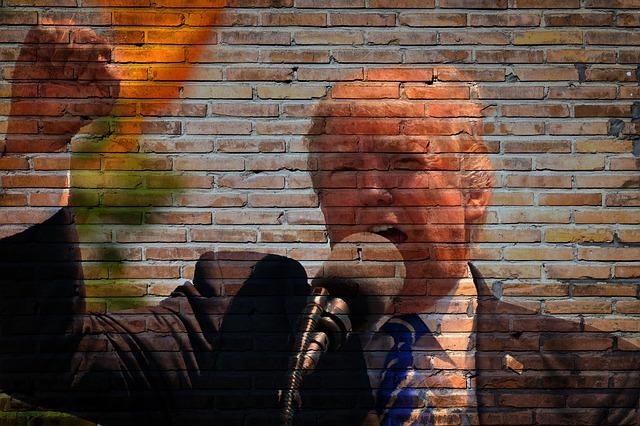
The U.S. dollar has long been treated as the ultimate safe-haven asset and the anchor of the global financial system. Today, that status is facing unusual strain. Currency markets, which historically looked past everyday political noise in Washington, are now reacting directly to a White House style marked by abrupt policy reversals, public confrontations with economic institutions, and highly unpredictable messaging. As investors increasingly expect consistency and transparency but instead encounter political shockwaves, the dollar’s value comes under pressure—raising broader questions about U.S. economic credibility and the long-term stability of the international financial order.
Why political volatility in Washington is shaking the currency markets
Foreign-exchange markets thrive on information, but what they value most is a clear, stable policy framework. When major economic or trade decisions appear suddenly—via late-night social media posts or spontaneous remarks to reporters—traders are forced into rapid-fire reassessments of U.S. risk.
In practice, this means algorithmic trading systems kick in almost instantly, generating waves of sell orders that can knock the dollar down within minutes. Trading desks describe real-time screens flashing red as markets scramble to incorporate the latest Washington shock: an unexpected tariff threat, a surprise personnel change, or an offhand comment that contradicts earlier official guidance. Traditional drivers such as interest-rate differentials, inflation expectations, and GDP projections can quickly take a back seat to the newest presidential headline.
The result is a currency that is more vulnerable to sharp, headline-driven swings than at any point in recent memory. Instead of pricing the dollar primarily on economic fundamentals, investors are increasingly forced to model the risk of political surprise.
At the same time, global investors are beginning to reposition. The perception that U.S. policy can shift direction without warning has encouraged many to look for refuge in currencies seen as less tied to domestic political drama. Large asset managers now speak openly about applying a persistent “chaos discount” to U.S. assets—a higher risk premium demanded as compensation for the heightened chance of sudden, market-moving statements from Washington.
This behavior is visible not only in intraday currency moves but also in longer-term positioning. Some central banks have been quietly diversifying their foreign-exchange reserves, while large institutional investors have reduced their reliance on the greenback as a one-way safe bet.
- Sudden tariff tweets can trigger programmatic, algorithm-driven selling of the dollar.
- Mixed or inconsistent policy messages erode confidence in U.S. economic governance.
- Unexpected cabinet or adviser shake-ups raise questions about the durability of fiscal and trade policy.
- Public clashes with the Federal Reserve blur the boundary between politics and monetary policy, worrying investors who prize central bank independence.
| Event Type | Typical Market Reaction | Likely Dollar Impact |
|---|---|---|
| Surprise tariff announcement | Risk-off sentiment, stock markets fall | Sharp, short-term selloff |
| Policy reversal tweet | Jump in FX volatility gauges | Higher uncertainty premium on the dollar |
| Hostile rhetoric toward trade partners | Rotation into classic safe havens like yen and Swiss franc | Gradual downward pressure |
| Public criticism of Fed decisions | Concern over central bank autonomy and credibility | Strain on the dollar’s long-term valuation |
Trade wars, tweets and tariff threats: How policy whiplash erodes confidence in U.S. assets
Every time the administration floats new tariff threats online, foreign-exchange desks must re-evaluate U.S. risk exposure on the spot. Overnight messages about higher duties on key partners—whether China, the European Union, or regional neighbors—have repeatedly caught markets off guard. Traders are often left guessing whether these declarations represent negotiating tactics or firm policy, leading to rapid, sometimes violent swings in the dollar.
This is less about a single, catastrophic shock and more about a steady erosion of trust. Over time, repeated episodes of rhetorical escalation followed by partial walk-backs have made it harder for investors to treat U.S. economic policy as predictable or rules-based. Many portfolio managers now explicitly factor in a “tweet premium”: an extra layer of uncertainty that makes them more cautious about holding dollar-denominated assets as core, long-term positions.
This back-and-forth between confrontation and compromise is also changing how major institutions view America’s traditional role as a safe haven. Where foreign central banks and sovereign wealth funds once tended to look through political cycles in Washington, they now monitor headline risk far more closely. A stray comment can influence decisions on whether to roll over U.S. Treasury holdings, hedge dollar exposure more aggressively, or diversify into other reserve currencies.
Analysts highlight several notable shifts in behavior:
- Shorter average holding periods for U.S. Treasurys and corporate bonds, as investors avoid locking in exposure for too long.
- Greater diversification into the euro, yen, and select emerging-market currencies perceived as less subject to U.S. domestic politics.
- Higher hedging costs as option prices rise in response to policy-driven volatility.
- Reduced enthusiasm for cross-border mergers, acquisitions, and supply-chain investments vulnerable to sudden tariff changes.
| Policy Signal | Common Market Outcome |
|---|---|
| Announced or hinted tariff hike | Spike in dollar volatility and risk metrics |
| Subsequent delay or partial reversal | Short-lived relief rally, but not a full return to prior confidence |
| Lack of clear follow-through or inconsistent messaging | Persistent risk premium as investors assume more surprises ahead |
Global investors rotate into alternative safe havens as the greenback faces new political risk
Capital flows are gradually revealing a shift in how the world views the dollar. While it remains the dominant reserve currency—still accounting for roughly 58% of disclosed global FX reserves according to recent IMF data, down from over 70% two decades ago—political turbulence in Washington is causing investors to reassess the degree of “risk-free” status once attached to U.S. assets.
Episodes such as brinkmanship over the debt ceiling, high-profile departures of key economic advisers, and public friction among senior officials feed a perception that U.S. policy can become hostage to domestic drama. That perceived fragility undermines one of the dollar’s core advantages: the assumption that U.S. institutions will deliver continuity, even when politics turns contentious.
In response, some major players—sovereign wealth funds, large pension systems, global insurers—are quietly reducing concentrated dollar exposure. Traders report more frequent inquiries about reallocating into currencies and assets considered better shielded from U.S. political risk.
- Central banks are slowly diversifying reserves, adding more euro- and yuan-denominated assets alongside traditional holdings.
- Hedge funds are building positions in currencies with less direct exposure to U.S. trade disputes, and using options to hedge dollar downside.
- Family offices and ultra-high-net-worth investors are tilting toward jurisdictions with more predictable legal frameworks and fewer executive-policy surprises.
| Asset Class | Perceived Strength | Key Attraction |
|---|---|---|
| Eurozone government bonds | Regulatory and institutional stability | Robust checks and balances at the EU and national levels |
| Japanese yen | Safe-haven reputation | Lower geopolitical noise and a conservative policy stance |
| Gold | Store of value and currency hedge | Protection against both inflation and policy-driven currency depreciation |
Even modest adjustments in how global investors price U.S. political risk can ripple widely through markets. Models that once treated U.S. institutions as rock-solid anchors now incorporate an explicit “political risk discount” when valuing dollar assets. That, in turn, nudges capital toward countries where executive authority is more constrained, fiscal debates are less theatrical, and economic policy is communicated in a more disciplined, rules-based fashion.
Steps policymakers can take now to shore up the dollar amid political turmoil
Despite the current turbulence, U.S. authorities still have significant tools to reassure markets that the underlying framework of economic management remains stable and predictable. The challenge is to separate long-term policy direction from short-term political noise and to visibly recommit to institutional norms that have underpinned confidence in the dollar for decades.
The Federal Reserve can play a central role by reinforcing its data-driven, independent stance. Clearer forward guidance—detailing how it responds to inflation trends, labor-market conditions, and financial stability risks—helps investors anchor expectations for interest rates, even when the political backdrop is unsettled.
The Treasury Department can complement this by coordinating with international partners and reiterating the United States’ commitment to an open, predictable financial system in which the dollar remains the primary reserve and transaction currency. Regular, measured communication from senior economic officials can also counterbalance the impact of off-the-cuff political commentary.
Congress, for its part, can help reduce policy uncertainty by providing a more stable fiscal and regulatory roadmap. Shielding key economic agencies from partisan swings and ensuring that major market-moving proposals undergo normal legislative scrutiny rather than appearing overnight can go a long way toward calming FX markets.
Concrete priorities include:
- Reaffirm central bank independence through bipartisan statements, hearings, and legislation that clearly back the Fed’s autonomy and mandate.
- Stabilize fiscal policy expectations with multi-year budget frameworks that minimize recurring shutdown threats and last-minute debt-ceiling standoffs.
- Improve official communication by relying on coordinated briefings, formal policy documents, and regular press conferences from economic agencies instead of ad hoc social media commentary.
- Deepen international cooperation through the IMF, G7, G20, and central bank swap-line networks, reinforcing the message that systemic stability remains a collective priority.
| Policy Tool | Main Objective | Expected Dollar Effect |
|---|---|---|
| Clear, consistent Fed guidance | Anchor market expectations for interest rates | Dampens volatility and reduces abrupt FX swings |
| Credible, medium-term budget plan | Contain concerns about deficits and debt sustainability | Supports the dollar’s long-run value and safe-haven appeal |
| Formal international commitments | Signal continuity and reliability in U.S. economic policy | Strengthens investor confidence and reserve-currency status |
Final Thoughts
Whether currency markets ultimately see the current turmoil as a passing phase or a new normal will hinge on how U.S. political dynamics evolve and how firmly institutions push back in favor of stability. For now, the dollar—once synonymous with predictability—is being asked to absorb the cost of a more volatile governing style.
As allies, investors, and rivals adjust their assumptions, the debate has shifted. The question is no longer if political shocks in Washington will move the foreign-exchange market, but how much additional volatility the world’s reserve currency can withstand before global capital quietly redefines what “safe haven” really means.