




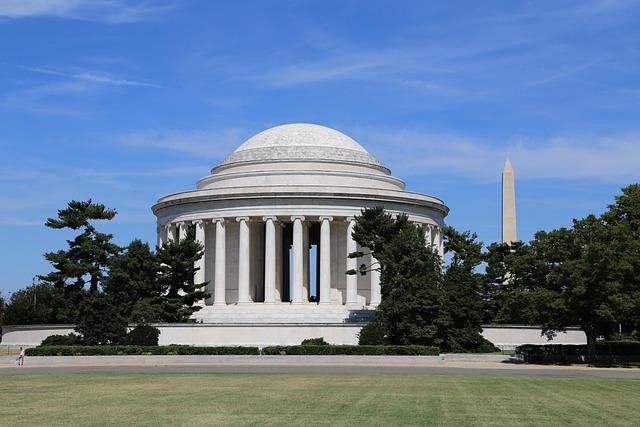
As renewed scrutiny falls on former President Donald Trump’s involvement in Washington, D.C.’s policing and criminal justice strategy, fresh crime data is complicating the political storyline he has promoted. Trump has repeatedly depicted the District as besieged by “rampant” and “out-of-control” crime, framing his interventions as a necessary law-and-order correction. Yet more recent statistics show that several major crime categories are falling, raising difficult questions about both the necessity and legality of expansive federal action in the nation’s capital. This analysis explores how far Trump’s influence actually extends over D.C.’s public safety system, the constitutional boundaries that constrain federal power in the District, and how evolving crime trends intersect with an ongoing struggle over who truly governs Washington, D.C.
Constitutional fault lines: How far can the White House go in D.C. crime policy?
Legal scholars remain deeply divided over how aggressively a president can shape Washington’s criminal justice landscape without encroaching on home rule. Article I’s “District Clause” gives Congress sweeping authority over the capital, but using that authority as a vehicle for broad executive control raises complex questions involving separation of powers, democratic self-governance for D.C. residents, and parallels to federalism principles applied in the states.
At the center of the debate is whether the president can invoke public safety emergencies to sideline local leadership, or whether such moves would violate the D.C. Home Rule Act and longstanding understandings of limited federal involvement in routine policing. Key areas of contention include:
- Scope of delegated authority from Congress to the president over D.C. governance
- Consistency with the D.C. Home Rule Act’s limits on direct federal micromanagement
- Historical precedent from prior federal interventions in District affairs
- Implications for voting rights and local self-determination
| Legal Issue | Supporters Say | Critics Say |
|---|---|---|
| Use of federal troops or agents | Permissible in rare cases of severe, demonstrable threats | Blurs the line between domestic policing and military force |
| Override of local prosecutors | Ensures “uniform” enforcement of federal criminal law | Compromises local prosecutorial discretion and independence |
| Rewriting D.C. code | Falls within Congress’s enumerated powers over the District | Functionally dismantles core elements of home rule |
Some constitutional experts describe the confrontation as a fundamental test of the District’s legal identity: is Washington first and foremost a functioning city with limited, but meaningful, self-rule, or a quasi-federal enclave where national authorities can assert near-total control? The Supreme Court has historically sidestepped drawing a bright line, leaving a gray area where aggressive federal crime initiatives can stretch the limits of precedent.
With crime figures now showing declines in several major categories, defense attorneys contend that broad federal interventions are increasingly difficult to justify under doctrines that require necessity and narrow tailoring. That shift, they argue, could embolden lawsuits challenging new directives under equal protection, due process, and even First Amendment theories—particularly if enforcement appears to concentrate in specific communities or in ways that chill protest activity.
Crime data vs. political rhetoric: Statistics undermine Trump’s D.C. law-and-order narrative
Recent datasets from the Metropolitan Police Department and the FBI’s Uniform Crime Reporting (UCR) program reveal a more complex picture than the images of pervasive chaos often broadcast on national television. While certain violent offenses remain a serious concern, a number of notable crime categories—including burglary and robbery—have shown measurable improvement.
Over the past year, D.C. has seen:
- Homicide rates trending downward after a recent spike
- Burglary falling at a double-digit pace
- Auto theft stabilizing after earlier increases
- Robbery reversing from an uptick to a modest decline
| Crime Type | 2023 | 2024 (YTD) | Trend |
|---|---|---|---|
| Homicide | Down 8% | Down 11% | Declining |
| Burglary | Down 15% | Down 19% | Sharp decline |
| Auto Theft | Up 5% | Flat | Stabilizing |
| Robbery | Up 3% | Down 4% | Reversing |
Policy analysts caution that these numbers do not mean D.C. is free of serious public safety challenges. But they do undercut the framing of a city in unrelenting free fall that can only be rescued through extraordinary federal intervention. Much like other large U.S. cities, D.C. experienced crime fluctuations during and after the COVID-19 pandemic. Nationally, FBI data and independent research from institutions such as the Council on Criminal Justice have recorded recent declines in homicides and some property crimes across numerous metropolitan areas, suggesting that Washington’s improving statistics may be part of a broader trend rather than the product of any single administration’s posture.
This divergence between perception and reality frustrates both city officials and independent experts, who argue that law-and-order messaging untethered from data risks justifying oversized federal responses. In their view, viral videos and isolated incidents—while serious—do not always reflect broader patterns, yet they are frequently invoked to defend ongoing or expanded federal involvement.
Civil liberties groups warn that a rhetoric-driven approach invites chronic “emergency” framing in a city that is already heavily surveilled and policed. They emphasize three core concerns:
- Oversight: Who ultimately controls tactical decisions and rules of engagement when federal agents operate alongside local police?
- Transparency: How are crime statistics and enforcement outcomes conveyed to residents, Congress, and the courts?
- Precedent: Could the template deployed in D.C. become a model for interventions in other majority-Democratic or politically disfavored cities?
Home rule under pressure: Long-term threats to local democracy and D.C. self-governance
Behind the constitutional arguments lies a broader political concern: that Washington, D.C. could become a testing ground for a more expansive model of federal control over urban governance. Civil rights advocates and community organizers argue that when national leaders bypass locally elected officials in the capital—especially in a jurisdiction without full voting representation in Congress—they send a message that local democratic choices are conditional and reversible.
Home rule in D.C. was designed to shield routine municipal decision-making from abrupt swings in national politics. Yet critics say that emergency-based federal interventions risk transforming what were meant to be narrow exceptions into an almost standing mechanism of supervision. Over time, they argue, this could entrench a dynamic in which neighborhood-level priorities are consistently subordinated to national political agendas.
Advocates warn that the implications extend far beyond the District’s borders. If Washington, D.C.—a majority-Black city—can see its governance repeatedly overridden in the name of public safety, similar approaches could be applied to other localities where political leadership or demographics clash with the party in power in Washington. Among the emerging risks they highlight are:
- Targeted interventions focused on majority-Black or opposition-led cities
- Erosion of local oversight over police budgets, discipline, and accountability systems
- De facto disenfranchisement as local elections lose direct control over key policy areas
- Policy instability as priorities whipsaw with each administration’s law-and-order agenda
| Issue | Local Power | Under Federal Override |
|---|---|---|
| Police Reform | City council and mayor craft use-of-force rules and oversight mechanisms | Federal agencies set priorities and can dilute local reforms |
| Budget Choices | Negotiated through local budget processes and community input | Influenced or dictated by national political and security agendas |
| Community Input | Public hearings, advisory boards, and neighborhood commissions with binding impact | Community feedback often becomes advisory, with limited legal force |
Civil rights organizations say the broader effect is to chill decades of organizing around self-determination, voting rights, and accountable policing. They argue that if residents perceive their ballots and local advocacy as easily overridden, long-term trust in democratic institutions—already fragile in many communities—could deteriorate further.
Pathways forward: Balancing public safety with District self-governance
In response to intensifying federal involvement, a loose coalition of legal scholars, former Justice Department officials, civil rights advocates, and local leaders is advancing a series of policy proposals aimed at striking a balance between security and self-governance. Their shared premise: Washington, D.C., can address serious crime without ceding open-ended authority to the White House or Congress.
Central recommendations include:
- Codified limits on executive intervention: Federal law could define clear statutory triggers—such as specified benchmarks for unrest or cross-jurisdictional threats—before federal authorities may supplant local control.
- Mandatory congressional notification and review: Any federal deployment affecting city policing or prosecutorial discretion would require prompt notice to Congress, coupled with public reporting requirements.
- Creation of an independent District–Federal Oversight Commission: This body would include D.C. officials, constitutional law experts, and nonpartisan public safety professionals to review emergency orders and make real-time recommendations on legality, necessity, and proportionality.
Policy experts emphasize that durable safety improvements depend less on indefinite federal presence and more on transparent data and robust community engagement. To that end, advocates are pushing for:
- Binding consultation with D.C. leaders before federal agencies materially change local policing strategies or priorities.
- Time-limited emergency powers that automatically sunset unless renewed after public hearings and independent evaluation.
- Community safety audits that analyze crime statistics alongside civil liberties impacts, including stop-and-search patterns and protest-related enforcement.
- Minimum local consent requirements for joint operations, ensuring that D.C. retains a deciding voice in how and when federal forces operate on city streets.
| Measure | Public Safety Goal | Self-Governance Safeguard |
|---|---|---|
| Independent Oversight Commission | Provide real-time review of emergency deployments and directives | Guarantees a structured local voice in federal decision-making |
| Time-Limited Orders | Prevent emergency interventions from becoming permanent crackdowns | Automatic sunset clauses require renewed justification and public input |
| Data Transparency Rules | Monitor crime trends, arrests, and use-of-force incidents | Enable public scrutiny and independent evaluation of tactics |
In Summary
As legal challenges move through the courts, crime statistics themselves will remain central to the debate over Trump’s D.C. law-and-order agenda. Declining rates in several major categories raise a pivotal question: do these improvements validate an aggressive federal posture, or do they align more closely with nationwide trends that began before and continued after Trump’s direct involvement?
With Congress considering new guardrails on federal influence over local law enforcement, and civil liberties organizations vowing sustained scrutiny, the tension between public safety initiatives and constitutional limits is unlikely to fade. Washington, D.C., now functions as a high-profile case study, forcing the country to confront a difficult question: how much power should a president wield over a city that is both a symbol of federal authority and the home of hundreds of thousands of residents?
The outcome of this struggle will help define not only the future of home rule in the District but also the broader contours of executive power, local democracy, and public order in the United States for years to come.


