
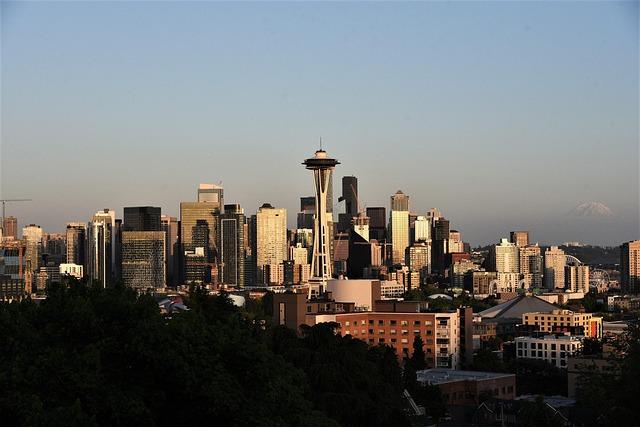
Three people were killed and multiple others wounded when shots rang out at a packed food festival in downtown Seattle on Saturday, transforming a summer celebration into a scene of terror as hundreds of visitors fled for safety. Authorities say one suspect is in custody, while a second person believed to be connected to the attack remains at large. The shooting, which unfolded in one of the city’s busiest entertainment districts, has reignited debate over security at major public events and triggered a wide‑ranging investigation into what allowed the violence to unfold in such a crowded space.
Seattle food festival shooting raises urgent questions about security and police deployment
Attendees describe a moment of confusion and fear as the first shots echoed through congested rows of food vendors and entertainment booths. With walkways jammed shoulder to shoulder, officers struggled to push through the crowd, highlighting concerns that the event’s security and crowd‑control planning lagged far behind its popularity. Although Seattle police were assigned to the festival, several witnesses reported that marked officers reached the heart of the incident only after people had already dived behind stalls, overturned tables, and food trucks to shield themselves.
Private security teams contracted by organizers were heavily concentrated at the primary gates, where they checked bags and scanned tickets. However, people familiar with the layout say that side streets, alleys, and informal access points around the perimeter saw minimal supervision—leaving multiple ways to enter the festival footprint with little or no screening. The combination of patchy perimeter control and dense pedestrian traffic is now at the center of a growing controversy over whether security preparations adequately reflected the event’s scale and risk profile.
City leaders have promised an in‑depth review of how law enforcement worked with private security firms before and during the festival, what threat information was shared in real time, and whether early warnings about congestion were dismissed or downplayed. Investigators are scrutinizing patrol radio traffic, staffing rosters, and the moment commanders formally treated the situation as an active‑shooter event. Among the core issues now under formal review:
- Perimeter control: Unsecured side streets and back alleys that effectively functioned as unsanctioned entrances.
- Staffing levels: Whether the number and placement of officers and guards reflected crowd estimates and previous safety assessments.
- Emergency access: Narrow, blocked aisles that slowed medics and police as they tried to reach victims.
- Surveillance coverage: Blind spots in camera systems in the busiest portions of the festival grounds.
| Security Element | Reported Issue |
|---|---|
| Entrance Screening | Bag checks inconsistent or absent at secondary and side entrances |
| Police Presence | Limited officer visibility in the densest crowd clusters |
| Crowd Management | Clogged aisles and vendor rows impeded emergency movement |
| Coordination | Slow transition to a unified command structure during the crisis |
Witness stories expose confusion, panic, and a lack of clear safety communication
People who were there describe an ordinary summer afternoon turning terrifying in a matter of seconds. One moment, families were sampling food and watching cooking demonstrations; the next, they were sprinting for cover with no clear understanding of where the shots were coming from or where it was safe to go. Parents grabbed strollers and small children, ducking between trailers and vendor tents. Strangers pulled one another behind barriers and into nearby storefronts, acting on instinct more than instruction.
Instead of coordinated direction, most attendees say they read the crowd—following those who appeared to know where they were going or simply moving away from the loudest sounds. Several people said they did not hear clear, authoritative commands from police or security personnel, and that in the blare of music, generators, and shouting, it was nearly impossible to distinguish official orders from general panic. Some sheltered in place, while others fled in different directions, illustrating how quickly chaos can spread when reliable information is scarce.
Digital communication tools also came under strain. Many people tried to refresh social media feeds or check city alert systems but either received no alerts or saw updates that lagged behind what they were experiencing on the ground. That information gap, witnesses say, compounded the sense of disorientation and made it harder to make quick, life‑or‑death decisions.
Attendees and safety advocates argue that future events need stronger, layered communication systems designed specifically for emergencies, including:
- Real-time audio instructions delivered over public address systems with short, repeated messages—such as “move to the nearest exit” or “remain sheltered”—that can be understood over music and crowd noise.
- Coordinated mobile alerts from police and city agencies that give precise directions, including safe routes to leave and areas to avoid.
- Highly visible signage showing exits, safe zones, and assembly points, especially in large, fenced‑in or gated spaces.
- Pre-event briefings and training for vendors, volunteers, and staff so that they can calmly guide attendees and prevent bottlenecks during a crisis.
| Witness Need | Suggested Response |
|---|---|
| Faster guidance | Dedicated emergency announcements and scripted instructions |
| Clear escape routes | Prominent, pre‑mapped exits and posted evacuation diagrams |
| Trusted information | Unified alerts from police and city channels, avoiding mixed messages |
Local culture and commerce adapt as residents demand both safety and open public spaces
Seattle’s neighborhoods—long celebrated for their street fairs, food festivals, and open‑air concerts—are now reexamining what it takes to keep those traditions alive in an era of rising concern about gun violence. Organizers say they are being pushed to rethink even the most casual, family‑oriented events, with some already tightening access points, adding ticketed “inner zones,” and creating buffer areas between main stages and surrounding streets. The goal, they say, is to preserve the city’s vibrant public life while addressing new security expectations from residents and visitors.
This recalibration is not unique to Seattle. Across the United States, large gatherings have become focal points in the broader discussion over public safety. According to data from the Gun Violence Archive, there were more than 650 mass shootings nationwide in 2023 alone—a figure that has left many cities reassessing the risks associated with dense crowds and limited escape routes. For small businesses and food vendors whose livelihoods depend on festivals and markets, the stakes are especially high: any perception that such events are unsafe can quickly erode attendance.
City officials, under pressure from both business associations and neighborhood advocates, are weighing a suite of new requirements that could permanently reshape how public events are planned and approved. Proposals currently being discussed include:
- Mandatory security plans for large‑scale events, from food festivals to parades, submitted as part of the permit process.
- Real-time coordination hubs that connect police, fire, medical teams, and event organizers in a single operations center.
- Detailed evacuation routes provided in advance to vendors, staff, and volunteers, and posted clearly for attendees.
- Expanded mental health support for those affected—attendees, workers, and nearby residents—through crisis counseling and follow‑up services.
| Event Type | Previous Measures | New Measures Under Review |
|---|---|---|
| Street fairs | Volunteer neighborhood patrols | Professional security teams, structured bag checks |
| Food festivals | Basic first-aid tables | Dedicated trauma responders and rapid triage zones |
| Outdoor concerts | Simple perimeter fencing | Controlled access with metal detectors and formal entry screening |
Experts call for focused gun violence prevention and smarter event policing
In the wake of the Seattle food festival shooting, public safety researchers say the conversation must go beyond generic calls for “more security” and turn toward targeted, evidence-based interventions. Criminologists emphasize that many high‑profile shootings are linked to a relatively small pool of repeat offenders and high‑risk networks. They advocate for focused deterrence programs that identify people most likely to commit gun violence, combine direct outreach with strict enforcement, and monitor known hotspots where conflict can spill into public venues.
Specialists are also urging tighter scrutiny of illegal firearm supply chains and better coordination between city, state, and federal agencies that track trafficking routes. In their view, major urban centers that regularly host large festivals should invest in real-time threat assessment capabilities—ranging from intelligence‑driven patrols and social media monitoring to partnerships with community groups that can flag escalating disputes before they reach crowded spaces.
At the same time, security consultants caution against relying solely on visible force. They argue that durable safety at public events requires a blend of smarter deployment, transparent communication, and community trust. Recommendations gaining traction include:
- Dynamic staffing that adjusts officer and security guard placement by time of day, crowd density, and risk indicators.
- Clearly marked perimeters and checkpoints that streamline entry screening while maintaining predictable lines of movement.
- Fast, redundant communication channels linking festival organizers, law enforcement, medical teams, and city emergency managers.
- Community liaison teams who work the crowd, answer questions, and encourage early reporting of suspicious or threatening behavior.
| Measure | Primary Goal |
|---|---|
| Focused deterrence | Identify and disrupt repeat shooters and high‑risk networks |
| Event risk mapping | Assign officers and resources based on specific vulnerabilities |
| On-site intelligence units | Detect and respond to credible threats within minutes |
Key takeaways as the investigation into the Seattle food festival shooting continues
Detectives are appealing to anyone who attended the Seattle food festival to share photos, videos, or firsthand accounts that could help reconstruct the timeline of the shooting and trace the suspects’ movements. Investigators say even brief clips or seemingly minor observations may prove crucial as they piece together what happened in the moments before gunfire erupted.
As families mourn the three people killed and support those still recovering from their injuries, the community is confronting painful questions about how the shooters accessed such a crowded event, what may have motivated the attack, and whether it could have been prevented. Police officials have pledged to maintain a heightened presence at upcoming public gatherings in Seattle and to “pursue every lead” until the second suspect is located and the full circumstances of the attack are understood.
For city leaders, event organizers, and residents, the challenge now is twofold: to demand accountability for any failures that occurred on the day of the shooting, and to design safer, smarter public spaces that do not abandon the open, communal spirit that makes events like Seattle’s food festivals so central to the city’s identity.