


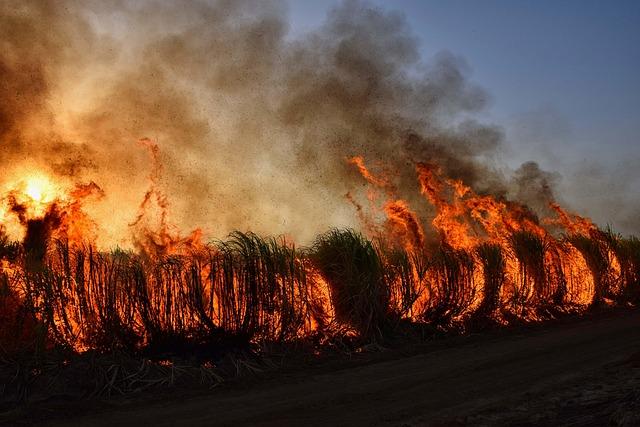
Spokane, Wash. — Wind-driven wildfires tearing through eastern Washington have triggered widespread evacuations in and around Spokane, with an estimated 65,000 residents ordered or urged to leave as flames race toward neighborhoods, highways, and critical infrastructure. Igniting during an intense late-season heat wave after weeks of exceptionally dry weather, the fires have already devoured thousands of acres, reduced homes to foundations, and stretched firefighting crews to their limits. Local, county, and state leaders have issued emergency declarations, opened shelters, and warned that the next several days could determine how far the destruction spreads, as containment remains difficult and unhealthy smoke blankets much of the Inland Northwest.
Spokane wildfires force mass evacuations as flames push toward neighborhoods
By Saturday, entire ridgelines west and north of Spokane were glowing orange, as gusts exceeding 40 mph transformed scattered brush fires into a fast-moving firestorm. Blazes jumped roads, ravines, and even segments of river, cutting off familiar routes in minutes. On the outskirts of the city, sheriff’s deputies and firefighters moved door to door and street to street, urging residents to leave immediately before escape routes shut down. Many families had only minutes to choose what to grab—pets, laptops, medications, passports—before smoke and embers made visibility nearly impossible.
Power lines arced and failed, neighborhoods dimmed under thick gray smoke, and gridlocked traffic slowed evacuations to a crawl as residents fled in cars, RVs, and farm trucks, some towing livestock trailers. Air tankers and helicopters attempted to build containment lines and defend structures, but shifting winds and low visibility forced aviation crews to stand down at several key moments when they were most needed.
Emergency managers described a constantly evolving situation in which some pockets of development were spared while others burned with little warning. To support the rapidly growing number of evacuees, local authorities and aid organizations have mobilized a broad safety net, including:
- Temporary shelters set up in schools, churches, fairgrounds, and community centers.
- Live evacuation maps and interactive dashboards updated on county websites and social media.
- On-site medical and mental health services addressing smoke exposure, minor injuries, and acute stress.
- Animal care hubs taking in horses, cattle, and companion animals displaced by the Spokane-area wildfires.
| Area | Status | Primary Concern |
|---|---|---|
| West Plains | Level 3: Go Now | Explosive fire growth and limited escape routes |
| North Spokane | Level 2: Be Ready | Unpredictable, shifting winds and spot fires |
| Spokane Valley | Level 1: Be Alert | Dense smoke and rapidly changing conditions |
Critical systems under siege as multiple wildfires strain infrastructure
While firefighters dig lines and protect homes, the broader infrastructure that keeps the Spokane region functioning is being pushed to a breaking point. Rural highways that usually handle light traffic have turned into emergency corridors, jammed with fire engines, ambulances, fuel trucks, law enforcement, and long lines of evacuees. Any collision, stalled vehicle, or falling tree can instantly block an essential route for both escape and fire response.
Older power grids are under immense pressure as utility crews race to de-energize lines before flames reach them, then reroute electricity to hospitals, water systems, and emergency shelters. In numerous communities, water systems are running at or near full capacity, with pumps operating constantly to supply hydrants and fill water tenders. Fire departments have been forced to shuttle engines between distant fill sites, adding precious minutes to every tactical decision.
Dispatch centers, already operating on extended shifts, report being swamped with overlapping 911 calls—from structure fires and traffic accidents to welfare checks and medical emergencies—forcing officials to prioritize life-threatening incidents first. At the same time, on-the-ground obstacles continue to pile up:
- Cell networks cut in and out as towers lose power, sustain damage, or become inaccessible.
- Backcountry and rural roads are clogged with stranded vehicles and blocked by falling limbs and debris.
- Evacuation shelters reach and exceed capacity, putting pressure on sanitation, security, and healthcare services.
| Resource | Status | Impact |
|---|---|---|
| Fire engines | Nearly all deployed | Delays for new incidents and limited backup |
| Water tenders | Operating at capacity | Rotating coverage across active fire fronts |
| Air support | Constrained by weather and smoke | Fewer retardant and water drops at critical times |
Within this high-pressure environment, incident commanders must constantly weigh competing priorities. They are coordinating structure protection around hospitals, long-term care facilities, and key commercial hubs, while organizing escorts for fuel and supply convoys moving through active fire zones. At the same time, they are working to keep water treatment plants, communications centers, and emergency operations facilities powered even as lines burn and substations come under threat.
Ad-hoc command posts have been established in gymnasiums, fairground buildings, and church parking lots, where laptops, radios, and satellite links form improvised nerve centers. Thick smoke, which can interfere with radio and visual signals, forces crews to rely on redundancy—multiple channels, backup repeaters, and analog maps—so operations can continue even if primary systems fail. Reinforcement crews from neighboring states and federal agencies are arriving, but with new ignitions and flare-ups appearing daily, officials acknowledge that every stretch of highway, wire, and pipeline is being tested in real time—and there is almost no room for error.
How changing climate patterns are intensifying Eastern Washington fire seasons
Eastern Washington’s wildfire season once followed a more predictable arc: a few intense weeks in midsummer, followed by cooler nights and autumn rains. That pattern has shifted dramatically. Today, scientists and fire managers describe a season that begins earlier, ends later, and burns hotter, driven by a combination of rising temperatures, persistent drought, and diminished snowpack in the Cascades and surrounding ranges.
Meteorological data collected over recent decades shows that spring temperatures are warming and snow is melting sooner, leaving soils and vegetation dry for longer stretches. Grasslands, shrub-steppe, and pine forests across the Inland Northwest are now drying out weeks ahead of historic norms. By mid-summer, fine fuels like grasses, weeds, and sagebrush are often so desiccated that a single spark—from a vehicle, power line, or lightning strike—can ignite a fast-moving blaze.
Compounding the problem, nighttime humidity recovery—once a natural brake on fire behavior—is not as strong as it used to be. Instead of fires laying down after dark, crews increasingly encounter flames that continue to spread aggressively through the night. Broad, stagnant high-pressure systems trap heat and smoke over valleys and basins, worsening air quality and creating conditions where embers can travel long distances ahead of the main fire front.
These evolving climate and weather patterns are reshaping fire behavior across Eastern Washington and the Spokane region in particular. Fires are more likely to push into the “wildland–urban interface,” where homes and businesses border forests and grasslands. Local leaders and fire planners are adjusting by preparing for multi-month fire campaigns instead of isolated, short-duration incidents. That shift affects everything from staffing and equipment rotations to how evacuations are ordered and how communities rebuild.
Preparing for wildfire: defensible space, go bags, and digital resilience
Given the acceleration of extreme fire behavior around Spokane and across Eastern Washington, emergency officials are urging residents not to wait for an evacuation notice to start preparing. Instead, they emphasize that home hardening, defensible space, and personal readiness can dramatically influence both survival and recovery.
Fire professionals recommend clearing at least 30 to 100 feet around homes and outbuildings, depending on terrain and vegetation. This “buffer zone” reduces the intensity of flames as they approach structures and can prevent embers from finding easy fuel. Clearing gutters, removing dry debris from decks, and spacing or trimming trees can all help disrupt the path of a wildfire.
At the same time, households are being strongly encouraged to create a go bag that can be grabbed at a moment’s notice. In many Spokane-area wildfires, residents have had less than 10–15 minutes to leave. Having essentials already organized can make the difference between a chaotic scramble and a safer, more orderly departure. Emergency planners recommend packing enough supplies for at least 72 hours away from home, including critical documents and digital backups stored securely online.
To protect long-term financial and legal stability, counties are working with insurers, lenders, and technology providers to expand the use of digital document backups. Scanned copies of IDs, titles, insurance policies, medical records, and other sensitive paperwork can be stored on encrypted drives or in secure cloud services, so they remain accessible even if a home and physical files are lost.
Preparedness coordinators stress that relatively small investments of time now—such as photographing belongings for insurance claims, updating emergency contacts, and planning for pets and livestock—can substantially ease the path to recovery. To guide residents, agencies are distributing checklists and sample plans that highlight simple but high-impact actions:
- Reduce nearby fuel: Rake and remove dry leaves, needles, and dead plants around decks, fences, and sheds.
- Harden the home exterior: Clean and screen vents, seal gaps where embers can enter, and relocate firewood at least several feet from structures.
- Prepare a go bag: Include important documents, medications, nonperishable food, water, flashlights, extra clothing, cash, and a basic first-aid kit.
- Digitize vital records: Scan or photograph identification, insurance cards, wills, and property records and store them in secure, encrypted cloud storage or on a password-protected USB drive.
- Map evacuation options: Identify multiple routes out of your neighborhood and a designated family meeting place in case you are separated.
| Go Bag Essential | Purpose |
|---|---|
| Government-issued ID & insurance cards | Confirm identity, file claims, and access services at evacuation centers |
| Mobile phone, charging cable & power bank | Receive emergency alerts, coordinate with family, and navigate changing routes |
| Current medication list & prescriptions | Prevent lapses in treatment and ensure correct refills away from home |
| USB drive with encrypted document scans | Quickly retrieve financial, legal, and medical records after a loss |
| Change of clothes & hygiene supplies | Maintain comfort and basic sanitation during displacement |
Looking ahead
As firefighters continue to work long shifts on steep terrain and in heavy smoke, and as thousands of residents remain displaced or on standby to evacuate, authorities caution that the Spokane-area wildfires are still far from fully contained. Weather forecasts, fuel conditions, and ongoing strain on infrastructure will shape how the situation unfolds in the days ahead.
What is already clear is that these fires underscore the growing vulnerability of communities across the West to extreme wildfire events. Longer seasons, hotter temperatures, and drier landscapes are turning what once were occasional disasters into recurring tests of resilience. For those forced to leave their homes, the immediate priority remains basic safety and accountability—making sure every family member and neighbor reaches a secure location. In the weeks and months to come, attention will shift to rebuilding lives, restoring critical systems, and reconsidering how communities develop and prepare in an era of increasingly volatile fire behavior.