




A Chinese Manufacturer Rebuilds the American Factory Floor—And Redefines Globalization
In an age when “offshoring” became shorthand for American factories shutting down and production racing to low‑cost countries, a surprising player is helping bring machines and jobs back: a Chinese-owned manufacturer. Instead of simply flooding the U.S. with imports, this company is pouring capital directly into American soil, reopening shuttered plants and hiring U.S. workers to make goods closer to where they are sold.
The strategy lands at a volatile moment. Washington is pushing hard for a manufacturing renaissance through subsidies, tariffs, and “Buy American” rules. At the same time, global corporations are rethinking far‑flung supply chains that proved brittle during COVID‑19 and increasingly costly amid trade wars and shipping disruptions. In that environment, a Chinese company betting billions on U.S. factories is more than a business story—it is a window into how globalization is being rewired and what that means for American workers, towns, and policymakers.
From Offshoring to “Onshoring” by China: A New Industrial Map
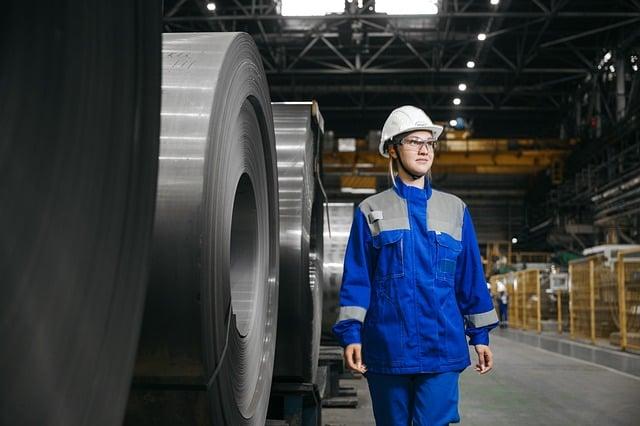
Walk into one of these revived plants and the symbolism is hard to miss: American workers in hard hats running production lines branded with Chinese logos. What used to be a quiet, empty factory is again humming with activity, powered by a mix of American labor and foreign capital.
Instead of exporting goods from coastal Chinese cities to U.S. ports, corporate leaders in China are now investing directly in U.S. industrial regions. They are installing new automation lines, upgrading IT systems, and applying manufacturing methods refined in Asian export zones. The old equation—U.S. company sends work to China—has flipped into something more complex: Chinese manufacturers are building capacity inside the U.S. to reach American buyers more efficiently and to avoid layers of geopolitical risk.
For these firms, producing in the U.S. offers several advantages:
- Capital flows: Chinese investment brings idle U.S. factories back online and funds large-scale upgrades.
- Technology transfer: Advanced machinery, robotics, and strict process standards are relocated to U.S. shop floors.
- Workforce impact: Local employees are schooled in lean production, just‑in‑time logistics, and export-grade quality controls.
- Policy friction: Every expansion is scrutinized through the lenses of national security, trade strategy, and domestic politics.
The traditional offshoring model assumed that cheap labor would keep production abroad indefinitely. That logic is fraying. Rising wages in China, mounting shipping costs, recurring port congestion, and tariff uncertainty have all pushed firms to consider “nearshoring” or “onshoring” closer to consumers. According to UNCTAD, global foreign direct investment into manufacturing has shifted in composition since the pandemic, with more capital flowing into regional hubs and domestic markets rather than pure export platforms.
The new model can be summed up in how key drivers are changing:
| Driver | Old Offshoring Model | China-to-U.S. Plant Model |
|---|---|---|
| Labor Costs | Low wages abroad | Higher wages, offset by heavy automation |
| Supply Chains | Long, vulnerable global routes | Shorter, U.S. market-adjacent networks |
| Trade Barriers | Exposure to tariffs and quotas | Producing inside U.S. borders to mitigate duties |
| Corporate Control | U.S. firms shifting work overseas | Chinese firms establishing plants onshore |
For communities that watched factories close in the 1990s and 2000s, the reversal feels jarring: the job might be in Ohio or Alabama, but the ultimate decision‑maker sits in Shanghai or Shenzhen. Yet executives insist these projects are not charity or geopolitics; they are hard-nosed attempts to control costs, secure supply, and serve customers faster.
This mix of domestic labor with foreign capital challenges old assumptions that “Made in America” and foreign ownership are mutually exclusive. Chinese supervisors walking the same shop floor as third-generation American machinists, local politicians negotiating with overseas boards, and communities balancing economic opportunity against security worries—all of this turns the American factory into a frontline experiment in 21st-century economic interdependence.
Why a Manufacturing Giant Chose U.S. Soil: Incentives, Skills, and Logistics
Behind the ribbon cuttings lies a carefully constructed pitch from U.S. officials. Instead of selling the country solely as a lucrative market, federal and state leaders presented the U.S. as a high-performance production base with predictable rules and deep industrial capabilities.
Confidential briefings and roadshows emphasized an array of incentives that narrowed the cost gap with Asia enough to tilt the boardroom debate. Packages often combined:
- Targeted tax credits for investment in automation, AI-driven production lines, and clean energy equipment.
- Training partnerships with community colleges, technical schools, and unions to customize curricula for the plant’s needs.
- Upgraded freight corridors—improvements to rail spurs, highways, and intermodal hubs to keep goods moving reliably.
- Performance-based grants contingent on meeting local hiring, wage, and export benchmarks.
By stacking these incentives—along with accelerated depreciation rules and, in some states, cash rebates per job—governments reduced upfront risk and signaled they were willing to co‑invest in the plant’s success. Deals increasingly emphasize multi‑year commitments, clawback provisions, and transparency to avoid the “open the plant, grab the subsidy, then leave” cycle that burned many towns in previous decades.
Equally important, U.S. officials highlighted structural strengths that go beyond subsidies:
- A deep bench of skilled maintenance technicians, electricians, welders, and process engineers.
- A sophisticated logistics grid that can ship components or finished goods across the country within days.
- A relatively stable regulatory and legal environment, including enforceable contracts and clear recourse for disputes.
- Proximity to one of the world’s largest consumer markets, reducing inventory and demand-forecasting risk.
Company leaders, familiar with running massive production complexes in China, have described American workers as “tool-ready”—capable of adjusting to digitally integrated equipment after short certification programs rather than years of retraining. Internal models suggest that faster delivery times, fewer quality disruptions, and lower geopolitical exposure can compensate for higher hourly wages.
Comparing the two locations illuminates why the balance is shifting:
| Factor | China | U.S. |
|---|---|---|
| Labor Cost | Lower | Higher |
| Worker Skill Level | Mixed, region-dependent | Advanced, especially in high-tech and precision work |
| Subsidy Transparency | Limited public disclosure | Contract-based, often legislatively approved |
| Shipping Time to U.S. Buyers | Weeks via ocean freight | Days via truck or rail |
Layer onto that the growing weight of carbon accounting and ESG reporting—where long-distance shipping generates more emissions—and the appeal of regionalized production grows even stronger.
Turning Foreign-Owned Plants into Durable Middle-Class Jobs
Whether a new plant becomes a true springboard into the middle class depends far less on who owns it and far more on the surrounding ecosystem. Local leaders who endured factory closures in earlier eras are now rewriting their playbooks. Instead of racing to the bottom with tax giveaways, they are working to lock in quality jobs, safe conditions, and spillover benefits for the broader region.
Key levers communities are deploying include:
- Skills partnerships that link high schools, technical colleges, and universities to specific manufacturing pathways, including credentials in robotics, industrial maintenance, and quality assurance.
- Local-hire clauses baked into subsidies and infrastructure agreements, prioritizing residents and displaced workers over purely external recruitment.
- Supplier development initiatives that help nearby small and midsize firms meet quality, cost, and compliance standards so they can join the plant’s supply chain.
- Housing and transit planning to ensure workers can afford to live within reasonable commuting distance and reach the plant reliably across all shifts.
- Transparency agreements that require regular reporting on wages, turnover, safety incidents, and long-term investment plans.
Unions, worker centers, and workforce boards are also stepping into these negotiations earlier. Their push for portable credentials—recognized across the regional labor market, not just within one company—gives employees leverage, whether they stay at the plant or move on to another employer.
When communities connect policy tools directly to worker outcomes, the picture changes:
| Community Action | Outcome for Workers |
|---|---|
| Link tax breaks to wage floors and benefit standards | More reliable middle-income earnings and access to healthcare |
| Fund bilingual safety and technical training | Lower injury rates, higher retention, broader advancement paths |
| Back local supplier networks with grants and advisory services | Job creation beyond the plant, supporting a regional industrial cluster |
Smaller towns that once felt they had no bargaining power are learning to negotiate with more confidence. New agreements increasingly feature:
- Joint oversight committees including plant management, local officials, and worker representatives to monitor compliance and address disputes.
- Clear public reporting requirements on promised capital investment, employment levels, and community benefits.
- Clawback provisions that require firms to return incentives if they close facilities prematurely or fail to hit job and wage commitments.
The aim is not a single ribbon-cutting photo op. It is to rebuild a resilient industrial base where paychecks can support mortgages, childcare, higher education, and retirement—fundamentals of a middle-class standard of living that can withstand corporate strategy shifts in Beijing, Washington, or anywhere else.
How Washington Can Compete for the Next Wave of Global Manufacturing
Individual foreign-owned plants can revive a city, but capturing the next generation of global manufacturing requires a coherent national strategy. U.S. policymakers have a limited window to convert today’s high-profile projects into a broad-based industrial comeback.
Trade and industry experts argue that Washington must move beyond ad hoc subsidies and create a stable, long-term framework that rewards staying power, upgrading technology, and investing in people. That involves aligning:
- Federal tax incentives that run for multiple years and support advanced manufacturing, semiconductors, and clean energy inputs.
- Streamlined, digital-first permitting so critical factory and grid projects move in months rather than years.
- Targeted trade enforcement that counters unfair practices like dumping, while avoiding broad tariffs that disrupt entire sectors.
- A more responsive visa system for specialized technicians, enabling rapid deployment of experts who can install and maintain complex equipment.
- Modernized port and rail infrastructure designed for higher volumes, resilience, and lower emissions.
Another challenge is coordination. State governments often compete against one another with opaque incentive packages, undercutting their own negotiating leverage. Analysts are calling for a national framework that prioritizes projects with:
- Meaningful domestic sourcing of inputs where feasible.
- Automation-heavy production lines that support high productivity and justify higher wages.
- Enforceable local hiring and training commitments tracked against clear metrics.
To shift the competition from simple subsidy bidding wars to performance-based support, policy advisers recommend tying federal funding to outcomes such as export growth, wage gains, and measured productivity improvements. That means rewarding not only jobs created, but also their quality and durability.
The toolbox at Washington’s disposal spans short, medium, and long-term levers:
- Stable, multi-year tax credits for advanced manufacturing and low-carbon technologies.
- Unified federal-state incentive standards that raise transparency and limit zero-sum competition.
- Faster, digital-first permitting for factory builds, power interconnections, and broadband needed for smart manufacturing.
- Scaled apprenticeships co-funded by employers and public programs to build a pipeline of skilled production workers.
- Strategic trade tools that are precise enough to address specific distortions without triggering broad retaliation.
Mapped out against goals and time horizons, the approach looks like this:
| Policy Tool | Main Goal | Impact Horizon |
|---|---|---|
| Advanced manufacturing tax credit | Reduce capital costs for new plants and retooling | Short term |
| National training fund | Develop a large, adaptable pool of skilled workers | Medium term |
| Infrastructure upgrades | Eliminate logistics bottlenecks and improve reliability | Long term |
| Supply-chain transparency rules | Encourage local sourcing and make risks visible | Medium term |
Key Takeaways
It is too soon to know whether this wave of Chinese-backed factories heralds a sweeping U.S. manufacturing revival or remains a narrower, sector-specific phenomenon. What is clear is that global supply chains are being redrawn in real time—shaped by geopolitical rivalry, automation, climate pressures, and corporate risk calculations.
The presence of a Chinese-owned plant on American soil crystallizes an emerging reality: the future of “Made in America” will be determined not only by laws written in Washington, but also by investment decisions in boardrooms from Shanghai to Shenzhen. The outcome will depend on how effectively communities convert foreign-owned facilities into ladders to the middle class—and how quickly policymakers craft rules that favor long-term production, high-quality jobs, and resilient, modern supply chains.


