



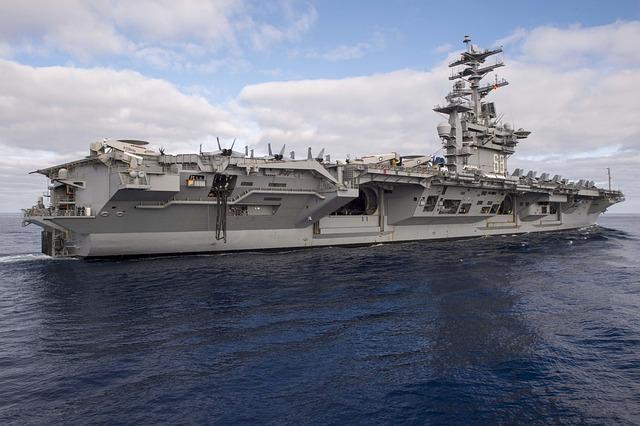
The Nimitz-class aircraft carrier USS Abraham Lincoln (CVN-72) has left the Middle East after an almost seven‑month deployment, according to USNI News, signaling a notable adjustment in U.S. naval strategy amid persistent regional friction. The end of Lincoln’s extended cruise in the U.S. 5th Fleet area—where the strike group conducted air operations, maritime security missions, and joint drills with regional and coalition forces—comes as the Pentagon reassesses how to distribute limited high-end assets. As Washington weighs deterrence, rapid crisis response, and long-term alliance commitments from the Gulf to the Indo‑Pacific and Europe, the Lincoln’s departure highlights a broader strategic rebalancing of carrier presence worldwide.
Repositioning the Carrier Strike Group: From Continuous Gulf Coverage to Global Flexibility
As USS Abraham Lincoln and its escorts transition out of the Gulf and adjacent waters, U.S. Navy planners are rethinking where scarce, sea‑based airpower will generate the greatest strategic return. The move reflects a deliberate shift away from nearly permanent carrier stationing in U.S. Central Command (CENTCOM) toward more dynamic deployments in contested areas such as the Western Pacific and key entry points to the Mediterranean.
Instead of anchoring a single carrier strike group to one high‑risk region for months on end, defense officials are leaning toward a posture that emphasizes:
– Flexible, surge‑ready forces that can deploy rapidly to emerging crises.
– Greater use of rotational forces and allied basing to increase responsiveness.
– Reduced reliance on open‑ended deterrence patrols in the Gulf.
This approach also suggests growing U.S. confidence in the ability of regional partners—Gulf states, European navies, and other coalition players—to handle day‑to‑day maritime security tasks, including escort operations and routine patrols around the Strait of Hormuz.
Balancing Global Demands: Where Carrier Strike Groups Add the Most Value
Naval strategists note that these movements are part of an intricate balancing act among competing geographic priorities, rapid advances in military technology, and rising expectations from allies. To achieve maximum strategic effect, fleet planners are assessing where:
– Carrier air wings can best bolster deterrence against peer and near‑peer rivals.
– Cruiser‑destroyer escorts can protect critical sea lines of communication.
– Amphibious forces and Marines can support crisis response and expeditionary operations.
In practice, this recalibration shows up in a pattern of overlapping deployments and carefully sequenced port calls that support U.S. interests without overcommitting any single carrier.
- Increased Pacific patrols near contested archipelagos, strategic islands, and busy shipping lanes such as the South China Sea and the Philippine Sea.
- Rotational presence in the Mediterranean to reassure NATO allies, deter opportunistic aggression, and respond to flashpoints from North Africa to the Black Sea approaches.
- Shorter, sharper Gulf visits centered on joint exercises, interoperability drills, and tailored deterrence against specific threats.
| Region | Priority Role | Carrier Presence Trend |
|---|---|---|
| Indo-Pacific | Great-power deterrence | Rising |
| Mediterranean | NATO reassurance | Stable |
| Gulf / Red Sea | Targeted surge missions | Moderating |
Recent defense reviews and the 2022 U.S. National Defense Strategy have reinforced this pattern by placing renewed emphasis on the Indo‑Pacific and the need to counter advanced Chinese and Russian capabilities, while still managing ongoing risks from Iran and non‑state actors in the Middle East.
What the Lincoln Deployment Reveals About Carrier Readiness and Maintenance Stress
The Lincoln’s prolonged cruise has highlighted just how dependent carrier readiness is on tightly managed maintenance and training cycles. Extending the deployment beyond typical lengths placed sustained pressure on:
– Crew endurance and morale.
– Air wing sortie production and aircraft upkeep.
– Mechanical reliability of critical onboard systems.
Commanders and sailors describe a constant trade‑off between keeping a high operational tempo and preserving enough capacity to handle unexpected breakdowns or emergent repairs. To stay on mission, crews leaned heavily on:
– Deferred maintenance to be completed in post‑deployment yard periods.
– On‑the‑fly workarounds developed by experienced technicians.
– 24/7 troubleshooting by engineering teams and embarked technical representatives.
While this showcased the ingenuity and resilience of the crew, it also exposed underlying vulnerabilities in aging platforms and the logistics tail that supports them.
- Compressed shipyard windows as post‑deployment maintenance periods absorb accumulated repair needs and upgrades.
- Heightened demand on supply chains to keep key components, aviation spare parts, and consumables flowing to deployed strike groups.
- Increased training burden as sailors are expected to maintain high‑end warfighting proficiency while also performing intermediate‑level maintenance tasks.
- Risk of readiness gaps for follow‑on carriers awaiting delayed yard availabilities or extended modernization work.
| Operational Factor | Observed Impact |
|---|---|
| Crew Fatigue | Higher reliance on surge manning and cross-rating |
| Equipment Health | More corrective repairs, fewer planned upgrades |
| Training Pipelines | Delays in turnover and qualification cycles |
| Fleet Scheduling | Tighter sequencing for next carrier deployments |
Adapting the Carrier Maintenance and Deployment Model
As the Navy integrates lessons from the Lincoln’s deployment into its broader force‑generation system, planners are confronting difficult trade‑offs. Officials acknowledge that incremental adjustments are unlikely to be enough if extended cruises become more common.
Potential changes under review include:
– Modifying maintenance cycle length to give shipyards more time to complete complex overhauls, especially on older Nimitz‑class carriers.
– Re‑examining forward presence requirements in regions that have traditionally relied on continuous carrier coverage.
– Expanding use of allied ports and allied basing to reduce transit time, fuel consumption, and wear on hull, mechanical, and electrical systems.
The Lincoln’s experience is already being used in wargames and planning exercises as a real‑world case study on how extended operations can accelerate platform aging, stress personnel, and compress the breathing room between major deployments.
Security Ripple Effects: The Gulf After USS Abraham Lincoln’s Departure
The departure of USS Abraham Lincoln alters the strategic picture in the Gulf, where U.S. carrier presence is closely watched as an indicator of Washington’s resolve toward Iran. With the strike group now redeploying, regional states and non‑state actors are adjusting to a leaner, more agile American footprint built around:
– Rotational deployments of naval and air assets rather than a standing carrier presence.
– Coalition patrols that share the burden of escorting commercial traffic.
– Land-based airpower stationed at regional hubs capable of reinforcing maritime operations.
For Gulf monarchies worried about Iranian interference with tankers or energy infrastructure, this marks a shift from constant carrier coverage to a model that relies more on rapid reinforcement and multi‑national coordination than on a single, high‑visibility capital ship.
- Deterrence posture: Moves from predictable, persistent carrier presence to dynamic, risk‑based deployments that can surge when needed.
- Iranian signaling: Presents Tehran with opportunities to probe maritime boundaries, test rules of engagement, or employ gray‑zone tactics.
- Allied burden‑sharing: Increases pressure on regional partners to invest in their own naval, coastal, and air defense capabilities.
| Actor | Likely Focus | Short-Term Risk |
|---|---|---|
| U.S. | Flexible response, ISR coverage | Perception of reduced commitment |
| Iran | Pressure tactics, maritime probes | Escalatory incidents at sea |
| Gulf States | Integrated air and missile defense | Capability gaps in crisis |
A More Distributed Security Architecture in the Gulf
As one of the region’s most visible symbols of U.S. power projection returns home, the resulting gap is less likely to be filled by another single carrier and more likely to be covered by a layered, multi‑national framework built around:
– Multinational task forces such as Combined Maritime Forces (CMF) and various specialized groupings focused on anti‑piracy, counter‑smuggling, and freedom of navigation.
– Commercial convoy arrangements and industry‑government coordination to safeguard key shipping routes.
– Enhanced coastal defenses and shore‑based missile, radar, and drone networks operated by Gulf partners.
This shifting architecture aims to blunt Iran’s asymmetric capabilities—fast‑attack boats, UAV swarms, mines, and ballistic or cruise missiles—without committing a U.S. carrier indefinitely. The result is a security environment that is more networked but also more unpredictable, raising the risk of miscalculation even as Washington insists that its commitment to open sea lanes and regional stability remains firm, albeit expressed through different tools.
Policy Recommendations: Smarter Rotations and More Robust Allied Burden Sharing
Recent analyses from U.S. and European think tanks argue that the Lincoln deployment should serve as a catalyst for rethinking how the United States employs carriers in the Middle East. Instead of relying on extended, predictable tours, experts advocate for:
– Shorter, clearly time‑bounded carrier deployments.
– Greater use of prepositioned equipment and munitions.
– Expanded reliance on rotational land-based airpower and unmanned systems.
Under this model, credible maritime presence would be sustained through overlapping layers of capability—regional bases, allied navies, and rapid surge options—rather than through a single carrier strike group anchored in the theater for most of the year.
Spreading the Load: Roles for Regional and Extra‑Regional Partners
Alongside adjustments to U.S. force posture, policy proposals in Washington, Brussels, and key Asian capitals emphasize that Middle East security must become a more collective effort. Recommendations include:
- Expanded maritime patrols and escort missions conducted by European and Asian allies in vital chokepoints such as the Bab el-Mandeb and Strait of Hormuz.
- Integrated air and missile defense networks co‑developed with Gulf partners to protect ports, oil infrastructure, and urban centers from missile and drone attacks.
- Coordinated logistics hubs that enable allied navies to refuel, rearm, and repair without constant U.S. carrier or amphibious support.
| Actor | Suggested Role |
|---|---|
| NATO Allies | Regular convoy escorts and ISR sharing |
| Gulf States | Harbor security and coastal defense |
| Indo‑Pacific Partners | Rotational frigate deployments |
This approach mirrors broader trends in U.S. strategy that encourage allies in Europe and the Indo‑Pacific to shoulder more responsibility for their own regional security, freeing up U.S. high‑end forces—especially carrier strike groups—for the most demanding deterrence and warfighting missions.
Concluding Remarks
The USS Abraham Lincoln’s departure from the Middle East after nearly seven months of operations highlights both the enduring centrality of carrier strike groups to U.S. military strategy and the mounting strain of sustaining them on extended deployments. While the Lincoln provided a visible, flexible instrument for crisis response and reassurance, its exit underscores the reality that U.S. naval power must be spread across multiple theaters facing different, but simultaneous, challenges.
In the coming months, attention will focus on how the Navy manages carrier availability amid competing global demands, tight maintenance schedules, and evolving threats from state and non‑state actors. For regional partners, the post‑Lincoln period will test how resilient existing security frameworks are without an almost continuous carrier presence. For planners in the Pentagon and allied capitals, the deployment will serve as another data point in the ongoing effort to maintain credible forward presence, strengthen deterrence, and avoid overextending the fleet in an increasingly contested maritime environment.