




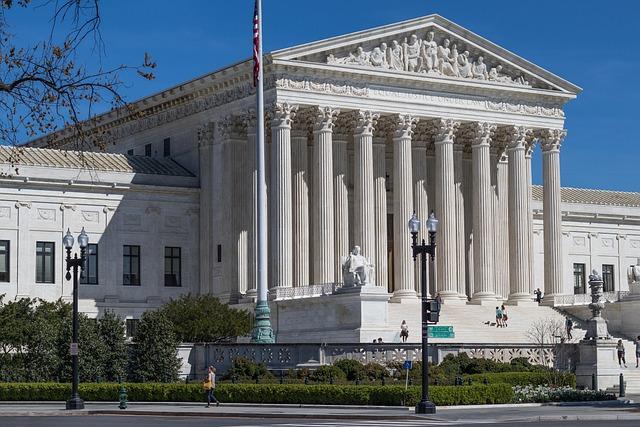
The U.S. Supreme Court has, at least for the moment, allowed the Trump administration to proceed with a redesigned federal voter eligibility database—an interim decision that may significantly influence how states clean and verify their voter registration lists in advance of upcoming elections. In a short order issued without a detailed written opinion, the justices declined to halt the rollout of the new system, despite warnings from critics that it could spur improper voter purges. Supporters argue the changes are essential to strengthen election integrity and deter voter fraud. The ruling, delivered against the backdrop of years of partisan conflict over voting rights and ballot access, leaves the administration’s approach in effect while legal battles continue in lower courts.
Supreme Court Ruling: What the Interim Decision Means for Election Law
By allowing the revamped federal voter eligibility database to operate while litigation continues, the Supreme Court has immediate and practical consequences for how states manage their rolls. The order effectively permits election administrators to begin using the updated system for real-time cross-checking of registration records, even as unresolved questions remain about data reliability and the risk of disenfranchising eligible voters.
Legal commentators note that this temporary green light may influence lower courts’ thinking. Some judges could interpret the Supreme Court’s posture as a signal of deference toward the executive branch’s role in administering federal election-related systems. At the same time, civil rights lawyers are already preparing lawsuits to test whether the database’s implementation can coexist with longstanding protections under the Voting Rights Act (VRA) and the National Voter Registration Act (NVRA). Any pattern of racially skewed or otherwise disproportionate removals is likely to become central evidence in those cases.
The ruling also intensifies a recurring conflict in American election law: the balance between federal oversight and state autonomy in running elections. As states decide how aggressively to rely on federal data, new litigation is expected to surface around privacy protections, due-process requirements, and the thresholds for removing someone from the voter rolls. Early filings are likely to raise constitutional due-process claims if voters are stripped from registration lists without clear notice or a meaningful chance to correct errors.
Key legal flashpoints include:
- Transparency: Whether states must publicly explain how they use federal data to identify potentially ineligible voters.
- Verification standards: The level of corroborating evidence required before a flagged registration is changed or canceled.
- Timelines: How quickly a database “flag” can lead to a change in voter status, especially close to an election.
- Remedies: What legal options and administrative procedures are available for wrongly purged voters.
| Legal Issue | Potential Impact |
|---|---|
| Federal–state authority | More disputes over who controls rules for voter eligibility and list maintenance |
| Data accuracy | New claims of unjustified cancellations and wrongful denials at the polls |
| Civil rights compliance | Expanded oversight under the VRA, NVRA, and constitutional protections |
Election Integrity vs. Voter Access: How the Database Revamp Could Reshape Both
The Trump administration’s overhaul of the federal voter eligibility database aims to modernize and centralize how states check registrations, but it also raises the stakes for voters whose records are incomplete, outdated, or inconsistently maintained. Supporters say the improvements will allow election officials to quickly identify duplicate registrations across states, catch clear cases of ineligibility, and keep rolls more accurate in an era of high mobility.
Opponents counter that the very tools designed to improve list accuracy could make eligible voters more vulnerable to removal—particularly when matching rules are aggressive, underlying data are inconsistent, or notice procedures are weak. Populations most at risk, advocates argue, include naturalized citizens, college students, renters, military families, and anyone who has recently changed their name or moved. These groups often have records that differ subtly across agencies, making them more likely to be misflagged.
Key dynamics include:
- Faster cross-state data matching can help clear out obvious duplicate registrations or outdated entries.
- Heightened risk of false positives means legitimately registered voters may be removed based on partial or mistaken matches.
- Uneven data quality across states can amplify racial, socioeconomic, and geographic disparities in who gets flagged.
- Limited transparency in system design makes it difficult for external experts to audit matching criteria or error rates.
| Potential Impact | Voter Access | Election Integrity |
|---|---|---|
| Stricter database matching | Could discourage or remove some eligible voters, especially with common names | May help reduce duplicate registrations and obviously ineligible entries |
| Rapid data updates | Leaves voters less time to discover and fix errors before elections | Allows quicker action on clearly outdated or invalid records |
| Opaque algorithms | Makes it harder for individuals to understand or challenge why they were flagged | Restricts independent validation of the system’s accuracy and fairness |
How these changes ultimately tilt the balance between ballot access and security will be determined less by broad rhetoric and more by technical implementation and local policy choices. States still decide whether to treat database “hits” as advisory leads or near-automatic triggers for action. Advocacy groups, journalists, and researchers are already watching closely to see whether certain demographics or geographic areas experience disproportionately higher removal rates or challenges.
Recent nationwide data underscore the stakes. According to the U.S. Election Assistance Commission, approximately 19 million voter registrations were removed from rolls in the two-year period leading up to the 2022 midterms, due to reasons ranging from death and relocation to list maintenance errors and inactivity. As the revamped system comes online, those numbers—and who is most affected—are likely to be scrutinized even more intensely.
Voting Rights Advocates Raise Red Flags on Data Quality and Transparency
Voting rights organizations warn that the new database framework, while marketed as a neutral tool for list accuracy, may worsen long-standing problems with inconsistent records and opaque correction processes. They point to past examples in which trivial differences—like a missing middle initial, a transposed birthdate, or a dropped accent mark—incorrectly flagged registrations and led to attempted removals.
The expanded reliance on multiple federal and state data sources, advocates argue, increases the volume of potential mismatches without sufficient clarity on how conflicts are resolved. When combined with limited notice requirements, these technical issues can translate into real-world harms, such as voters arriving at polling places only to find their names missing or marked as “inactive.”
Another central worry is how the administration defines and responds to “risk” signals for ineligible voting. If algorithms or scoring systems are used to rank registrants for additional scrutiny, but the criteria remain secret, critics fear that naturalized citizens, language minorities, and communities with common surnames could be disproportionately targeted for review.
To address these concerns, civil rights advocates emphasize that transparency is itself a core democratic safeguard, not an optional feature. They are pressing for:
- Public disclosure of matching rules, thresholds for removal, and overall error rates.
- Advance notice to anyone flagged for removal or subject to heightened scrutiny, with clear deadlines for response.
- Independent audits of the database, underlying code, and any third-party algorithms used.
- Accessible appeal processes that allow voters to correct records before Election Day without needing legal representation.
| Key Concern | Advocates’ Warning |
|---|---|
| Data Matching | Minor discrepancies can wrongly classify eligible voters as ineligible |
| Algorithm Secrecy | Hidden criteria can conceal biased or error-prone decision-making |
| Notification | Voters may be dropped from rolls without timely or clear notice |
| Redress | Complex, slow, or confusing appeal systems can discourage participation |
Policy Pathways: Modernizing Eligibility Systems Without Sacrificing Rights
As the updated eligibility database moves forward under judicial scrutiny, policymakers at every level of government face a dual challenge: harness modern technology to maintain accurate rolls while ensuring that no eligible voter is sidelined by flawed data or opaque processes. A growing set of policy proposals seeks to strike that balance.
Core recommendations include:
- Codified due-process protections before any removal from the voter rolls, including written notice, clear reasons for the action, and an opportunity to contest it.
- Transparent matching criteria that are publicly available, subject to comment, and periodically reviewed for bias or excessive error rates.
- Independent technical audits of the database and any third-party tools before large-scale list maintenance actions are taken.
- Notice-and-cure periods that guarantee voters a reasonable window to fix errors ahead of Election Day.
In addition, experts recommend adopting:
- Data minimization rules that limit what personal information is stored and shared, reducing privacy risks and cyberattack exposure.
- Routine public reporting on mismatches, removals, and false positives, broken down by geography and demographic categories where legally permissible.
- Accessible remedies for voters in rural, low-income, and historically marginalized communities, including in-person assistance and language support.
| Policy Focus | Voter Protection | System Benefit |
|---|---|---|
| Mandatory Audits | Helps identify wrongful purges and systemic flaws | Improves overall data accuracy and reliability |
| Notice & Cure | Gives voters a clear path to correct mistakes | Lowers the risk of last-minute litigation and confusion |
| Cybersecurity Standards | Protects sensitive personal data from breaches | Preserves public confidence in the system’s integrity |
| Public Dashboards | Lets the public monitor list maintenance activity | Builds trust through visible accountability |
At the federal level, Congress could establish baseline national standards for how key data sources—such as immigration records, Social Security files, and criminal justice databases—are combined and interpreted in determining voter eligibility. These standards could explicitly bar reliance on opaque, probabilistic, or proprietary algorithms that cannot be independently tested for accuracy and bias.
Civil rights organizations are also urging lawmakers to require racial and language-access impact assessments for any major changes to eligibility rules or database practices. Such reviews would evaluate how proposed systems affect naturalized citizens, voters with limited English proficiency, and communities where common naming conventions historically trigger high mismatch rates. Federal modernization funds could then be conditioned on meeting these benchmarks, aligning technological innovation with the fundamental guarantee that every eligible voter has a fair opportunity to be heard.
Closing Remarks
As court challenges to the revamped voter eligibility database continue, the Supreme Court’s decision ensures that, for now, the Trump administration’s system can be used in upcoming election cycles. The order does not resolve deeper debates over data reliability, potential discrimination, or the respective roles of federal and state authorities in regulating voter rolls. Those questions will now move to the forefront in lower courts and legislative arenas, even as advocates, election officials, and voters monitor how the system performs in practice—and, ultimately, who is able to cast a ballot.


