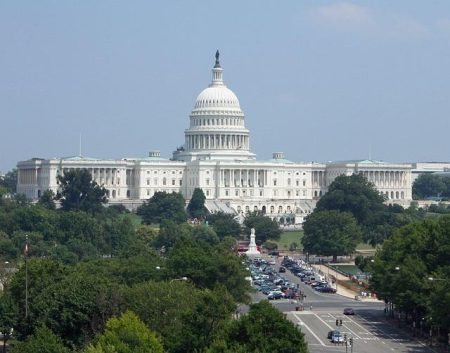




In a blistering column for The Washington Post, Sen. Joe Manchin (I‑W.Va.) urges Congress to confront what he describes as an entrenched culture of denial, drift and crisis management. Writing as the federal debt soars past $34 trillion, election-year tensions rise and global conflicts demand swift decisions, Manchin contends that lawmakers are ignoring unmistakable warning signs. His essay, “What could make Congress wake up,” is less a lament than a stark bulletin: the United States is edging toward a series of self‑inflicted crises that could finally force a reckoning on Capitol Hill.
Congress on Autopilot: Drifting from Deadline to Deadline
With shutdown threats, aid fights over foreign conflicts and looming budget showdowns piling up, Manchin portrays a Congress on autopilot, stumbling from one manufactured deadline to the next. He argues that the core problem is not procedural complexity but a basic failure of political courage. Negotiations routinely start days or hours before funding lapses, members cast symbolic party‑line votes on bills that have zero chance of becoming law, and the congressional calendar is increasingly organized around campaign events and fundraising rather than legislating.
In that vacuum, he warns, presidents and federal agencies step into the breach. Executive orders, emergency declarations, aggressive rulemaking and major court rulings fill the space where robust legislation should be. Manchin insists that all of these are poor stand‑ins for Congress doing the difficult, public work of deliberation and compromise. The more lawmakers put that work off, he argues, the more every deadline becomes a cliff — and every cliff becomes an excuse for short-term patches instead of long-term solutions.
Embedded in his critique is a challenge to both parties to stop treating brinkmanship as a political branding exercise and start acting like stewards of the institution. Manchin calls on colleagues to reclaim Congress’s constitutional responsibilities with tangible, measurable changes rather than cable‑ready sound bites:
- Enact appropriations on time so agencies can plan, instead of relying on last‑minute omnibus bills or stopgap measures.
- Restore regular order so committees can hold public hearings, markups and amendments on complex legislation.
- Recommit to budget discipline to defuse debt‑limit showdowns as political weapons.
- Elevate bipartisan coalitions by giving them real floor consideration, not just courtesy meetings.
| Pressure Point | Risk | Needed Action |
|---|---|---|
| Budget Deadlines | Serial shutdown threats and stopgaps | Durable, multi‑year fiscal agreements |
| Foreign Crises | Confusing signals to allies and adversaries | Clear, timely, unified funding decisions |
| Domestic Gridlock | Executive and judicial policymaking by default | Specific, enforceable statutes from Congress |
Behind Closed Doors: How Quiet Bipartisan Deals Still Get Done
Despite the constant public combat, Manchin points to a less visible reality: serious legislating still happens in cramped conference rooms, away from the cameras. Coal‑state senators meet with climate‑focused colleagues, deficit hawks sit down with big‑city appropriators, and rural Republicans hash out terms with urban Democrats. These meetings have recently yielded cross‑party agreements on infrastructure, targeted clean‑energy support, and streamlined permitting — packages assembled vote by vote in negotiations that rarely trend on social media.
These coalitions are transactional and ever‑shifting, but they function. Lawmakers agree to preserve certain tax incentives or regulatory flexibilities in exchange for investments in broadband, port modernization or electric grid reliability in their districts. It is not soaring rhetoric about unity; it is, as Manchin describes, legislating by ledger, with each line item measured in jobs created, projects delivered and political risks absorbed.
Most of these deals follow a recognizable script: a handful of senators and representatives craft a narrow framework, party leaders test it in closed‑door lunches, and staff attorneys race to translate policy bullet points into legislative text before partisan outrage hardens on cable news and social media feeds. Inside these negotiations, members rely on a few familiar tools:
- Explicit trade‑offs: Accepting modest spending caps in return for focused investments in infrastructure, technology or defense.
- Sunset dates: Structuring new programs to expire or require review, forcing future Congresses to reconsider them based on results.
- Regional alliances: Members from both parties teaming up to protect energy sectors, agriculture, manufacturing or ports that span state and party lines.
- Process assurances: Commitments to hold votes or allow amendments so skeptics have a reason to stay engaged instead of walking away.
| Issue Area | Key Trade‑Off | Result |
|---|---|---|
| Infrastructure | Greater state flexibility in exchange for tighter federal oversight | Large, durable bipartisan majorities |
| Energy | Support for existing fossil infrastructure paired with new clean‑tech incentives | Stable but ideologically mixed coalition |
| Budget | Short‑term spending caps now, delayed fights over long‑term entitlements | Avoided shutdowns without resolving deeper disputes |
Why Changing the Rules Matters More Than More Speeches
Manchin notes that members are not short on rhetoric — floor speeches, social media posts and cable hits are constant. What they lack, he argues, are rules that reward governing instead of posturing. Speeches fuel the 24‑hour political news cycle; structural reforms determine whether Congress can function at all.
When committee chairs can quietly bury bipartisan bills for months, when party leaders can prevent meaningful amendments from ever seeing a vote, and when primary campaigns punish compromise more than gridlock, oratory becomes little more than political background noise. To truly jolt the institution, he contends, Congress must adopt binding rules that change how members spend their workdays, how legislation is drafted and how power is allocated inside both chambers.
That means replacing purely symbolic gestures with procedural changes that members feel immediately in their routines, including:
- Guaranteed debate and votes on bipartisan bills that meet clear committee support thresholds, preventing leadership from silently killing them.
- Structured but open amendment periods that allow genuine policy changes while preventing endless delay tactics.
- Recalibrated committee power so subject‑matter expertise and performance, not just seniority, shape who leads oversight and drafting.
- Election and ethics incentives that favor cross‑party lawmaking over partisan outrage and viral clips.
| Current Reality | Reform Impact |
|---|---|
| Key bills often move under closed rules | More amendments and genuine floor negotiations |
| Leadership offices dominate agenda‑setting | Committees recover authority; expertise carries more weight |
| Floor time used mainly for scripted speeches | More recorded votes that carry clear political accountability |
Rebuilding Public Trust: Practical Reforms Congress Can Implement Now
Instead of yet another high‑profile commission with a thick report destined for a shelf, Manchin argues that Congress needs enforceable rules that voters can see and measure. Trust, which has fallen to historic lows in recent surveys — with many polls showing fewer than one in five Americans expressing confidence in Congress — will not rebound without visible changes in how lawmakers conduct business.
He starts with ethics and money. That includes tighter financial transparency and conflict‑of‑interest rules: real‑time disclosure of stock trades, mandatory blind trusts for senior committee leaders overseeing specific industries, and automatic public logs of meetings and communications between lobbyists and congressional offices. He also urges stronger budget enforcement so that major tax breaks or new spending cannot be rushed through with minimal scrutiny at odd hours.
To counter the perception that the real decisions happen offstage and that hearings are mere theater, Manchin suggests that leaders commit to genuine public deliberation. That could include regular, televised bipartisan work sessions where negotiators walk through bill text line by line, explaining trade‑offs and answering questions before final votes.
- Prohibit members from raising campaign funds while Congress is in session, limiting dialing‑for‑dollars during work hours.
- Tighten post‑service lobbying rules and close the “strategic adviser” loophole that lets former members influence policy without registering as lobbyists.
- Mandate that full bill text be posted publicly at least 72 hours before any final vote, with clear summaries and cost estimates.
- Back committee subpoenas with real, swift penalties for ignoring them, regardless of which party controls the gavel.
| Reform | Action | Impact on Trust |
|---|---|---|
| Ethics & Stocks | Mandatory blind trusts for key committee leaders | Limits conflicts of interest and insider perceptions |
| Budget Openness | Public, nonpartisan cost estimates for every major bill | Clarifies trade‑offs and long‑term fiscal effects |
| Lobbying Rules | Extended cooling‑off periods for ex‑members and senior staff | Slows the revolving door between Congress and K Street |
| Public Deliberation | Broadcast negotiations and markup sessions on significant legislation | Gives citizens a clearer view of how laws are shaped |
The Road Ahead: Will Congress Choose to Wake Up?
Whether Manchin’s broadside marks a turning point or fades into the background will depend less on the sharpness of his words and more on what Congress does when the cameras are off. The pressures he highlights — ever‑present debt battles, hardened partisanship, and shrinking space for genuine compromise — are familiar. What has changed is the visible cost of delay: downgraded credit outlooks, jittery markets, fraying safety‑net programs and uncertainty for allies abroad.
For now, Capitol Hill continues to run on short‑term fixes, temporary deals and tactical calculations aimed at surviving the next news cycle or primary challenge. If a true reckoning comes, it will not be because one senator sounded an alarm in a newspaper op‑ed. It will come when enough members in both parties decide that their legacy will be measured not by their media hits or social media following, but by whether they built a Congress capable of governing, not just campaigning, in an era of relentless crises.