


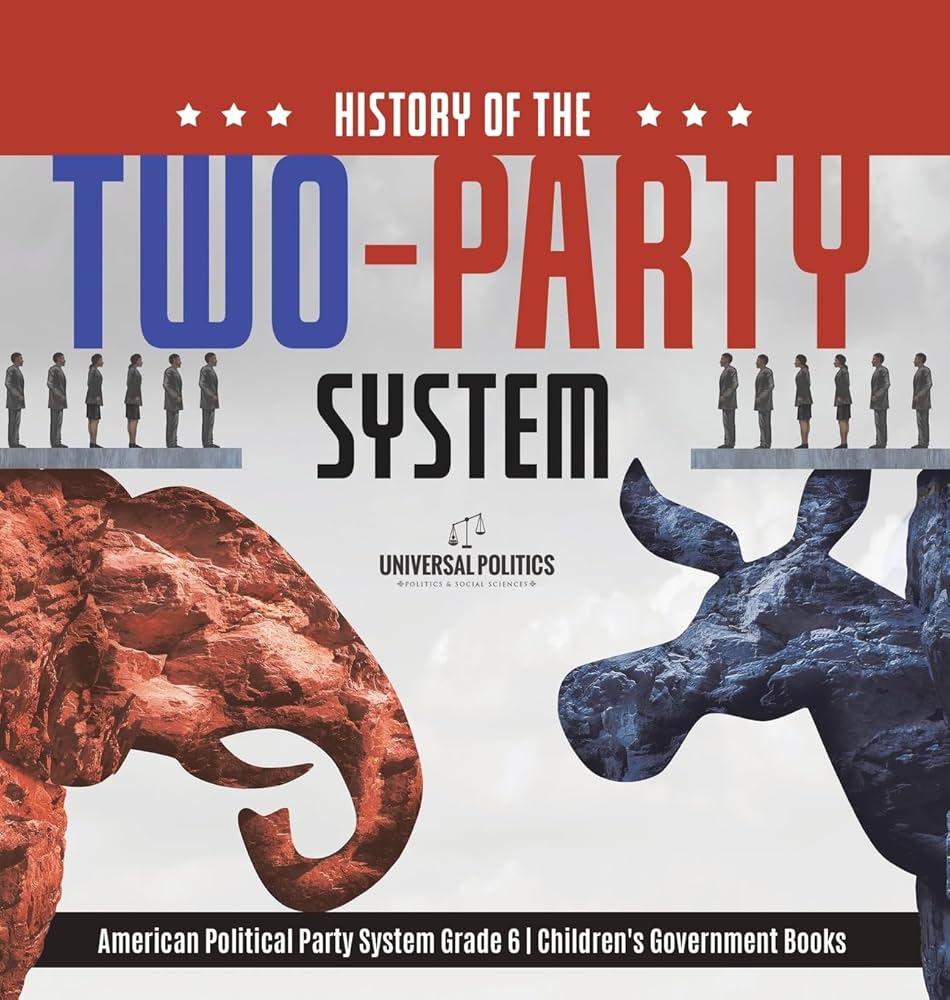
The Evolution and Endurance of the United States’ Two-Party Political System
Historical Foundations of America’s Bipartisan Framework
Following the American Revolution, the newly independent nation grappled with establishing a durable political system. Early political debates quickly crystallized into two main camps, each advocating distinct visions for the country’s governance. The Federalists, led by Alexander Hamilton, pushed for a robust centralized government to stimulate economic development and maintain national stability. Conversely, the Democratic-Republicans, spearheaded by Thomas Jefferson and James Madison, emphasized the importance of states’ sovereignty and an agrarian-based republic.
These ideological rifts were more than theoretical—they influenced foundational policies and shaped the trajectory of the young republic. Several elements contributed to the solidification of this dual-party structure:
- Constitutional framework: Designed to balance power, it fostered competition between political factions vying for influence.
- Electoral system: The winner-take-all approach incentivized coalition-building around two major groups, marginalizing smaller factions.
- Regional economic interests: Divergent priorities between Northern industrial centers and Southern agricultural regions deepened political divides.
- Role of media and civic organizations: Newspapers and political clubs mobilized public opinion and solidified party loyalties.
This early political polarization entrenched a rivalry that became a defining characteristic of American democracy.
| Party | Key Leaders | Philosophy | Primary Supporters |
|---|---|---|---|
| Federalists | Alexander Hamilton | Strong federal government, industrial economy | Urban merchants, financiers |
| Democratic-Republicans | Thomas Jefferson | States’ rights, agrarianism | Rural farmers, frontier settlers |
How Electoral Systems Cement Two-Party Dominance
The United States’ electoral design plays a crucial role in perpetuating a bipartisan political environment. The predominant winner-take-all system, where the candidate with the most votes in a district wins outright, inherently disadvantages smaller parties by excluding proportional representation. This structure encourages voters to back one of the two major parties to avoid “wasting” their ballots on less viable candidates, thereby reinforcing the duopoly.
Several mechanisms underpin this phenomenon:
- Single-member districts restrict representation to one winner per area, limiting diversity in elected officials.
- Strategic voting psychology leads citizens to choose candidates with realistic chances of winning.
- Stringent ballot access requirements and campaign finance regulations create significant obstacles for third-party contenders.
| Electoral Rule | Impact on Political Landscape |
|---|---|
| Winner-Take-All Voting | Favors two-party system; marginalizes smaller parties |
| Ballot Access Laws | Imposes barriers for third-party candidates |
| Campaign Finance Rules | Limits fundraising capabilities of minor parties |
As a result, the U.S. political arena remains largely a contest between Democrats and Republicans, who alternate in power across federal, state, and local governments. This entrenched system often sidelines alternative political movements, sparking ongoing discussions about the necessity of electoral reforms to better capture the electorate’s diverse preferences.
The Influence of Political Culture and Voter Tendencies on Party Persistence
American political culture traditionally values stability, moderation, and consensus-building, which naturally steers voters toward the two major parties. This cultural inclination favors practical decision-making over ideological purity, prompting many to support candidates perceived as electable rather than those representing fringe viewpoints. The winner-take-all electoral framework further amplifies this tendency by encouraging strategic voting, where electability and coalition potential often outweigh strict policy alignment.
Key behavioral patterns among voters include:
- Pragmatic voting: Preference for candidates capable of effective governance.
- Resistance to polarization: Avoidance of fringe parties that might fragment the electorate or destabilize government.
- Party loyalty: Deep-rooted identification with either the Democratic or Republican parties, often influenced by family and community traditions.
| Factor | Effect on Party System |
|---|---|
| Electoral Rules | Sustain two-party dominance |
| Voter Loyalty | Restricts growth of minor parties |
| Cultural Norms | Encourage centrist and moderate politics |
Strategies to Broaden Political Representation Beyond the Two-Party Model
To cultivate a more representative and inclusive political system, comprehensive electoral reforms are essential. Adopting ranked-choice voting, for example, empowers voters to rank candidates by preference, reducing the fear of “wasted” votes and enabling third parties to gain traction. Furthermore, campaign finance reform that ensures equitable funding and public financing opportunities for all parties can diminish the disproportionate influence of major party donors and special interests.
Equitable media coverage is also critical, as balanced airtime and reporting can elevate the visibility of diverse political voices beyond the traditional two-party narrative. Additionally, fostering coalitions among minor parties around shared policy goals can amplify their collective impact and challenge the duopoly.
| Approach | Implementation | Anticipated Benefit |
|---|---|---|
| Electoral Reform | Introduce ranked-choice voting | Enhances voter choice and election fairness |
| Campaign Finance | Provide public funding for all parties | Reduces financial inequities |
| Media Representation | Ensure equal coverage for diverse candidates | Increases visibility of alternative voices |
| Coalition Building | Encourage alliances among minor parties | Strengthens political influence |
Final Thoughts
The persistence of the United States’ two-party system is the product of intertwined historical developments, electoral structures, and cultural norms. From the nation’s inception to today, mechanisms like the winner-take-all voting system and entrenched party loyalties have continuously reinforced a bipartisan political landscape. Gaining a deeper understanding of these factors is vital for engaging with ongoing debates about political representation and democratic reform. As America’s political environment continues to evolve, addressing the challenges and opportunities within this two-party framework remains central to shaping a more inclusive and responsive democracy.