


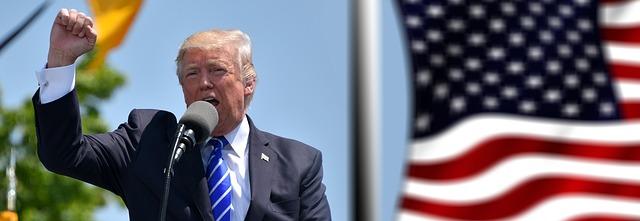
Thousands of protesters poured into streets across the United States this week for a wave of “No Kings” demonstrations targeting former President Donald Trump and what organizers say is an escalating challenge to basic democratic norms. From courthouse steps to state capitols and major city plazas, the coordinated rallies united progressive coalitions, civil rights leaders, and community-based organizers who argue that Trump is attempting to stand above the rule of law. As court cases involving the former president multiply and the 2024 election cycle intensifies, the “No Kings” actions highlight deep unease about constitutional checks, presidential power, and the future of American democracy.
Inside the “No Kings” movement: How anti-Trump organizers are reinventing protest
What started as scattered local efforts has evolved into a tightly networked, national campaign. Activists have borrowed tactics from labor walkouts, climate justice campaigns, and online-first movements, building a model that is flexible, fast-moving, and intentionally leaderless.
Under banners that read “No Kings, No Crowns, Just Voters”, volunteers coordinate pop-up teach-ins, courthouse vigils, and neighborhood canvasses through shared digital calendars and encrypted chats. Seasoned organizers work alongside first-time demonstrators who say they are alarmed by Trump’s rhetoric about “total immunity” and his repeated clashes with institutional restraints.
Instead of centering a single charismatic figure, the “No Kings” movement focuses on repeatable local actions that can be scaled up quickly across multiple battleground states as the campaign calendar tightens.
- Key tactics: decentralized rallies, courthouse actions, rapid-response protests tied to legal developments
- Digital backbone: unified messaging through social media, email lists, and encrypted channels
- Core message: opposition to expanding presidential power beyond constitutional checks and balances
- Participants: students, clergy, former Republican officials, civil rights organizations, neighborhood groups
| City | Recent “No Kings” Event | Primary Focus |
|---|---|---|
| Philadelphia | Late-night courthouse vigil | Defending rule of law and judicial independence |
| Phoenix | Student-led campus walkout | Mobilizing youth voting power |
| Atlanta | Faith-led march through downtown | Framing accountability as a moral obligation |
Behind the scenes, lawyers run know-your-rights workshops, while data teams track crowd sizes, voter registration sign-ups, and online engagement. The aim is to convert protest turnout into measurable gains in civic participation, particularly in swing regions.
The movement’s central refrain appears on handmade posters and professionally designed graphics alike: the presidency is a constitutional office, not a royal title. Activists insist that ultimately, voters-not any single politician-must determine how far executive power can stretch.
Grassroots frustration and 2024 politics: What the “No Kings” rallies reveal about democratic fatigue
Across dozens of cities, the chants sound similar even as the accents and audiences change. Protesters describe feeling stuck in an endless loop, forced to re-litigate the Trump years while urgent issues like housing costs, climate resilience, and infrastructure compete for attention. Many say they are tired of personality-driven campaigns that overshadow policy debate.
Their banners and speeches point to two overlapping frustrations: a sense that political leaders are recycling the same candidates and conflicts, and a belief that institutions have failed to enforce consistent guardrails on presidential power. Some carry signs warning that democracies rarely fail overnight but instead erode slowly when norms are bent for short-term gain.
Recent polling mirrors this mood. National surveys in 2024 have found majorities of Americans worried about the stability of U.S. democracy and skeptical that political institutions are functioning fairly. Young voters in particular report growing distrust in both major parties, even as they remain highly concerned about authoritarian trends and election denial.
- Recurring candidates are viewed as evidence of political stagnation and elite insulation
- Young voters voice disillusionment with Democrats and Republicans while demanding stronger democratic protections
- Democratic norms are widely perceived as more fragile than in previous election cycles
- Street protests complement online campaigns, serving as a visible pressure point on parties and institutions
| Rally Theme | Voter Sentiment | Political Signal |
|---|---|---|
| No unchecked power | Fatigue with strongman-style rhetoric and unilateral executive action | Insistence on clear limits to presidential authority |
| Protect the vote | Anxiety about future election interference and voter suppression | Demand for stronger voting rights and ballot access protections |
| Accountability now | Distrust toward courts, Congress, and oversight bodies | Pressure on institutions to enforce legal and ethical standards |
Campaign professionals watching the “No Kings” mobilizations see both warning signs and potential opportunity. The protests are clearly aimed at blocking a Trump return to the White House, but they also reveal broader skepticism that could dampen turnout or scramble traditional party loyalties, especially among swing voters and independents.
Many demonstrators say they are open to backing down-ballot candidates-regardless of party-who commit to structural reforms such as tightening presidential immunity rules, safeguarding election administration, and restraining emergency powers. In that way, the rallies act as an early barometer of democratic anxiety, sending a message that 2024 will be judged not only on who wins, but on whether voters still trust the rules of the contest itself.
Policing, protest, and free speech: Where law enforcement and “No Kings” demonstrators clash
The most tense scenes have emerged where energized crowds meet lines of police in tactical gear. In several cities, officers deployed metal barricades and rolling street closures, channeling marchers into narrow routes. Protesters accused authorities of “kettling”-confining groups in tight spaces and restricting exit points-especially when certain contingents were delayed longer than others.
Organizers say heavy armor, visible less-lethal weapons, and aggressive crowd formations discouraged participation from families, older adults, and undocumented residents. Police officials counter that such measures are necessary to prevent conflict with pro-Trump counterdemonstrators and to protect nearby businesses and government buildings.
On the outer edges of some marches, minor scuffles broke out as officers removed banners from traffic lights and ordered demonstrators off intersections. Those exchanges sharpened concerns about where crowd control ends and intimidation begins.
Civil liberties attorneys, legal observers, and volunteer monitors tracked incidents in real time, logging videos and witness statements. Their main question: were restrictions being enforced neutrally, or did political messaging influence who was targeted for dispersal orders or arrest?
Key points of tension included:
- Use of amplification: Threats to confiscate bullhorns and speakers when officers said noise exceeded local limits.
- Protest zones: Disputes over “free speech areas” positioned far from courthouses and key entrances.
- Arrest thresholds: Confusion over when chanting, sit-ins, or blocked sidewalks crossed into an unlawful assembly.
| Issue | Police Rationale | Protester Concern |
|---|---|---|
| Amplified sound | Limit disruption, comply with municipal noise ordinances | Potential to mute key speakers and limit public visibility |
| Barricades | Maintain traffic flow and secure sensitive buildings | Obstruct press access and reduce protest visibility |
| Targeted detentions | Isolate individuals deemed “instigators” or non-compliant | Chilling effect on dissent and selective enforcement fears |
Advocacy groups have begun filing public records requests to examine internal directives around these protests. They argue that how cities manage “No Kings” demonstrations will set important precedents for free speech, assembly rights, and protest policing in a highly polarized election year.
The road to Election Day: How anti-Trump organizers plan to turn “No Kings” energy into votes
With the election calendar tightening and voters inundated with political messaging, “No Kings” organizers are shifting from spectacle to precision. Large marches remain part of the playbook, but coalition leaders now emphasize targeted voter contact in swing suburbs, exurban communities, and historically underrepresented neighborhoods.
The priority groups include disaffected Republicans, independents, young voters, and communities of color that report deep fatigue with traditional outreach. Rather than duplicating efforts, grassroots organizations are building shared databases and joint plans for:
- Hyper-local organizing through school boards, unions, neighborhood associations, and parent groups
- Digital rapid response videos, explainers, and graphics tailored for TikTok, Instagram, and YouTube Shorts
- Counter-messaging operations aimed at responding to misinformation within hours instead of days
- Mutual aid partnerships that connect protests to food distributions, legal aid, and community services to build long-term trust
Coalition members say the goal is not only to oppose Trump’s return to power, but to strengthen democratic participation in communities that have historically been sidelined from policy decisions.
In key battlegrounds, the strategy mixes old-fashioned door-knocking with tech-driven outreach:
| Key State | Top “No Kings” Tactic | Main Target Group |
|---|---|---|
| Pennsylvania | Door-to-door canvassing coordinated with union locals | Union households and working-class swing voters |
| Arizona | Peer-to-peer text banking and campus events | Young Latino voters and first-time voters |
| Georgia | Faith-based outreach, town halls, and church-based voter drives | Black church networks and surrounding neighborhoods |
Parallel to on-the-ground efforts, election lawyers and voting-rights advocates are preparing for what some describe as an “all-hands” defense of ballot access. They are tracking changes to election laws, recruiting poll monitors, and assembling rapid-response legal teams in case of disputes over mail-in ballots, early voting, or certification.
Conclusion: “No Kings,” democratic anxiety, and the stakes of 2024
As the 2024 race accelerates, the “No Kings” protests capture the intensity of opposition Trump still faces beyond conventional partisan lines. Whether this wave of activism becomes a sustained electoral force or fades as campaign season wears on remains uncertain.
What is clear is that for Trump’s critics, the rallies serve a dual purpose: they are a visible rejection of what they view as creeping authoritarianism, and a real-time test of how much power public mobilization still holds in shaping the political landscape. In a year when faith in institutions is fragile, the “No Kings” movement is betting that organized voters-not would-be kings-will decide the boundaries of presidential power.