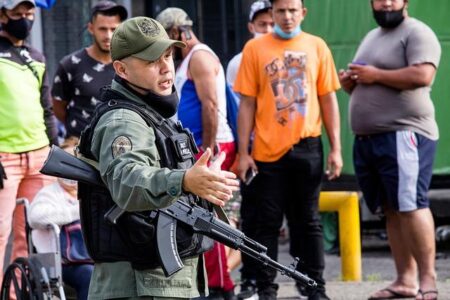



A National Guardsman gravely injured in a Washington, D.C., shooting is making measurable progress in his recovery, officials say, even as investigators assemble a more detailed portrait of the alleged gunman. The attack, carried out close to a tightly secured zone in the nation’s capital, has ignited fresh debate over how well domestic deployments are protected and what may have driven the suspect to open fire. Using surveillance footage, public records and the suspect’s online activity, authorities are working to determine whether the shooting was carefully planned or a rapidly escalating act of violence. The case has drawn attention nationwide, underscoring both the daily risks borne by service members on home soil and the growing difficulty of heading off targeted attacks in heavily trafficked public areas.
Recovery of wounded National Guardsman shows fragile but steady improvement
Physicians at George Washington University Hospital say the Guardsman, who underwent multiple operations to address extensive internal injuries from a high-velocity bullet, has been upgraded from critical to stable condition. A concise update provided to relatives notes that he can now breathe independently for short stretches and has begun reacting to simple verbal prompts. Clinicians describe these steps as “promising but highly delicate,” and stress that the next stage of recovery will require close, uninterrupted monitoring.
Hospital teams have implemented a strict care protocol centered on frequent neurological evaluations, infection control measures and carefully calibrated pain medication to curb secondary complications. Critical-care nurses are tracking subtle changes in reflexes and responsiveness, while trauma surgeons are watching for warning signs such as swelling, clotting issues or respiratory setbacks.
His family, who have rarely left the hospital since the shooting, say they are drawing strength from incremental signs that he is fighting his way back-brief moments of eye opening, a faint hand squeeze, or a small shift when addressed by name. Relatives and fellow service members have organized informal support shifts, from reading notes sent by colleagues to playing his favorite music at a low volume. Their efforts currently focus on:
- Care coordination: Staying in regular contact with trauma and ICU specialists to understand daily changes and next steps.
- Emotional steadiness: Keeping the room quiet and limiting visitors to prevent overload and allow the Guardsman to rest.
- Long-term planning: Beginning to map out likely needs for physical rehabilitation, occupational therapy and mental health support once he leaves intensive care.
| Key Medical Indicator | Current Status |
|---|---|
| Vital Signs | Stable, under constant observation |
| Respiratory Support | Can tolerate limited periods off the ventilator |
| Neurological Response | Responds to basic commands, though still limited |
| Next 48 Hours | High-risk phase for infection, clots and post-surgical complications |
Recent national data show how precarious this phase can be: according to trauma registries, the first two to three days after major surgery are often decisive in determining long-term outcomes for patients with penetrating injuries. For the Guardsman’s relatives, each stable reading and each new sign of awareness offers cautious hope that he will beat those odds.
Investigators reconstruct suspected gunman’s path and mindset through video and digital evidence
Federal and local investigators are meticulously reconstructing the suspect’s movements before the downtown shooting, using a mosaic of street cameras, transit logs and his digital footprint. Security footage places the man in the vicinity just before sunrise, walking through several high-security blocks and pausing near government buildings before heading toward the site where the National Guardsman was ultimately shot.
Detectives are overlaying this visual timeline with mobile phone geolocation data, transit card records and encrypted messaging logs. The goal is to determine whether the suspect conducted prior scouting, coordinated with anyone else or rehearsed his route. Early evidence points to a lone-actor scenario, yet authorities caution that they are still examining whether online contacts or in-person associates played any inspirational or logistical role.
Forensic analysts reviewing the suspect’s devices are flagging posts, chats and saved links that may reveal his thinking in the weeks leading up to the attack. Initial reviews suggest a mix of personal grievances and heavy exposure to polarizing and confrontational rhetoric online. Investigators are paying close attention to:
- Recent search history featuring queries on firearms, security post patterns and notable federal facilities.
- Social media engagement with lesser-known accounts that circulate anti-government narratives or glorify confrontations with authorities.
- Financial records tied to purchases of equipment, clothing and travel that match the suspect’s apparent route and actions in Washington, D.C.
| Timeframe | Key Activity |
|---|---|
| 48 hours before | Irregular trip to DC area; elevated late-night online activity and message traffic |
| Morning of incident | Seen on multiple cameras walking near and around federal properties |
| Minutes prior | Digital communications and device activity largely cease, suggesting intentional operational security |
This blend of offline movement and online activity mirrors patterns seen in other recent targeted attacks, where individuals absorbed extremist or grievance-fueled content digitally before acting alone. Officials say they hope the digital trail in this case will clarify whether the suspect’s attack was primarily motivated by ideology, personal vendetta or a volatile combination of both.
Scrutiny intensifies on D.C. security protocols and protection of deployed National Guardsmen
After the shooting left the National Guardsman hospitalized, security planners in Washington, D.C., are reevaluating long-held assumptions about risk levels for uniformed personnel working domestic missions. Senior officials acknowledge that traditional approaches-designed around crowd control, ceremonial details or visible deterrence-may not sufficiently protect troops from targeted, surprise attacks in dense urban environments.
Behind closed doors, after-action reviews are dissecting every stage of the response. Meeting notes and internal briefings are raising questions about whether radio channels were overloaded, whether nearby units had a clear line of sight, and how fast protective equipment could have been upgraded once the threat was recognized. One recurring concern is whether current mission planning adequately anticipates a sudden shift from routine presence to combat-like conditions.
Policy analysts say the case exposes structural weak points in how federal, local and military entities coordinate to safeguard service members on domestic deployment orders. Among the issues now under review:
- Rules of engagement governing how quickly Guardsmen can respond to gunfire when working in crowded public spaces.
- Intelligence-sharing channels between city law enforcement, federal agencies and National Guard leadership, especially regarding emerging local threats.
- Protective equipment standards-including body armor, helmets and medical kits-for missions that have historically been treated as low risk.
- Perimeter and access planning around busy corridors, transit hubs and symbolic sites frequently patrolled by Guardsmen.
| Focus Area | Current Concern | Proposed Shift |
|---|---|---|
| Threat Assessment | Primarily static and tied to scheduled events | Continuous risk updates informed by real-time intelligence |
| Troop Posture | High visibility with minimal protective layering | Maintained visibility with scalable, modular protection |
| Interagency Comms | Disparate and sometimes duplicative channels | Integrated, unified incident and intelligence pipeline |
These conversations are occurring at a moment when the broader national security community is rethinking how to manage domestic threats. Federal data have documented a rise in attacks and plots targeting government personnel and facilities in recent years, and experts argue that Washington, D.C.-as a symbolic and operational hub-requires constant adaptation in how forces are deployed and protected.
Experts call for unified threat assessment training and stronger community reporting tools
Security specialists and behavioral scientists say the shooting highlights familiar vulnerabilities in how early warning signs are identified, shared and acted upon. They are advocating for standardized, nationwide threat assessment protocols so that schools, city agencies, employers and military units work from the same reference guide when someone begins showing worrying behavior.
Under these models, frontline personnel-from National Guard officers supervising local missions to campus police, human resources staff and school resource officers-would receive regular training on how to distinguish heated rhetoric from actionable threats. The emphasis, experts say, should be on structured decision-making: documenting concerning behaviors, consulting multidisciplinary teams and escalating credible risks quickly while respecting civil rights and avoiding bias.
At the same time, they stress that community members remain critical to preventing violence, but that existing channels for reporting fears or tips are often fragmented, hard to navigate or not widely trusted. To address this, specialists are pressing for accessible, transparent systems that feed into trained assessment teams able to act without delay. Their recommendations include:
- Clear reporting pathways that are publicized and consistent across municipal, state and federal offices.
- Anonymous tip options-through phone, web forms or apps-to protect people worried about retaliation or stigma.
- Feedback mechanisms that inform reporters when their concern has been logged, reviewed or referred for action.
- Public awareness campaigns outlining what behaviors-such as explicit threats, weapons fascination or escalating harassment-should trigger a report.
| Reform Area | Main Goal |
|---|---|
| Training Standards | Sharpen the ability to spot and evaluate high-risk behavior early |
| Data Sharing | Bridge information gaps among local, state and federal threat databases |
| Community Reporting | Lower barriers and increase trust so credible tips reach authorities |
| Oversight & Privacy | Balance swift intervention with strong civil liberties protections |
These proposals echo broader national trends. Several states have introduced “behavioral threat assessment” frameworks in recent years, and federal agencies have urged more consistent adoption, arguing that fragmented systems leave preventable gaps. Advocates say the Washington, D.C., case could provide added momentum for those reforms.
Looking ahead
Authorities emphasize that the investigation is still unfolding, with significant questions remaining about the suspect’s path to Washington, D.C., and the exact mix of motives behind the shooting. For now, the National Guardsman’s gradual improvement stands out as a rare source of encouragement in an otherwise sobering situation.
As investigators continue to refine the timeline and expand their understanding of the alleged gunman’s background, leaders at every level are again confronting the heightened risks faced by those serving in the nation’s capital. In the days to come, officials expect to share more about both the investigation and possible changes to security practices-while the Guardsman’s family, friends and fellow soldiers remain focused on a single priority: that his recovery continues to move in the same hopeful direction.