

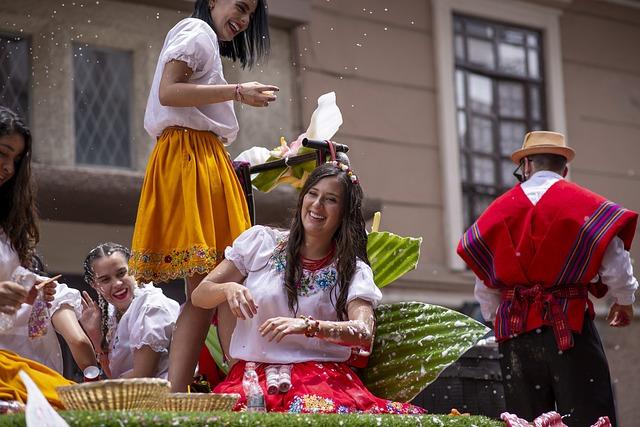
As National Hispanic Heritage Month unfolds across the United States with parades, cultural festivals and public proclamations, one major American institution has adopted an unusually low profile. The U.S. military-historically a powerful engine of mobility for Hispanic Americans and the single largest employer of Latinos in the country-is facing rising criticism from within its own ranks over how, or even whether, it chooses to recognize their service. In a year already shaped by intense political polarization, recruiting shortfalls and battles over diversity initiatives, the armed forces’ subdued response to Hispanic Heritage Month is fueling sharp questions about inclusion, respect and what service means in an increasingly diverse America.
Muted observance of Hispanic Heritage Month highlights concerns about representation
While federal agencies, school districts and city governments across the country launch highly visible Hispanic Heritage Month campaigns, the military’s observance has been strikingly limited. In San Antonio-widely known as “Military City USA” and home to generations of Latino military families-service members and veterans report fewer official events, sparse social media acknowledgments and minimal public statements compared with previous years.
The difference is especially notable when contrasted with the Pentagon’s robust promotion of other commemorative observances. For many Latino troops, the silence sends an unmistakable message about which histories and communities are prioritized.
- Few or no public ceremonies on major installations with large Latino populations
- No new outreach campaigns that highlight Hispanic military heroes or present-day leaders
- Scant internal messaging about Latino heritage, milestones or role models in uniform
| Branch | Latino Share of Enlisted | Planned HHM Events |
|---|---|---|
| Army | ~20% | None publicized |
| Air Force | ~18% | Internal only |
| Navy | ~17% | Under review |
Defense leaders publicly maintain that diversity and inclusion remain core priorities. Yet Latino advocacy organizations argue that public visibility is an essential test of that commitment, particularly at a moment when debates over race, culture and patriotism are increasingly politicized.
Younger prospective recruits-who have grown up with highly visible cultural celebrations in schools, workplaces and online-say the lack of recognition feels disconnected from the military’s actual demographic reality. Latinos make up roughly 19% of the U.S. population and continue to grow as a share of the enlisted force, according to recent Department of Defense personnel data.
For many, the issue is not that a single month of programs can erase longstanding inequities, but that complete or near-complete silence deepens the perception that Latino sacrifice is expected yet seldom highlighted. As one veteran from San Antonio described it, “If we’re good enough to wear the uniform, we should be visible enough to be acknowledged.”
Serving in silence: when cultural identity is kept out of sight
Inside the gates, many Latino service members say Hispanic Heritage Month feels like just another stretch on the training calendar. Troops describe quietly dialing back family customs-such as speaking Spanish during breaks, wearing small religious medals, or sharing traditional foods-because they worry those expressions might be viewed as unprofessional or “not regulation.”
Attempts to mark the month often happen informally and off duty: soldiers organizing potlucks that feature regional dishes, Marines circulating stories of Latino Medal of Honor recipients, or airmen leading unofficial briefings about Hispanic trailblazers in their branch. These efforts rarely come with command funding, official time or public support, reinforcing the sense that cultural pride is welcomed only in private.
Veterans and advocates note that this disconnect isn’t limited to day-to-day interactions; it also shows up in how official recognition is structured. Command-approved events may center on broad, generic themes like “unity in diversity,” while largely sidestepping specific discussions of Latino identity, Spanish-language heritage, immigration experiences or the unique traditions that many troops bring with them.
Within units, service members report patterns such as:
- Assumptions tied to Spanish surnames, including questions about citizenship, education or origin, regardless of service record.
- Mockery of accents or bilingual speech, even when those same troops are praised for their performance and professionalism.
- Little or no recognition of community observances such as DÃa de los Muertos, Las Posadas or Three Kings Day on base calendars or chaplain programs.
| Issue | Impact on Troops |
|---|---|
| Lack of official events | Heritage confined to private, off-duty gatherings |
| Restrictions on visible symbols | Faith and cultural identity kept discreet or hidden |
| Few Latino-centered history briefings | Contributions and role models remain largely unknown in the ranks |
For many service members, the message is subtle but persistent: personal heritage is acceptable as long as it does not become too visible, too specific or too central to unit life.
Recruitment and retention at risk as inclusion gaps come into focus
Military sociologists and diversity practitioners caution that the subdued approach to Hispanic Heritage Month is more than a missed public-relations opportunity. They view it as an indicator of deeper structural issues affecting recruitment and retention of Latino personnel at a moment when the armed forces are already struggling to meet end-strength goals.
Recent Pentagon reports, along with external surveys, suggest that young Hispanics are increasingly weighing factors like respect for cultural identity, representation among leaders and institutional trust when considering military service. With civilian employers publicly emphasizing inclusion, mentorship and employee resource groups, the bar has been raised.
Experts describe a widening “climate gap”: official statements praise diversity in broad, aspirational language, yet the daily experiences of troops-especially around promotion, assignments and leadership visibility-often tell a more complicated story. When key moments of recognition pass with little comment, that gap becomes harder to ignore.
Veterans’ groups and recruiters warn that the absence of highly visible acknowledgment reinforces a narrative that Latino service is both essential and underappreciated. They point to several emerging concerns:
- Perception of invisibility among Hispanic troops and their families, who see limited representation in ceremonies, media and base leadership roles.
- Persistent worries about advancement, particularly beyond junior and mid-level ranks, where Latinos remain underrepresented compared to their share of the enlisted force.
- Declining referrals from veterans and currently serving personnel, who historically have been key influencers for younger relatives and community members considering enlistment.
- Heightened competition from private-sector employers and public agencies that prominently celebrate Hispanic Heritage Month and invest in Latino-focused leadership pipelines.
As the military looks for ways to modernize recruiting strategies-especially in heavily Latino regions like South Texas, Southern California and parts of Florida-advocates argue that authentic recognition of Hispanic Heritage Month is not symbolic window dressing but a practical necessity.
Calls grow for revitalized observances and sustained Latino outreach
In response to the quieter tone surrounding this year’s Hispanic Heritage Month, Latino veterans’ organizations, civil-rights groups and military family coalitions are urging the Pentagon to revive and expand cultural observances that, they say, have gradually faded from base calendars and official communications.
They contend that sidelining these observances undermines years of trust-building with communities that reliably send sons and daughters into uniform. In many neighborhoods, the military has long been perceived as a pathway to education, stable income and leadership experience. When the institution appears reluctant to publicly acknowledge that community’s role, that perception can quickly shift.
Advocacy groups are drafting letters to members of Congress, pressing for formal inquiries into why some installations have reduced or eliminated Hispanic Heritage Month programming. They are also calling for dedicated funding streams, arguing that without a specific budget, cultural observances are too easily cut when schedules get tight or priorities change.
The central message from these coalitions is that recognition should be embedded into the culture of the force, not treated as an optional add-on once a year. They propose connecting observances directly to professional development, mentorship and leadership training so that cultural awareness is tied to mission readiness, not separated from it.
Policy ideas currently circulating in Washington and among service-member coalitions include:
- Reestablishing on-base Hispanic Heritage Month observances with standardized guidance and expectations from the Office of the Secretary of Defense.
- Ensuring year-round outreach funding so recruiters can regularly partner with Latino-serving schools, colleges, churches and civic organizations.
- Publishing clear data on Latino promotion, retention, occupation and assignment patterns to identify bottlenecks and areas of underrepresentation.
- Launching structured mentorship programs connecting junior enlisted and officers from underrepresented backgrounds with senior leaders who can advocate for their careers.
| Advocate Priority | Desired Pentagon Action |
|---|---|
| Recruitment | Invest in culturally informed outreach teams and partnerships |
| Retention | Develop clear leadership pipelines and mentorship for Latino troops |
| Visibility | Restore and enforce official guidance on cultural observances |
Advocates emphasize that these efforts should not be framed as political gestures but as practical measures to align military culture with the demographics of the force and the nation it serves.
Looking ahead: will the military match words with action?
As Hispanic Heritage Month unfolds beyond the base gates-with school assemblies, museum exhibits and community festivals honoring Latino art, history and public service-the relatively quiet stance of the armed forces highlights a growing tension between public rhetoric and institutional practice.
Latinos continue to enlist, deploy and lead in increasing numbers, forming a critical backbone of the enlisted ranks and occupying a slowly growing share of officer and senior noncommissioned positions. For many of them, the question is whether their stories, families and cultural traditions will be recognized as integral to the institution’s identity, rather than treated as peripheral.
Whether this year’s muted observance reflects a temporary shift in planning, budget constraints or a deeper change in priorities remains uncertain. What is clear, according to service members and veterans, is that visibility and representation are not merely symbolic. They directly affect morale, trust and the sense of belonging that keeps people in uniform over the course of demanding careers.
For now, most of the parades, concerts and educational programs celebrating Hispanic Heritage Month are happening in civilian spaces. Many in uniform are watching closely to see how, and whether, the military engages when the observance returns next year-and whether future efforts will move beyond slogans to meaningful, sustained recognition of Latino service.