


Denmark Tightens Its Military Hold on Greenland as Global Powers Compete in the Arctic
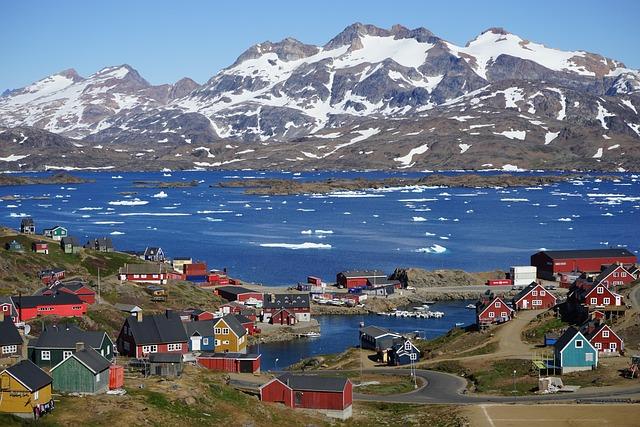
Denmark is sharply accelerating its military buildup in Greenland, reinforcing its control over the semi-autonomous Arctic territory at a time of renewed friction with Washington and lingering controversy over former U.S. President Donald Trump’s talk of “buying” the island. Extra Danish troops, upgraded surveillance systems, and new defense investments underline Copenhagen’s resolve to remain the primary security actor in Greenland, even as the melting Arctic ice cap turns the region into a new arena for global competition.
As climate change opens up fresh shipping corridors and access to minerals, fossil fuels, and rare earths, Greenland now sits at the center of a strategic race involving the United States, Russia, China, and European allies. Ideas once dismissed as political theater-such as purchasing Greenland-have instead spotlighted a deeper power struggle at the top of the world, where sovereignty, security, and economic opportunity are tightly intertwined.
Denmark Recasts Greenland as a Strategic Hub in a Warming Arctic
Copenhagen has rolled out a multi-year defense plan that turns Greenland’s vast coastline and airspace into a more closely monitored, heavily defended frontier. The initiative centers on modernizing radar networks, improving air and maritime surveillance, and upgrading dual-use harbors that can support both naval patrols and civilian services.
Danish defense planners say the goal is clear: maintain effective control over northern approaches to the North Atlantic and North America at a time when both Russia and China are stepping up operations in the High North. This includes more ice-capable vessels, research missions with strategic overtones, and longer-range air and missile activities that crisscross polar routes.
Key elements of Denmark’s Arctic defense expansion include:
- Installation of new long-range radar and sensor systems to track aircraft, ships, and drones across an increasingly busy Arctic sky and sea.
- Reinforced runways and logistics upgrades at key hubs such as Kangerlussuaq and Thule to support heavier aircraft and rapid deployments.
- Improved satellite communication links to keep military, civilian, and emergency services connected across remote regions.
These measures are designed to strengthen early-warning capability and tighten NATO integration, ensuring that Denmark remains the central security guarantor for Greenland even as U.S. strategic interest in the island grows.
From “Quiet Backwater” to Frontline: The New Arctic Security Landscape
For decades, the Arctic was treated by many policymakers as a low-tension, predominantly scientific and environmental zone. That era is effectively over. Denmark’s defense upgrades are being paired with more robust intelligence-sharing, joint training missions, and tailored deterrence measures aimed at countering so-called “gray-zone” activities-operations that fall below the threshold of open conflict but challenge sovereignty and infrastructure.
Among the assets now prioritized for protection around Greenland are:
- Undersea communication cables that connect North America and Europe and are increasingly seen as critical vulnerabilities.
- Evolving shipping lanes along the Northwest Passage and other Arctic routes that shorten transit times between Asia, Europe, and North America.
- Prospective mining zones rich in critical minerals, including rare earth elements, essential for green technologies and defense industries.
Greenland’s government in Nuuk insists that it is being brought into these strategic discussions more systematically than in the past, pointing to new consultation formats and joint working groups. Danish authorities also emphasize potential civilian benefits tied to the buildup, such as:
- Modernized coastal infrastructure capable of supporting fisheries, emergency response, and local transport alongside defense needs.
- Expanded airlift and medevac capacity that can cut response times for accidents and medical emergencies in isolated settlements.
- Improved surveillance and domain awareness to track foreign research expeditions, icebreakers, and commercial ships in Greenlandic waters.
| Key Site | Upgrade Focus | Strategic Role |
|---|---|---|
| Thule Air Base | Radar & missile warning | US-Danish early warning hub |
| Kangerlussuaq | Runway & logistics | Arctic airlift gateway |
| Nuuk Area | Maritime sensors | Monitoring coastal traffic |
Greenlandic Leaders Push Back: Security Without Sacrificing Self-Rule
The rapid pace of military activity has triggered a political response in Nuuk. Greenland’s elected representatives argue that, as the territory with home rule and a growing degree of autonomy, they cannot be treated as junior partners or afterthoughts when strategic decisions are made.
Greenlandic ministers warn that any changes-whether new radar installations, expanded runways, weapons storage, or intensified training-must be negotiated with, not simply explained to, local authorities. The message is unambiguous: defense policy must respect home rule and democratic consent.
Civil society organizations, including youth climate groups and local village councils, are calling for binding agreements that guarantee:
- Early consultation with Greenlandic institutions before major military initiatives are finalized.
- Public access to environmental and safety data about defense-related infrastructure and activity.
- Long-term ecological monitoring of ice, wildlife, and coastal areas affected by increased air and sea traffic.
Environmental and Community Impacts in Focus
Greenland’s communities are already confronting rapid climate change-temperatures in the Arctic are rising more than twice as fast as the global average, and Greenland’s ice sheet is currently one of the largest contributors to global sea level rise. In this context, more military traffic and infrastructure raise specific local worries.
Residents and traditional livelihoods highlight the following concerns:
- Hunters report that noise from training flights and maritime exercises may be affecting the migration of seals and caribou close to planned activity corridors.
- Fishermen fear that sonar use, fuel spills, and dredging operations around new or expanded ports could disrupt fish behavior and reduce stocks near shore.
- Small coastal communities worry that restricted zones around sensitive bases or radar sites could cut off well-used sea-ice routes and coastal paths.
| Local Priority | Military Plan | Point of Tension |
|---|---|---|
| Protecting fishing zones | Expanding naval patrols | Risk of pollution, noise |
| Preserving hunting routes | New training corridors | Wildlife disturbance |
| Greater self-governance | Quick deployment decisions | Limited local veto power |
Greenlandic politicians are increasingly framing these issues as questions of rights, not just consultation. They argue that sustainable security means military plans must be compatible with traditional livelihoods, cultural continuity, and ambitions for greater self-determination.
US-Denmark Security Coordination: Thule and the New Arctic Watchtower
Amid the buildup, U.S.-Denmark military coordination has become more intense and more structured. The centerpiece is Thule Air Base in northwest Greenland, a remote outpost that is being reconceived as a critical hub for monitoring shifting Arctic dynamics.
Today, Thule’s radars and sensors are being tasked with tracking:
- Long‑range Russian bombers and aircraft conducting patrols or probing NATO air defenses in the High North.
- Missile and space launches using polar trajectories, including sub‑orbital and hypersonic tests.
- Unmarked or dual-use drones operating over sea ice, energy exploration sites, and sea lanes.
- Chinese research and survey vessels that Western officials suspect may collect intelligence alongside scientific data.
Behind closed doors, Danish and American commanders are building integrated operational concepts that treat the Arctic as a strategic corridor linking North America, Europe, and Asia, not a frozen cul‑de‑sac. Real-time data sharing, joint airspace management, and contingency planning now underpin a more seamless defense posture across the North Atlantic and Arctic theaters.
Exercises, Modernization, and the Security-Climate Balancing Act
The new tempo of activity is visible on the ground and in the air. Joint U.S.-Danish (and broader NATO) task groups are rotating more frequently through Greenland, using its airfields and waters to rehearse scenarios ranging from search-and-rescue to ballistic-missile defense.
While many projects are publicly presented as “climate adaptation” or “resilience” efforts-such as reinforcing runways threatened by thawing permafrost-they are also calibrated to improve hard security capabilities. Expanded infrastructure enables:
- Faster deployment of aircraft and ships to emerging crises or suspicious activities in the Arctic.
- More persistent surveillance of new shipping routes and potential chokepoints.
- Improved interoperability with other NATO allies operating in northern waters.
| Focus Area | US Role | Denmark Role |
|---|---|---|
| Missile Warning | Upgraded radar & satellites | Policy access & sovereignty guarantees |
| Arctic Patrols | Aircraft & surveillance assets | Coast Guard and local logistics |
| Data Sharing | Intel fusion & analysis cells | Legal frameworks & liaison officers |
Officials describe this division of labor as a careful calibration: Washington brings high-end technology, global reach, and strategic lift; Copenhagen contributes sovereign authority, on-the-ground experience, and political management with Nuuk and Greenland’s institutions to keep operations legitimate and locally acceptable.
Calls for a Clear, Transparent Arctic Strategy
Policy experts across Europe and North America caution that without a clear, well-communicated Arctic strategy, Denmark and the United States risk fueling insecurity on multiple fronts. Rival states may misread new deployments as offensive posturing, while Greenlandic citizens may interpret secrecy as disregard for their autonomy and environment.
To reduce the chance of miscalculation and mistrust, analysts are urging governments to commit to:
- Full disclosure of overarching objectives in their Arctic strategies, with unclassified summaries made accessible to the public and allies.
- Regular parliamentary oversight of Arctic-related defense spending and basing decisions.
- Predictable rules and communication channels for regional militaries, including notification of major exercises.
Concrete recommendations often emphasize structured transparency and inclusive governance:
- Publish declassified Arctic strategy summaries that outline threat perceptions, capability plans, and diplomatic priorities.
- Institutionalize early consultations with Greenland’s government before announcing major defense steps.
- Guarantee indigenous representation on advisory bodies shaping Arctic security and resource policies.
- Embed environmental standards and impact assessments into every major military infrastructure project.
| Priority Area | Key Measure |
|---|---|
| Transparency | Regular public briefings on Arctic deployments |
| Indigenous Rights | Formal consent protocols with Inuit communities |
| Governance | Joint Denmark-Greenland security committees |
| Stability | Hotline mechanisms with Arctic rival states |
Indigenous Participation as a Strategic Asset
Inuit leaders in Greenland stress that they are not peripheral voices but central actors in deciding how the Arctic’s future will unfold. Their communities have inhabited the region for millennia, relying on intricate knowledge of sea ice, wildlife, and weather patterns that remains invaluable in a rapidly changing climate.
They argue that:
- Self-rule arrangements and land rights must be honored in practice, not only on paper, whenever new bases, training grounds, or transit corridors are considered.
- Knowledge-sharing between defense planners and local experts can improve safety, avoid sensitive ecological zones, and reduce conflict with traditional uses.
- Fair benefit-sharing mechanisms are needed so that wealth from new resource projects or defense-related contracts contributes tangibly to Greenlandic communities.
Legal scholars and Arctic governance specialists note that respecting indigenous rights is not simply a moral or historical obligation. It also enhances long-term stability by undercutting grievances that foreign powers could otherwise exploit for influence. For countries claiming to support a rules-based international order in the Arctic, real power-sharing, data-sharing, and benefit-sharing with Inuit communities has become an important test of credibility.
Insights and Conclusions
As Denmark reinforces its military presence in Greenland, the island finds itself once more at the intersection of great-power competition, environmental transformation, and the quest for self-determination. Whether Washington’s renewed fascination with Greenland proves enduring or episodic, Copenhagen’s response shows that the Arctic has shifted from distant periphery to core strategic theater.
What unfolds next-on the ice, in diplomatic negotiations, and in political debates spanning Nuuk, Copenhagen, Washington, Moscow, and Beijing-will shape not only Greenland’s path but also the broader balance of power in a rapidly warming Arctic. The choices made now about defense, transparency, and indigenous participation will determine whether the region evolves into a zone of managed cooperation or a new fault line in global rivalry.